
The pumping station is the heart of irrigation: if it stops, it does not matter how well programmed the sprinklers are or how finely tuned your water schedule is. Many serious breakdowns blamed on bad luck had been giving warnings for weeks with a different noise, a fluctuating pressure or electricity consumption rising for no reason.
Here you will find six preventive checks designed for the day-to-day of a golf course: what to look at, how often, how to record it and when to call a specialist technician. They are simple routines that any maintenance team can adopt without major investment.
Daily round of the pumping station: eyes and ears open
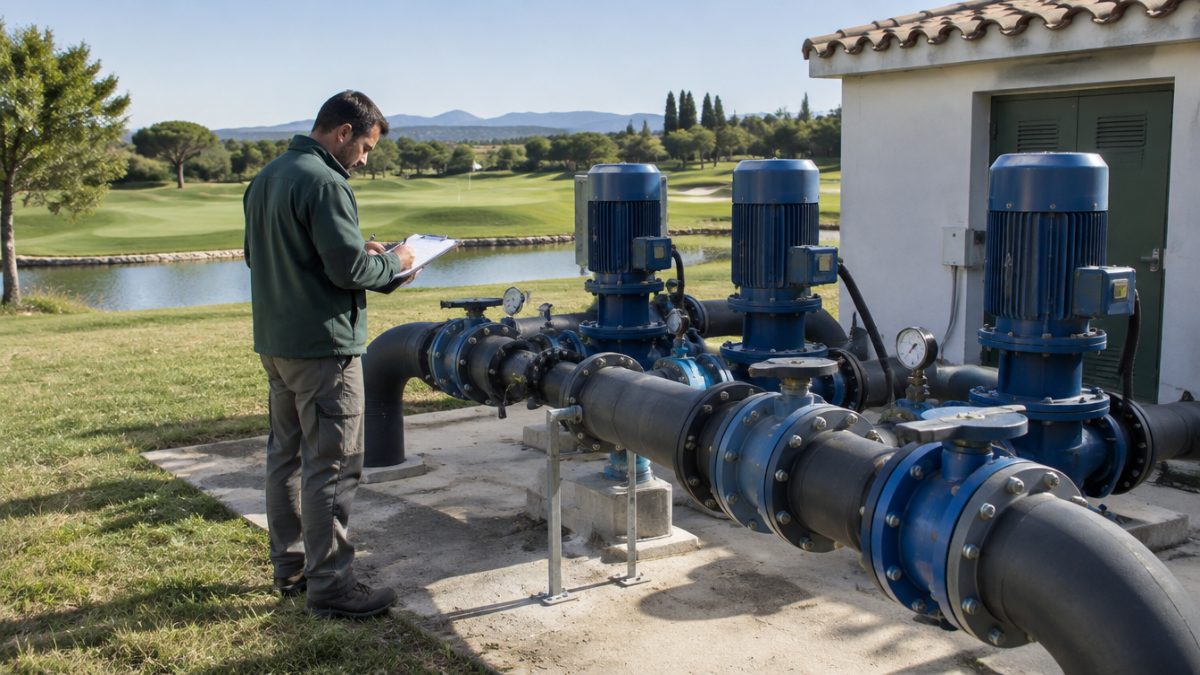
The first check needs no instruments, only someone attentive. A short walk-round, preferably at the same time and always in the same order, detects more problems than you would think. Equipment usually warns before it breaks: vibrations, new humming, a smell of heat or drips where yesterday there was nothing.
On a basic round of the pumping station it is worth checking:
- Noise and vibration of each pump set, comparing with the usual.
- Drips at packing glands, gaskets, flanges and fittings.
- Cleanliness of the room: dust, damp, nests or debris that block ventilation.
The key is not the round itself but writing it down. An observation such as “pump two sounds odd” has little value if nobody remembers it three weeks later. Recorded with a date and an owner, it becomes the thread that lets you discover patterns.
Pumping station pressures and flows: read the curve
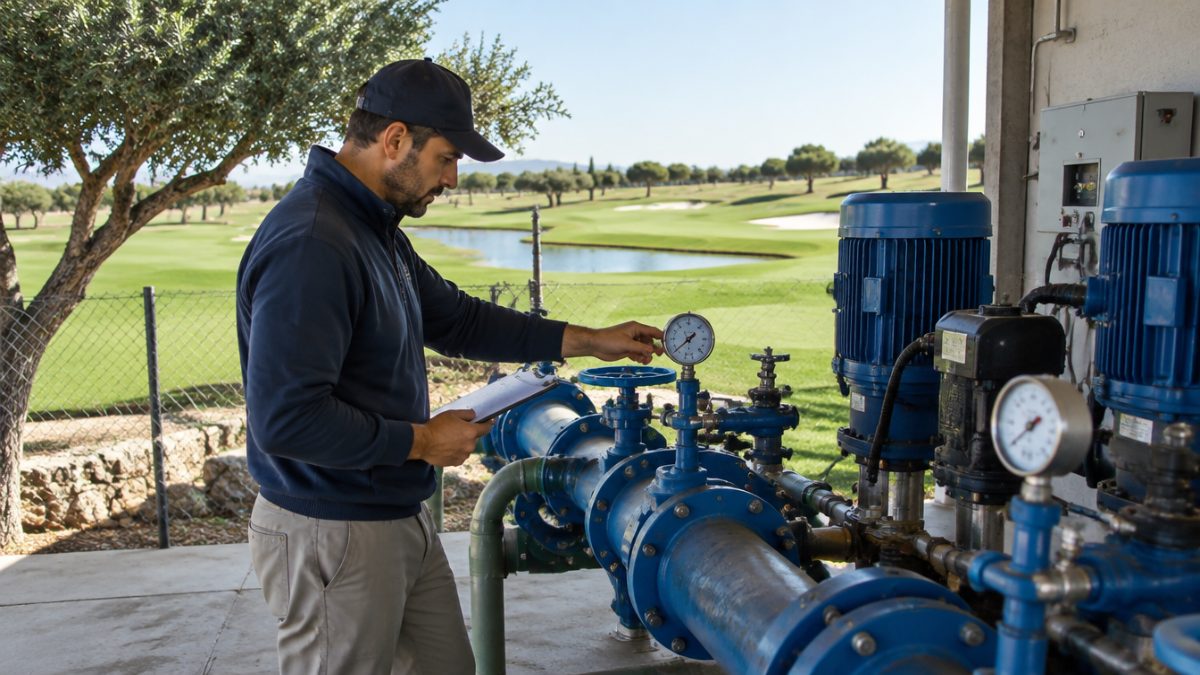
Pressure gauges and flow meters are not just for checking that there is water. Their real value appears when you compare readings over time. A discharge pressure that drops slowly under the same conditions points to impeller wear, air ingress or a leak in the network. If it rises more than normal, there may be a partly closed valve or a blockage.
A good practice is to define, with the help of the installer or a technician, the usual operating point of each pump set and note the reference readings. From there, any sustained deviation deserves a check, even if the course is still being irrigated normally.
- Note suction and discharge pressure with the same number of pumps running.
- Compare the recorded flow with the volume that should come out according to the programmed stations.
Pumping station electricity consumption: the cheapest symptom
A motor that works under strain consumes more to deliver the same. That is why the electricity bill and current readings are a very inexpensive early alarm. If consumption per cubic metre pumped grows steadily, something is degrading: bearings, impellers, suction filters or the pump’s own operating point.
It is also worth reviewing when you irrigate: concentrating pumping in the cheapest bands of the electricity contract, if play allows, has a direct effect on costs.
A simple guideline: each month, on the same dates, note the electricity reading and the flow, calculate their ratio and investigate any sustained rise.
Suction, filters and tanks: where many faults begin
A large part of the problems of a pumping station starts before the pump. If the water arrives with sediment, algae, leaves or sand, the filters clog, cavitation appears and the impellers suffer. This is especially common when drawing from lakes, ponds or wells, or when mixing with water from another source.
Recommended checks:
- Periodic cleaning of suction filters and screens, more often in algae-growth or leaf-fall seasons.
- Inspection of the level and condition of ponds and tanks, including accumulated sediment.
- Checking of foot valves, non-return valves and gates, which should open and close freely.
- Review of water quality when there are visible changes in turbidity or colour.
If you hear a noise like gravel inside the pump, suspect cavitation: it is cumulative damage that shortens the life of the equipment.
Pumping station control panel and its protections
The control panel and the variable frequency drives age too. Heat, dust and humidity are their main enemies. A poorly ventilated room can cause intermittent trips that seem inexplicable and are solved with a clean and an adjustment.
Electrical inspections must always be carried out by qualified professionals, in compliance with current regulations and safety procedures. What the course team can do is watch for external signs and put them in writing:
- Alarms or fault codes that appear on the drive panel.
- Protection trips, with date, time and circumstances.
- Temperature and ventilation of the panel and the room.
With that history, the technician arrives knowing what has happened and how many times.
Critical spares and a plan B for the pumping station
No plan eliminates breakdowns, but it does eliminate surprise. Think about what would happen if a pump set failed today: is there a standby pump? Can operation be alternated to share running hours? How long does a supplier take to deliver a bearing, a mechanical seal or a pressure sensor?
Define a short list of critical spares according to the equipment you have and its usual lead time. You do not need a huge store, but you do need to know which parts could leave you without irrigation for days. Complement that list with two habits:
- Alternate the pumps so that all accumulate similar wear and you confirm that they start.
Also document which supplier to call and which stations are prioritised if you have to irrigate at reduced capacity: greens and tee boxes first, fairways afterwards.
Pumping station: from one-off checks to a constant history
The six checks above work if they are always done and compared with each other. The most common mistake is to note them on loose scraps of paper or in the memory of the person who has been on the course longest. When that person is absent, preventive control of the pumping station breaks down just when it is needed most.
Set a frequency for each check: daily for the round and pressures, weekly for filters and suction, monthly for consumption and the panel, and a periodic technical inspection scheduled with the installer. Assign owners and a single way of recording. The easier it is to leave a record, the more likely it is to be done.
With a few months of history you can already answer the committee: how much it costs to pump a cubic metre, which pump set gives the most trouble and when to renew a piece of equipment.
Further reading: Irrigation Association. To go deeper into irrigation efficiency and best practice, you can consult the resources of the Irrigation Association.
Frequently asked questions
How often should I inspect the pumping station of a golf course?
As a guide, a daily visual and listening round, pressure readings when irrigation starts, cleaning of filters and suction weekly or more often in algae seasons, and a scheduled technical inspection with the installer at least once a year. Adjust the intervals to the size of the equipment, the water quality and the manufacturer's recommendations.
What signs show that a pump is starting to fail?
The most frequent are new noises or vibrations, a pressure drop at the same flow, drips at the seal, abnormal motor heating and electricity consumption that rises with no change in irrigation. Any of them, if it persists over time, justifies an inspection before the breakdown leaves the course without water.
Who should work on the pumping station's electrical panel?
Only qualified professionals, following current regulations and safety procedures. The course team should limit themselves to observing and recording alarms, protection trips, room temperature and general condition, and passing it on to the technician with as much information as possible to speed up the diagnosis.
Keep reading
- Irrigation audit to detect losses Irrigation audit: 7 steps to detect water losses
- Periodic sprinkler inspection Sprinkler Maintenance: 8 Key Inspection Tasks
- Preventive maintenance plan for machinery Preventive Equipment Maintenance: 7 Key Tasks