
Machinery is the maintenance department’s biggest physical asset, and also one of its biggest sources of scares. A greens mower down on a Friday before a tournament, a hydraulic leak in midsummer, an engine overheating because of a blocked radiator: almost all of it can be avoided with constant, well-organised preventive equipment maintenance.
We propose seven tasks that underpin a realistic preventive equipment maintenance programme, adapted to a workshop with few staff. These are general guidelines; the exact intervals and specifications for each machine are always set by the manufacturer’s manual and your technical service.
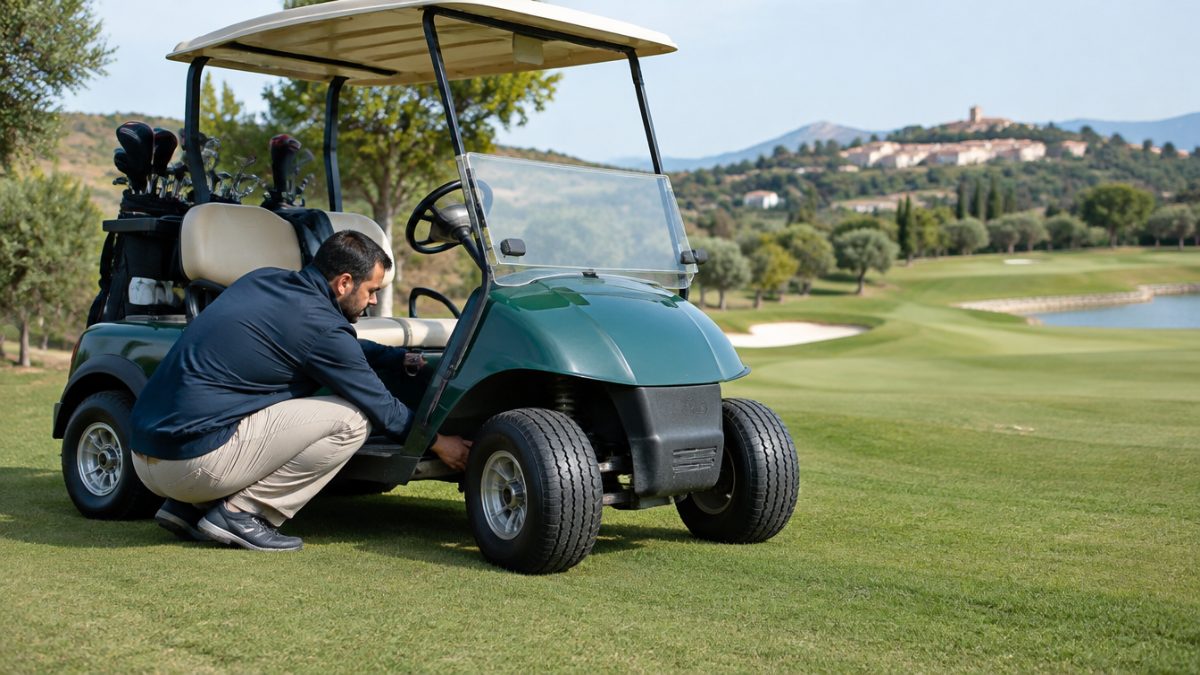
Task 1: Daily check before going out on the course
The basis of preventive equipment maintenance is a brief, systematic inspection before each use. It requires no technical jargon, just discipline: look at, touch and listen to the machine before it starts work.
- Check oil, coolant and fuel levels.
- Look for leaks, worn hoses or loose fasteners.
- Inspect tyres, brakes, lights and safety devices.
- Verify that the blades and cylinders are in good condition.
This five-minute check catches a large share of problems before they turn into breakdowns or accidents. It is worth having the operator log it and tell the workshop when something does not feel right.
A very common example: an operator notices that the machine’s steering “pulls” to one side and mentions it on arriving at the workshop. A quick check finds uneven tyre pressure or a loose hitch. Without that communication, the fault would have been discovered halfway through the shift, with the machine stopped in the middle of the course. This habit is the gateway to any well-done preventive equipment maintenance.
Task 2: Cleaning and greasing after the shift
A dirty machine ages faster. Grass debris holds moisture, speeds up corrosion and hides leaks. Pressure washing with care, without aiming the jet at bearings or electrical components, is one of the most profitable actions in the workshop.
Greasing deserves a section of its own: each grease point has its own interval and type of grease. A forgotten grease nipple can be the origin of a wrecked bearing weeks later. Marking the key points on the machine and keeping a simple diagram to hand helps make sure nobody misses one.
Task 3: Sharpening and adjusting the cutting units
Cut quality depends on cylinders and bedknives being sharp and properly adjusted. A torn cut weakens the leaf, leaves a yellowish tinge on the surface and opens the door to disease, as well as burning more fuel.
- Check the cylinder-to-bedknife contact at the interval set by the manufacturer and by use.
- Sharpen or grind when the cut loses quality, without waiting until it is obvious.
- Check the actual cutting height with the proper instrument, not just the machine’s own scale.
Good sharpening, besides improving the look of the course, reduces wear and the repair bill. Within preventive equipment maintenance, the cutting unit is where well-done work shows most, because the turf reflects it within a few hours.
Task 4: Control of fluids, filters and hydraulic circuits
Fluids are the machine’s lifeblood. Engine oil, hydraulic oil, coolant and fuel must be checked and replaced at the specified intervals. A blocked filter, degraded oil or a circuit with air in it can cause faults that are wrongly blamed on other components.
Hydraulic hoses deserve special attention, as they work under pressure and a burst can spill oil onto the turf, with the resulting environmental and surface damage. Replacing preventively those showing cracks or chafing costs far less than cleaning up and repairing the affected turf, as well as complying with responsible waste management.
Task 5: The preventive equipment maintenance service record
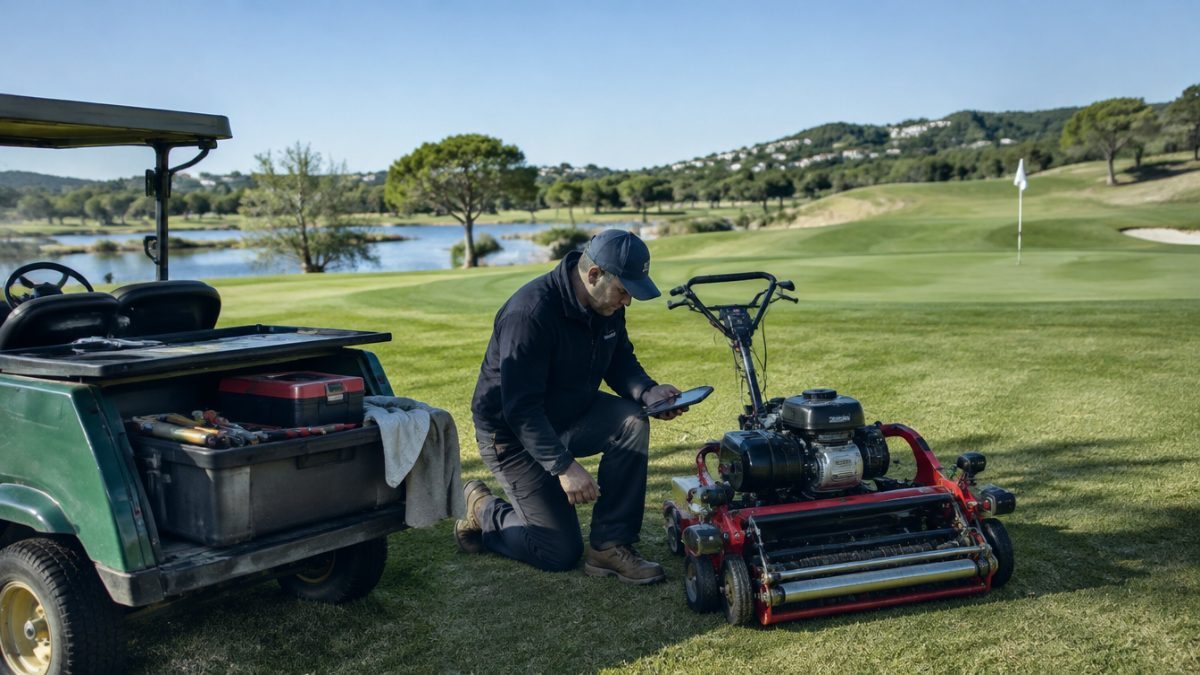
Without records, preventive equipment maintenance depends on the mechanic’s memory. Each machine should have its own service record: hours of use, checks carried out, parts replaced, breakdowns and costs.
- Note the date, hours and work done at each intervention.
- Record the cost of parts and labour.
- Identify the machines with the most recurring breakdowns.
This history lets you schedule services by actual hours, detect repeated faults and, above all, decide with data when it is time to replace a machine rather than keep repairing it.
Task 6: Critical spare parts stock and suppliers
Part of preventive equipment maintenance is anticipating what will run short. You do not need a huge store, but you do need to have identified the parts whose failure stops work: belts, filters, hoses, bearings, blades and fuses, depending on the fleet.
A useful rule: the longer a part takes to arrive and the more critical the machine, the more it justifies keeping a spare. Also keep an up-to-date list of suppliers and technical services with their usual lead times, so that in an emergency you know who to call without losing the morning searching. Reviewing the stock once a quarter avoids both shortages and surpluses of parts that are never used, and strengthens preventive equipment maintenance at a reasonable cost.
Task 7: Team training and a culture of care
No programme works if the operators do not make it their own. Teaching each person to check their machine, to spot abnormal noises and to report problems without fear of reprisals is the most lasting investment.
Some practical ideas:
- Give each new employee a short demonstration of the daily check.
- Publicly recognise whoever catches a fault in time.
- Occasionally hold a session with the mechanic to go over common operating mistakes.
When the team looks after the machines as their own, preventive equipment maintenance stops being a workshop obligation and becomes a way of working.
Further reading: GCSAA. The GCSAA (Golf Course Superintendents Association of America) offers training resources on workshop management and safety when operating course machinery.
Frequently asked questions
What is the difference between preventive and corrective maintenance?
Corrective maintenance repairs once the machine has already failed; preventive maintenance gets ahead of it with scheduled checks, parts changes and adjustments. Preventive equipment maintenance usually costs less in the medium term, reduces unexpected downtime and extends service life. The ideal is to combine both, always prioritising prevention.
How often should preventive equipment maintenance be done?
It depends on the type of machine, the hours of use and the working conditions. The most reliable approach is to follow the manufacturer's manual and adjust it with the workshop's experience. It is useful to record actual hours so you can schedule services by use and not only by calendar, avoiding both too many and too few checks.
How do you know whether to repair or replace a machine?
Compare the accumulated cost of repairs, downtime and reliability with the cost of a new machine. Each machine's service record provides the data needed. If breakdowns keep recurring and availability drops at critical times, it is usually a sign that it is time to plan a replacement.
Keep reading
- Renewing the machinery fleet: decision keys Replacing the machinery fleet: 6 key decision factors
- Reel sharpening: steps for a clean cut Reel sharpening: 6 steps for a clean cut
- Complete guide to turf maintenance on golf courses Complete guide to turf maintenance on golf courses