
August is the month when you see whether the summer preparation was worth anything. The heat bites, water demand is at its highest, part of the staff are on holiday and the course usually has more traffic than ever. Organising the greenkeeper tasks in August well makes the difference between coping and suffering.
This practical calendar, designed for a Mediterranean climate, covers seven priority jobs: from irrigation management and disease monitoring to preparing machinery and the autumn programme. Adapt it to your species, your region and the reality of your workforce.
Irrigation, the first of the greenkeeper tasks in August: fine-tune timing and uniformity
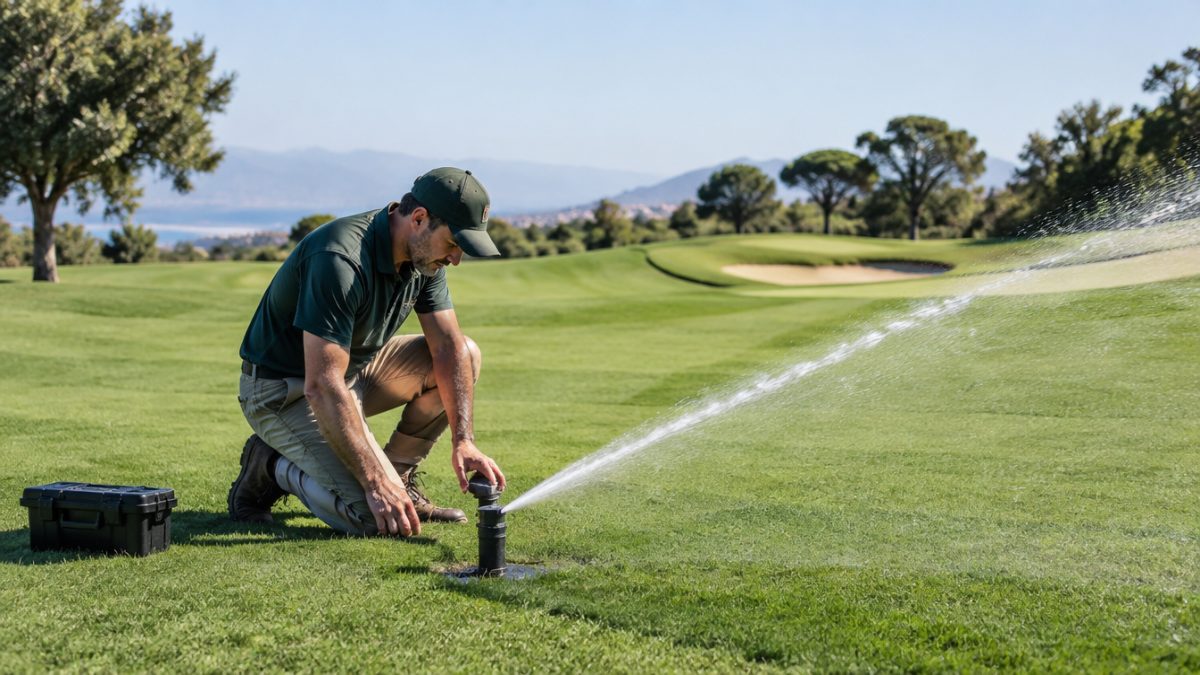
Among the greenkeeper tasks in August, irrigation carries the most weight. With high temperatures and peak evapotranspiration, any coverage failure turns into a dry patch within days. Irrigating in the early hours, with cool soil and little wind, is still the most efficient.
Recommendations for these weeks:
- Walk the circuits to find fallen sprinklers, blocked nozzles and leaks.
- Check run times by zone and compare them with actual evapotranspiration, not with what you remember.
- Avoid irrigating during play in heavily used areas.
- Have a contingency plan for supply cuts or pumping breakdowns.
If water is limited, prioritise: greens and tee boxes first, fairways next, rough last.
Look after the greens at peak heat
Among the greenkeeper tasks in August, greens deserve special attention. In cool-season species, such as bentgrass or Poa annua, heat stress is the great enemy. On bermudagrass greens the challenge is different: excess growth and thatch. Whatever your case, it is worth easing the pressure on the surface when the heat is extreme.
Common measures:
- Raise the cutting height slightly on the hardest days and reduce the frequency of rolling.
- Mow first thing and avoid heavy machinery in the middle of the day.
- Cool with light midday irrigation when stress symptoms call for it.
- Moderate nitrogen and watch potassium and root health.
Observe the colour, firmness and response to foot pressure every day. A green that marks easily underfoot is asking for water or rest.
Watch for diseases and pests that surge with heat and humidity
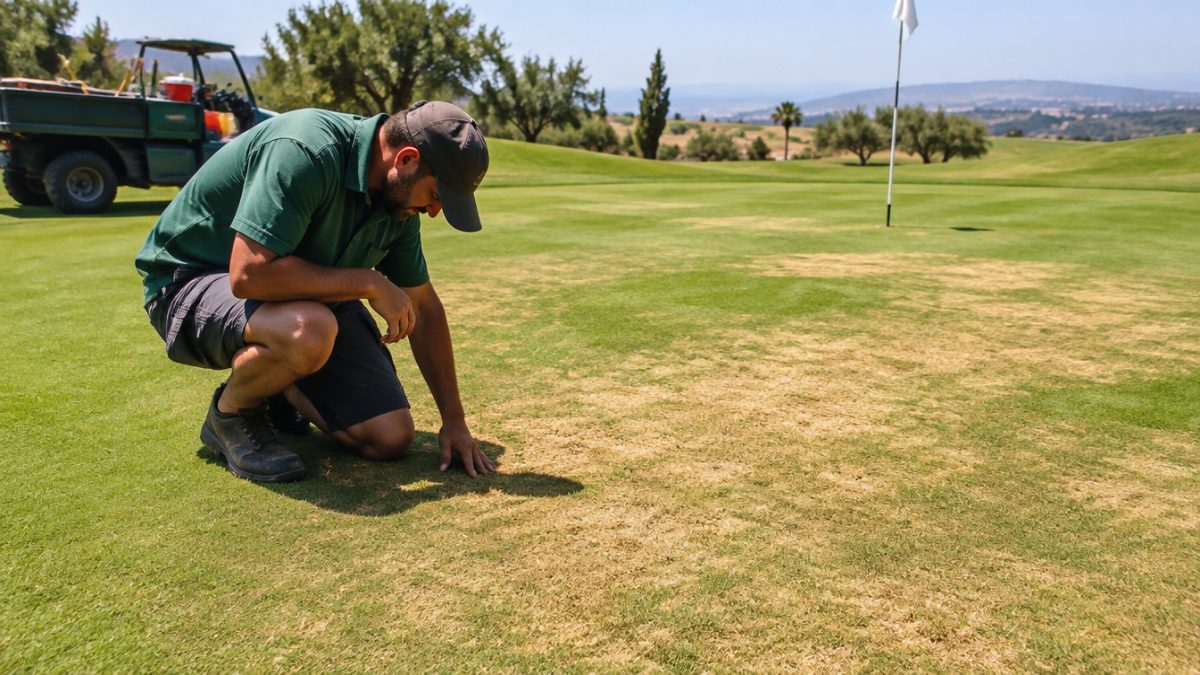
Warm nights and surface moisture favour summer fungi, and some soil insects reach their peak of activity. Among the greenkeeper tasks in August is patrolling the course with a keen eye, first thing, when the dew reveals the first patches.
Some useful guidelines:
- Identify the problem before acting: a patch may be caused by fungi, insects, lack of water or an irrigation fault.
- Reduce hours of leaf wetness with early irrigation and good ventilation.
- Prioritise cultural measures and integrated management before resorting to a treatment.
If a plant protection product finally has to be applied, always do so following the label, current regulations and the advice of an authorised technician, and keep a note in the treatment record.
Control dry spots and water repellency
Within the greenkeeper tasks in August comes a classic: with hot, dry soil for weeks, areas that repel water often appear: hard patches where the irrigation runs off. These are so-called localised dry spots, very typical on sandy greens and exposed mounds.
To manage them:
- Mark the areas on a plan or work report so you can watch them every day.
- Spike with fine tines to open infiltration channels without disturbing play.
- Consider using wetting agents, following the manufacturer’s instructions and your adviser’s advice.
- Irrigate in several short pulses so the water penetrates instead of running off.
Noting where and when they appear each year lets you anticipate them the following summer, instead of firefighting when the damage is done.
Keep machinery in shape with quick checks
August is not the best time for a breakdown: hands are short and commitments many. A machine out of action for a week can delay mowing across half the course. That is why, among the greenkeeper tasks in August, you should include a routine of brief but constant checks.
- Check oil and coolant levels and the condition of hydraulic hoses daily.
- Clean radiators and air filters, which clog with dust and grass debris.
- Verify cylinder sharpening and adjustment, because stressed turf tears more easily.
- Keep basic spare parts and the technical service contact to hand.
A short daily report per machine, with hours of use and incidents, helps you decide when to service it before something fails.
Organise the team around holidays and summer shifts
The human factor is also part of the greenkeeper tasks in August. With staggered holidays, critical roles must be well distributed: irrigation, mowing greens, machinery checks and handling the unexpected. Good planning stops everything from depending on a single person.
Practical ideas:
- Prepare a rota with each day’s essential tasks.
- Bring shifts forward to work in less heat and protect the team.
- Ensure water, shade and breaks for all staff.
- Leave written instructions for whoever covers a colleague.
What is written down is passed on without errors; what exists only in the manager’s head is lost as soon as they go on holiday.
Prepare for September before it arrives
The greenkeeper tasks in August also look ahead. The best recovery weeks for the turf come with autumn, and August is the time to get everything ready. Ordering sand, seed and fertiliser early avoids delays, and defining the autumn work calendar lets you communicate it to the club.
Review and decide:
- Which areas need aeration, overseeding or top-dressing when temperatures fall.
- Which materials need ordering and with what delivery times.
- How partial closures are coordinated with management and course events.
Closing the month with a summary of what worked, what failed and what needs correcting leaves you a fantastic basis for next summer.
Further reading: AEMET. Check the forecasts and heat warnings from AEMET, Spain's State Meteorological Agency, to anticipate heatwaves and adjust irrigation and shifts.
Frequently asked questions
What are the most urgent greenkeeper tasks in August?
The most urgent are efficient irrigation and checking its uniformity, caring for greens during peak heat, and monitoring for diseases and pests. Next come dry spot control, machinery checks and organising the team around holidays. All this without losing sight of autumn preparation, which is also part of the greenkeeper tasks in August.
Should the cutting height of greens be raised in August?
Often it is a good decision, especially for cool-season turf and on days of extreme heat, because it reduces stress on the plant. Do it moderately, consider the club's speed expectations and return to the usual setting when temperatures fall.
What should be recorded during August?
It is worth noting irrigation run times by zone, breakdown incidents, patches or diseases detected, treatments carried out and hours worked. That history helps justify decisions, plan better for next summer and calmly review the greenkeeper tasks in August the following year.
Keep reading
- the greenkeeper tasks in July Greenkeeper Tasks in July: 7 Key Jobs
- evapotranspiration and irrigation scheduling Evapotranspiration in golf: 5 keys to watering just right
- preventive equipment maintenance Preventive Equipment Maintenance: 7 Key Tasks