
In July the course defends itself more than it grows. With maximum temperatures, warm nights and very high evaporative demand, the greenkeeper tasks in July consist above all of sustaining what was achieved in spring and avoiding losses that take months to recover.
We review seven priority jobs, designed for a Mediterranean climate and for teams that often work around holidays, summer tournaments and very tight budgets. The specific adjustments depend on your species, your soil and your water, but the order of priorities we propose works on most courses.
Water management: July's absolute priority
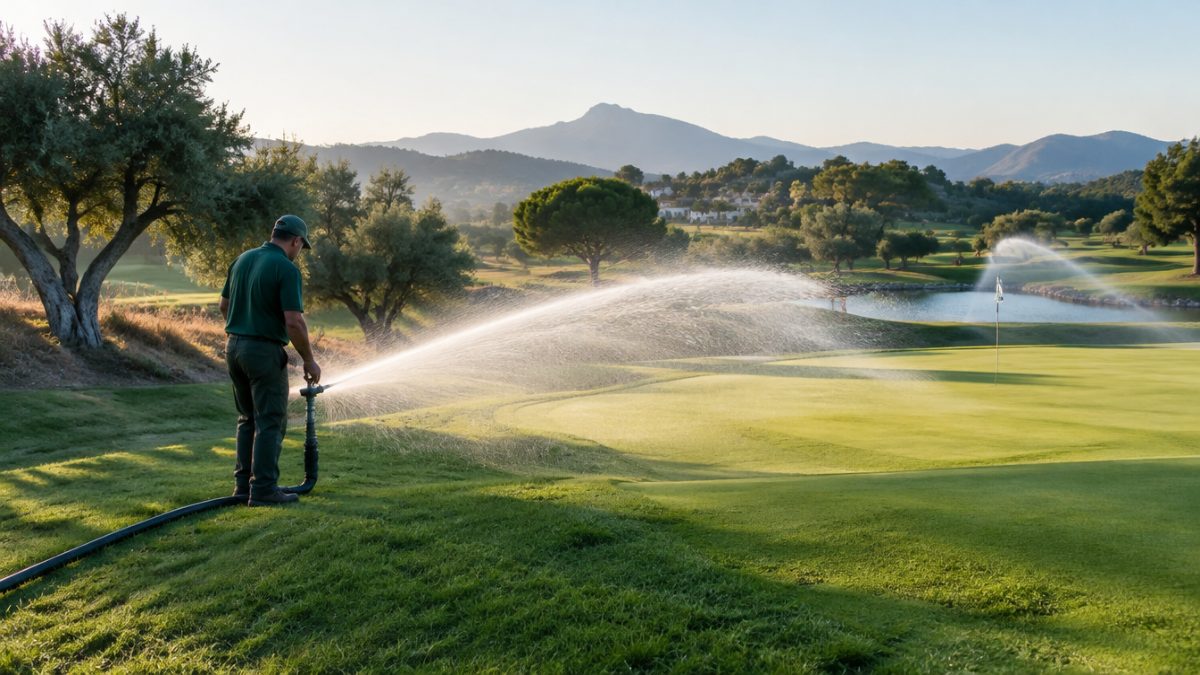
If one task defines the greenkeeper tasks in July, it is irrigation. The strategy is to supply the water needed to sustain the plant without creating a waterlogged environment, with early-morning irrigation and daily adjustments according to demand.
- Check every morning that all zones have irrigated correctly.
- Fix blockages, leaks and misaligned sprinklers straight away.
- Use hand watering on critical spots so as not to over-irrigate whole areas.
- Respect the priorities: greens, tee boxes and playing areas first, then roughs.
When water is limited, deciding in advance which areas get priority avoids improvised decisions under pressure. A practical example: agree with management before summer that in the event of restrictions greens and tee boxes will be protected and the rough will be allowed to turn yellow. That prior agreement, part of the greenkeeper tasks in July, avoids arguments when the heat bites.
Protecting greens: heights, rolling and less aggression
Among the greenkeeper tasks in July, caring for greens means reducing all unnecessary aggression. Raising the cutting height slightly, spacing out the most demanding passes and relying on the roller to maintain speed are common decisions.
Avoid deep operations in the middle of a heatwave unless there is a very clear reason and the technical adviser backs it. A green weakened by heat needs rest, not more stress, and that is one of the central ideas of the greenkeeper tasks in July. If there are tournaments, negotiate realistic speed targets for the time of year with the golf department in advance. Many players accept a slightly slower green if they know it guarantees good condition in September; the hard part is explaining it afterwards, not beforehand.
Night-time moisture, dew and summer diseases
Warm, humid nights favour certain diseases, especially in cool-season turf. Controlling prolonged leaf wetness is an effective form of prevention.
- Irrigate in the early hours so the leaf dries quickly in the morning.
- Remove dew with light passes where it is common.
- Improve air circulation by pruning or removing obstacles.
- Avoid waterlogging and surface compaction.
For any plant protection intervention, always follow the label, current regulations and the judgement of an authorised adviser, noting each application clearly.
Prudent nutrition in the greenkeeper tasks in July
Fertilisation is done with great caution. In cool-season turf, excess nitrogen in the dog days can be counterproductive; in warm-season species such as bermudagrass, kikuyu or paspalum, growth is still active and demand is higher, but always with balance.
- Split into small, frequent doses.
- Give importance to potassium and micronutrients that help against stress.
- Avoid applying in the hours of greatest heat.
- Base decisions on soil and water analyses, without repeating recipes from other years.
If the irrigation water is saline or of limited quality, watch for salt build-up and schedule leaching when the system and regulations allow.
Daily monitoring and early detection
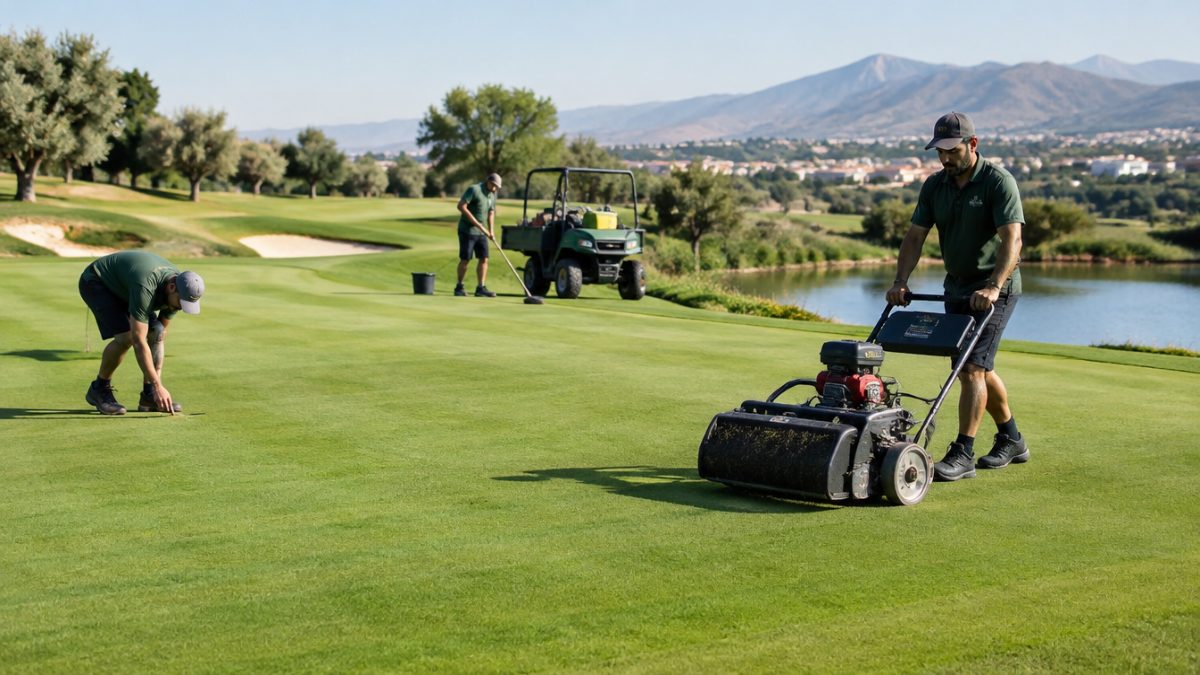
July does not forgive late problems. A dawn inspection round, with attention on greens, tee boxes and exposed areas, lets you detect patches, dry spots and traffic damage before they spread.
It is worth noting what you see, even if only with a photo and a sentence. Over the weeks, those notes help you understand which areas suffer first, at what time and why. It is valuable information for planning next summer and for justifying investment in irrigation, drainage or trees. Among the greenkeeper tasks in July, this is the one that takes the least time and leaves the most learning. The sooner a problem is detected, the fewer resources it takes to fix it.
Machinery: avoiding stoppages at the worst moment
In the heat, machines work harder and break down more. Among the greenkeeper tasks in July, keep to a strict routine of checks.
- Clean radiators and air filters regularly.
- Monitor temperatures, levels and the condition of hydraulic hoses.
- Keep cylinders sharp, as a torn cut aggravates turf stress.
- Have essential spare parts and a plan B if a critical machine breaks down.
An attentive mechanic and a breakdown log save a lot of grief over the season. If a greens mower fails, deciding in advance which one replaces it and who adjusts the heights keeps the greenkeeper tasks in July from being delayed all morning.
Looking after the team and communicating with the club
The last job of the month is the most human. Long days in the sun call for adapted shifts, hydration, breaks and attention to symptoms of heat exhaustion. A tired team makes mistakes and gets injured.
Informing management and members about what is being done and why reduces tension. Explaining that the cutting height has been raised to protect the greens, or that certain operations are being postponed until the heat eases, avoids misunderstandings. With good communication and a realistic division of tasks, the team reaches September with the course in good condition and the energy to begin the autumn season.
Further reading: AEMET. Extreme temperature warnings from AEMET, Spain's State Meteorological Agency, help you reorganise shifts and irrigation on the hardest days of summer.
Frequently asked questions
What are the most important greenkeeper tasks in July?
Water management, protecting greens from stress and daily monitoring top the list. Then come prudent nutrition, machinery maintenance and looking after the team. If resources are limited, protect first what defines play: greens, tee boxes and teeing areas.
Should you lower or raise the cutting height in July?
In general, in intense heat the cutting height is raised slightly to reduce stress, especially in cool-season turf. To maintain speed, use the roller and less aggressive passes. The decision depends on the species, the condition of the plant and the demands of play.
How can you reduce water use without harming the course?
With early-morning irrigation, well-checked sprinklers, targeted hand watering and clear priorities by zone. Measuring and recording consumption helps detect leaks and imbalances. Among the greenkeeper tasks in July, adjusting irrigation to real demand usually saves a lot of water without the turf noticing.
Keep reading
- Greenkeeper tasks in June: key jobs Greenkeeper Tasks in June: 7 Key Jobs
- Greenkeeper tasks in May: key jobs Greenkeeper Tasks in May: 7 Key Jobs
- Evapotranspiration in golf: keys to irrigating just enough Evapotranspiration in golf: 5 keys to watering just right