
There is a lot of talk about artificial intelligence in greenkeeping, and not always with rigour. Between the promises of courses that run themselves and the distrust of those who think it is all marketing, there is a very useful middle ground: tools that analyse data, detect patterns and save office time.
We outline seven realistic uses, what they need in order to work well, what limits they have and why, before thinking about algorithms, the first step is to have the course’s information organised and accessible.
What artificial intelligence in greenkeeping really means
That name groups together techniques that learn from data to classify, predict or summarise. On a golf course, that translates into systems that recognise patterns in images, estimate trends from records or draft text from notes.
Two ideas are worth fixing from the start. First: these tools are only as good as the data they receive. Second: they support decisions, they do not replace the greenkeeper. A model does not know the history of your greens or the microclimate of each hole, and it does not answer for the consequences of a wrong decision.
That is why artificial intelligence in greenkeeping should be seen as a tireless assistant for analysis and writing tasks, freeing up time for what really requires a professional eye: walking the course, talking to the team and deciding.
Use 1: analysing turf images
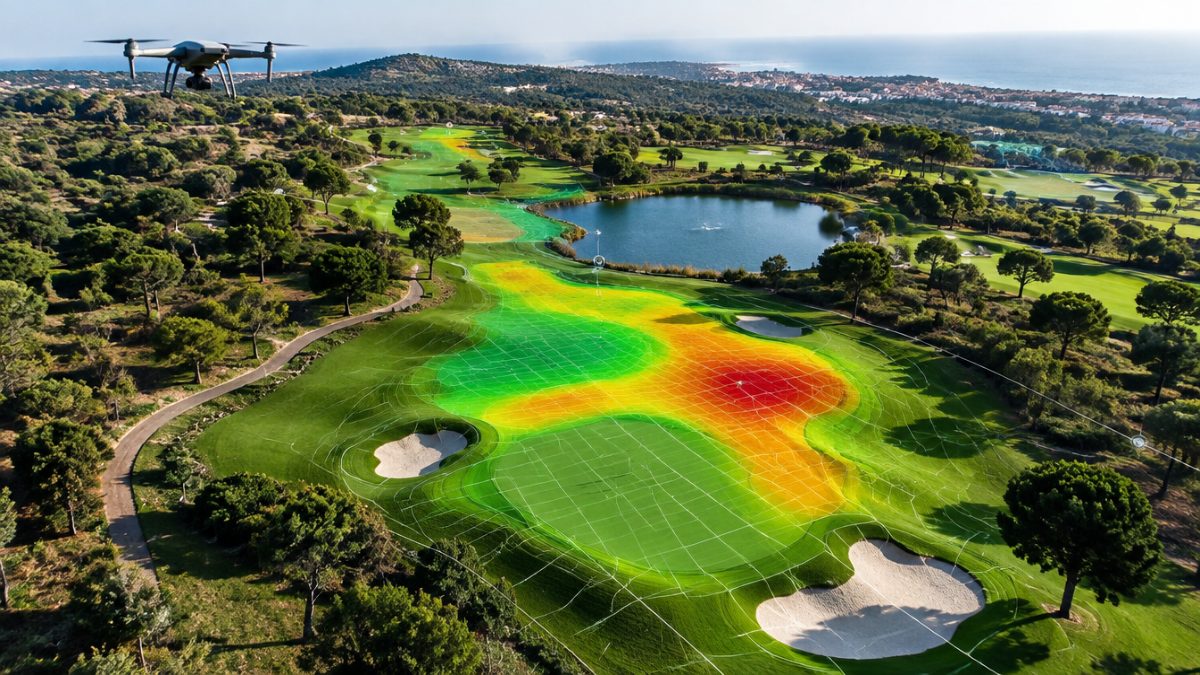
Vision systems let you compare photographs taken with the same criteria and detect changes in colour, density or stressed areas. They are especially useful when accompanied by aerial images or fixed-point cameras.
Their real value is in comparison: they will not tell you there is a specific problem, but they will tell you something has changed in that area compared with last week. From there, in-person inspection remains essential.
To get the most from it, define fixed capture points and times, with similar light and the same angle. If every photograph is taken differently, the analysis will compare things that are not comparable, and artificial intelligence in greenkeeping will end up flagging differences in lighting and not in turf.
Use 2: anticipating irrigation demand
By combining weather data, evapotranspiration and irrigation records, support models can suggest adjustments to scheduling. Even so, artificial intelligence in greenkeeping should not take control of the installation without supervision.
- Useful for proposing scenarios and comparing consumption between weeks.
- Limited if the sensors or the rainfall data are unreliable.
- Dangerous if applied without checking against the real condition of the soil.
Use 3: organising the history of tasks and treatments
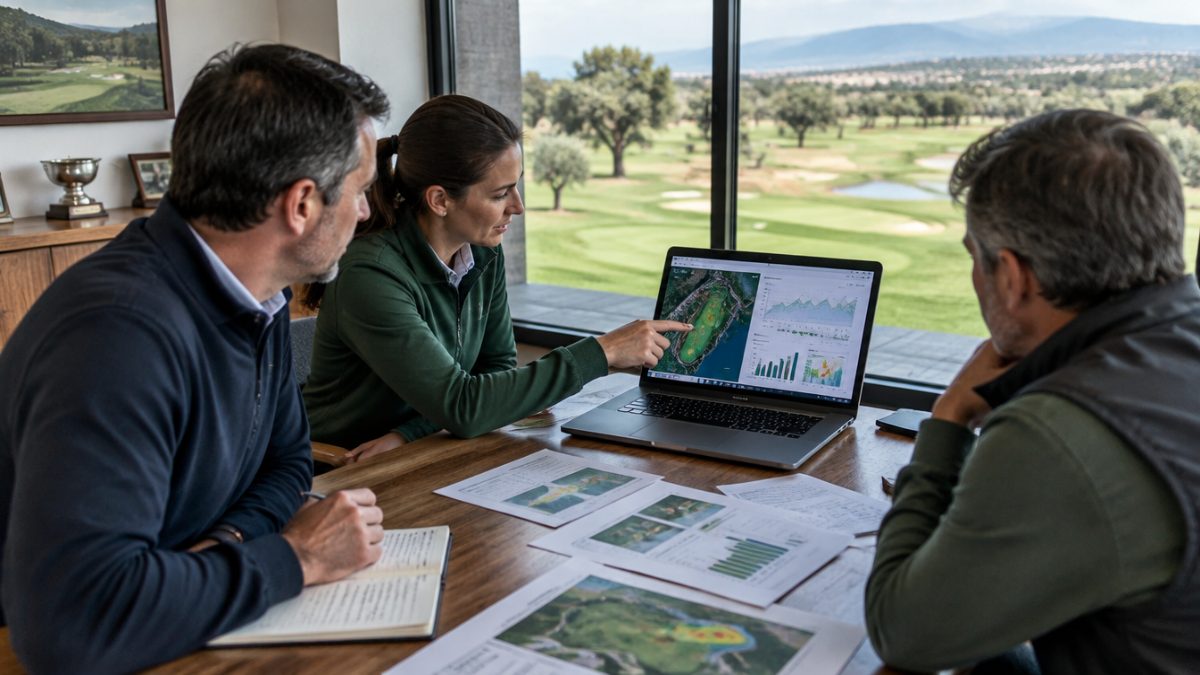
Many courses accumulate years of notes on paper, in spreadsheets and in scattered messages. Analysis tools can help classify that information, find patterns and answer questions such as how many hours were spent on a task in a particular area.
The key is for the data to be consistent. When everyone records in their own way, not even the best technology can draw reliable conclusions. Standardising names of areas, tasks and units is an upfront investment that pays off quickly.
A simple example: if one report says “fairway 3”, another “hole 3 fairway” and a third “f3”, no tool will know they refer to the same place. Unifying a catalogue of areas and tasks is the first step, and it is worthwhile with or without artificial intelligence in greenkeeping.
Use 4: helping to identify health risks
Crossing environmental conditions, problem history and field observations makes it possible to detect periods and areas of higher risk. That way, the team can step up monitoring where it is most needed.
It is a support for prioritising observation, never a definitive diagnosis. Any plant protection intervention must be decided by an authorised adviser, applied according to the label and comply with current regulations. Within artificial intelligence in greenkeeping, this is probably the area where most care is needed with expectations, because a false alert or a missing alert has real consequences for the turf.
Use 5: writing reports and communications
One of the most immediate uses of artificial intelligence in greenkeeping is in the office: summarising team notes, preparing draft reports for the green committee or adapting the same message to different audiences. It reduces hours of writing, but requires human review.
- Provide real, verified data.
- Check figures, names and dates before sending.
- Adjust the tone to the recipient: management, members or suppliers.
Well used, artificial intelligence in greenkeeping turns an hour of writing into ten minutes of review, and that difference, repeated every week, adds up.
Use 6: planning tasks and machinery maintenance
With the history of hours of use, breakdowns and servicing for each machine, analysis can point out which units need attention sooner than expected. It also helps distribute tasks among staff considering past workloads.
Once again, usefulness depends on the quality of the record. If operating hours are not noted, prediction has no basis. A good starting point is the service record for each unit.
In practice, a mechanic with a clean history of sharpenings, oil changes and breakdowns can anticipate spare parts purchases and plan downtime in the weeks of lowest activity. Artificial intelligence in greenkeeping only amplifies that prior order; it does not create it.
Use 7: training and quick reference to procedures
The seventh use is the most discreet: looking up procedures, summarising manuals or preparing training material for new operators. It helps speed up the onboarding of seasonal staff.
That said, whatever a digital assistant produces should be checked against reliable technical sources and your own experience. Texts can sound convincing and contain errors. On matters of safety, products or regulations, the last word belongs to the manufacturer, the adviser and current legislation.
Before adopting any tool, define which problem you want to solve, which data the team will provide and who will validate the results. Artificial intelligence in greenkeeping works when it answers a specific need, not when it is installed because it is fashionable.
Further reading: FAO. The FAO publishes information on digitalisation and efficient use of resources in agricultural management.
Frequently asked questions
Can artificial intelligence in greenkeeping replace the greenkeeper?
No. It provides analysis and automates repetitive tasks, but it does not know the microclimate of each hole, the history of the course or the club's priorities. The final decision, and the responsibility that comes with it, remains with the professional, who checks any suggestion against direct observation of the turf.
What do I need to start using artificial intelligence on the course?
First comes organised data: records of tasks, irrigation, machinery and observations with consistent criteria. Then, a specific problem to solve and a person to validate the results. Without that base, the tool will produce unreliable conclusions, however advanced the technology.
Is artificial intelligence in greenkeeping safe for deciding treatments?
Only as support for prioritising monitoring. Decisions about plant protection treatments belong to an authorised adviser and must comply with the product label and current regulations. An automatic recommendation should never be applied without professional verification and without checking the real situation on the course.
Keep reading
- drones on golf courses and their applications Drones on golf courses: 6 valuable applications
- evapotranspiration to water just right Evapotranspiration in golf: 5 keys to watering just right
- daily greenkeeper planning Daily greenkeeper planning: 6 effective steps