
On many courses along the Mediterranean coast, palm trees are not decoration: they mark entrances, fairways and social areas. That is why the red palm weevil worries maintenance teams so much. It is an insect whose larvae develop inside the trunk and, by the time symptoms show from the outside, the damage is usually far advanced.
Here you will find five prevention measures the course department can take on: inventory, monitoring, good pruning practice, coordination with the authorities and recording of everything that is done. All under one clear principle: fighting the red palm weevil takes persistence more than heroics.
How the red palm weevil works and why it is detected late
The red palm weevil is a beetle that attacks mainly palms of the genus Phoenix, and other species to differing degrees. The female lays her eggs in wounds or tender areas of the palm, and the larvae dig galleries inside, weakening the structure until the crown collapses.
The difficulty of controlling the red palm weevil lies in the fact that the cycle takes place largely hidden. The first visible signs, such as yellowing central fronds, an off-centre crown or chewed fibre debris, normally indicate an infestation that is already established.
For that reason, prevention and early detection carry more weight than any curative action. And the specific measures depend on the pest regulations in force in your autonomous community, which you should check with the competent authority.
Measure 1: inventory and map of the course's palms
You cannot protect what you have not located. Draw up an inventory of every palm: species, location, approximate height, general condition and date of the last inspection. A simple numbering on a course map already lets you organise efficient inspection routes.
Prioritise by landscape value and by risk. Palms next to fairways, tee boxes or public areas have a double priority: they are the most visible and the most dangerous if they fail. Update the inventory every time a specimen is removed, transplanted or planted. With this map, any report of red palm weevil is located within minutes and the team knows which neighbouring specimens to check next.
- Identification code and photo of each palm.
- Status: healthy, suspect, affected or removed.
- History of inspections and actions.
Measure 2: regular monitoring and warning signs
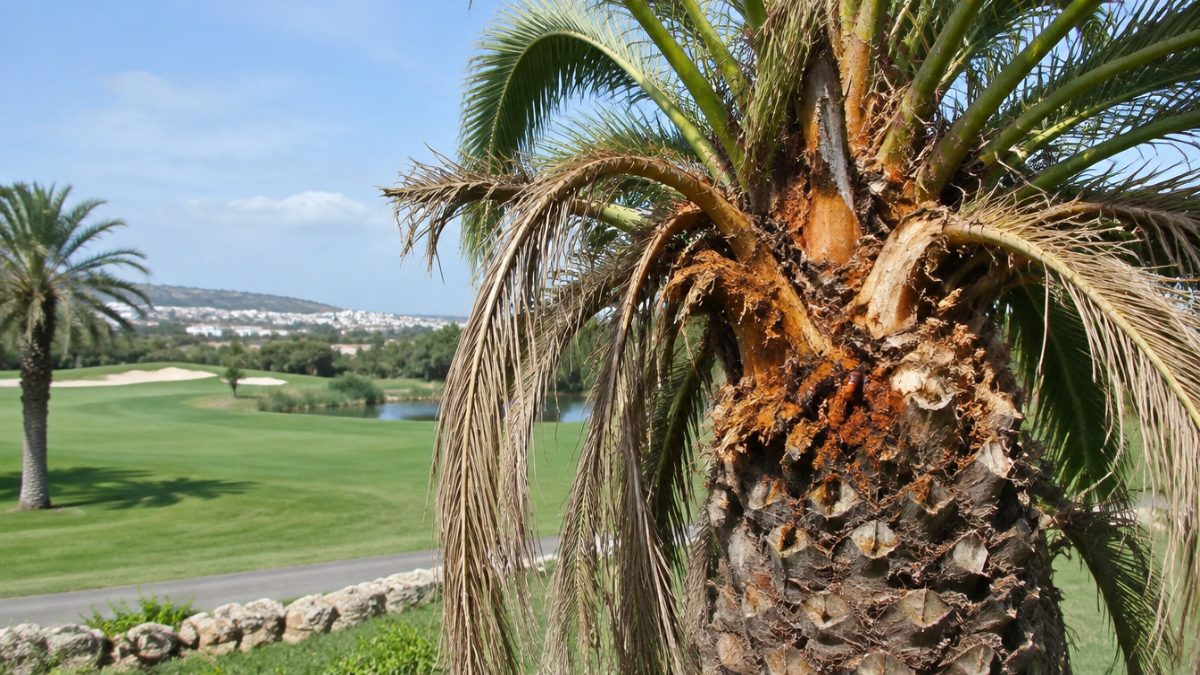
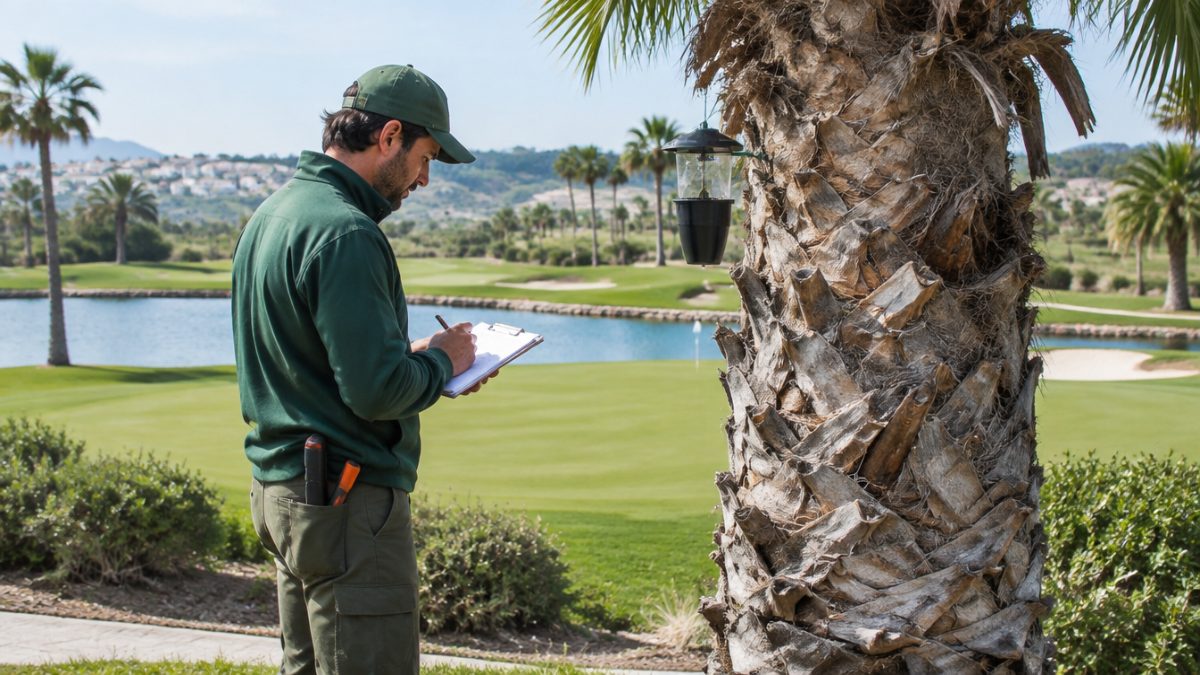
Monitoring for the red palm weevil needs a method. Set a reasonable inspection frequency, more intense in the warm months, when the insect is most active. Train all staff to recognise symptoms and report them, not just whoever looks after the trees: the mower operator passes the palms every day.
Signs that warrant an immediate alert:
- Central (youngest) fronds that bend over or dry out.
- A crown with the look of an open umbrella, or lopsided.
- Gnawed fibres, holes or brown liquid with a fermented smell at the base of the fronds.
- Chewing noise inside in advanced cases.
At any suspicion, alert a competent technician and the relevant authority, without handling or moving infested plant material on your own.
Measure 3: pruning with care so as not to attract the insect
The smell of fresh wounds attracts the adult. That is why pruning palms must be planned carefully: at the time indicated by the regulations and plant health technicians, avoiding unnecessary cuts and disinfecting tools between specimens.
Keep pruning to the bare minimum, removing only dead fronds or those at risk of falling, and do not make flush cuts that leave large wounds. When an intervention is unavoidable, the material removed must be managed as the authorities determine, never piled up in a corner of the course.
This is one of the simplest measures and, at the same time, one of the most neglected when the team is in a hurry to leave the course immaculate before an event. If you are going to plant new palms, also consider the origin of the plant material and its health status, because a specimen bought without guarantees can bring the red palm weevil to healthy palms on the course.
Measure 4: coordination with technicians and the authorities
The fight against the red palm weevil is usually regulated, since it is a pest of general concern, and in many areas there are obligations to report and to act. Identify your contact at the regional department or plant health service and keep a channel open.
Any preventive or curative treatment must be carried out following the label, current regulations and the advice of an authorised technician or adviser, with applicators who hold the required training. Avoid improvising mixes or repeating applications on your own: besides being ineffective, it can be counterproductive for other organisms and for the safety of people.
If there are palms in areas bordering the course, also inform the neighbours and the community. A nearby outbreak affects the pest pressure on your own trees.
Measure 5: recording and traceability of every action
Everything that is done must be written down: inspection dates, specimens checked, findings, alerts sent, pruning interventions and treatments with the person responsible. That history is gold when you have to justify decisions to the green committee, an insurer or an inspection.
A well-kept record also reveals patterns: outbreaks that recur in the same area, palms that fall ill after a particular pruning, or periods with more incidents. With that information you can adjust the monitoring and assign the team’s time where it is needed most.
Controlling the red palm weevil is, at heart, an exercise in organisation: consistent inspections, quick communication and a written memory. Those who document well react sooner.
Further reading: FAO. The FAO offers general information on plant health and invasive pest control that helps place this problem in its international context.
Frequently asked questions
How can the red palm weevil be detected in time?
With regular checks of the crown and the base of the central fronds, looking for bent young fronds, gnawed fibres or brown exudates. The sooner a competent technician is alerted, the more options there are to act. Once the crown has collapsed, the margin for recovery is very slim.
Can a palm be pruned at any time?
It is not advisable. With the red palm weevil present in the area, wounds attract the insect, so pruning should be limited to what is necessary and carried out at the time indicated by the regulations and the plant health technicians in your area, with disinfected tools and proper disposal of the waste.
Who should apply treatments against the red palm weevil?
Staff with the required training and authorisation, always following the label, current regulations and the judgement of an authorised adviser. The course crew should limit itself to monitoring, alerting and recording, avoiding improvised applications that may be ineffective or illegal.
Keep reading
- Integrated pest management on golf courses Integrated pest management in golf: 6 key steps
- How to keep a record of plant protection treatments Pesticide Application Records: 6 Key Data Points
- Tree management in golf Tree management on golf courses: 6 pruning criteria