
Every fleet reaches a point where repairing costs more than replacing, although you almost never notice the exact day that line is crossed. Deciding when to replace the machinery fleet is one of the most delicate conversations between the greenkeeper and management: there is a lot of money at stake and cut quality depends directly on the condition of the machines.
Here are six keys for approaching the decision sensibly: know the real condition of each unit, calculate its total cost, prioritise, compare purchasing options, plan the transition and build a solid case for the committee. These are general criteria that each course will adjust to its size, climate and budget.
Know the real condition of each machine before thinking about replacement
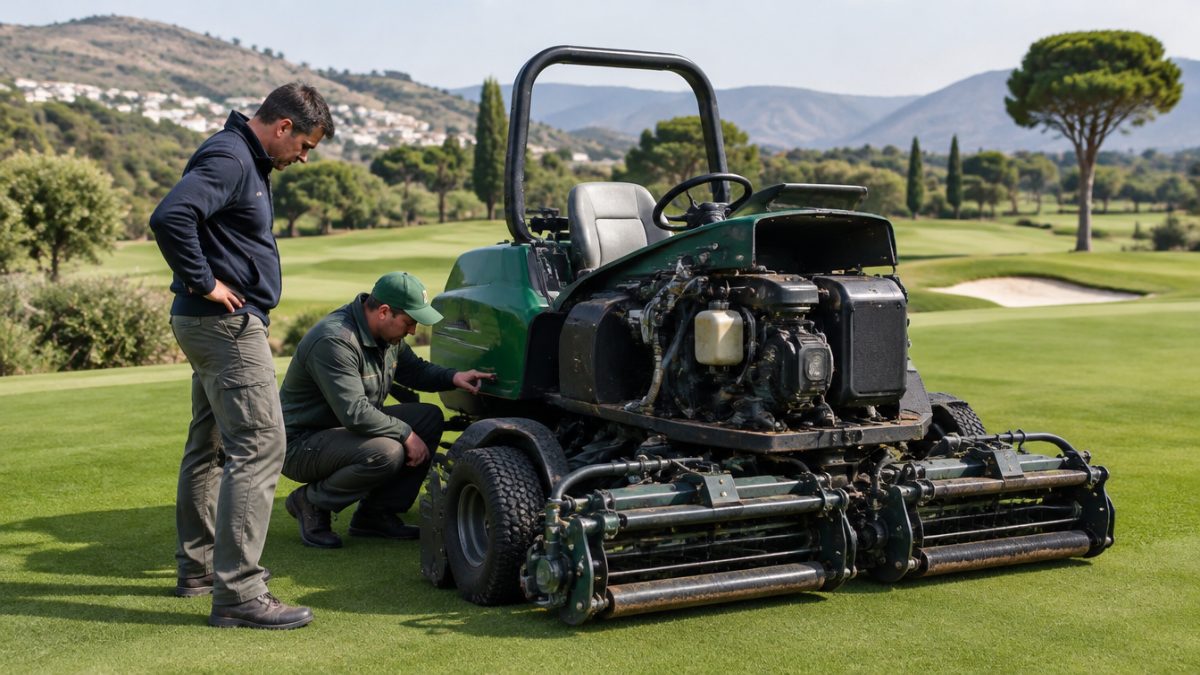
You cannot decide by eye. Before considering replacing the machinery fleet, build an inventory with a card for each unit: make, model, year of purchase, accumulated hours of use, general condition, recent breakdowns and worn critical parts. Ask the operators for their opinion, because they know which machine vibrates, which loses power and which has to be raised at every service.
Distinguish between cut-quality machines, such as greens, tee and fairway mowers, and support machines, such as tractors, utility vehicles or trailers. The former directly affect the playing surface and the club’s image; the latter mainly affect the crew’s efficiency.
Calculate total cost before replacing the fleet, not just the purchase price
The most common mistake is to compare a new machine with an old, fully depreciated one and conclude that the old one is free. It is not. To replace the machinery fleet sensibly, add up what it costs to keep each unit running:
- Repairs and spare parts over the last period.
- Mechanic hours and machine downtime.
- Fuel and consumables, which tend to be higher on older units.
- Loss of cut quality, or re-work that was not needed before.
- Residual value when selling it or trading it in on the purchase.
With that figure per working hour, compare it with the estimated cost of a new unit. Often the difference is smaller than it looks, and at other times it is overwhelming.
Prioritise with a simple criticality matrix
There is no budget to replace the whole machinery fleet at once, so it pays to set an order. Rate each machine on its impact on playing quality, reliability, safety risk and maintenance cost. A greens mower that leaves an uneven cut weighs more than a utility vehicle that still does the job.
A three-level matrix works well: replace now, replace next financial year and keep under watch. Review the classification every year, because a machine that is fine today can move into the critical zone after a major breakdown.
Compare options: purchase, rental, leasing or second-hand
When the time comes to replace the machinery fleet, outright purchase is not the only route. Rental and leasing spread the cost into instalments and usually include maintenance, which makes budget control easier, in exchange for a financing cost and terms that need to be read carefully. Buying second-hand can be a reasonable option for support equipment, as long as you check the history and the real hours.
Ask for several quotes when replacing the fleet, and compare after-sales service, parts availability and response time in case of a breakdown. A cheap unit with the workshop hundreds of kilometres away can end up costing more than a slightly pricier one with nearby support.
Plan the transition so you do not disrupt operations
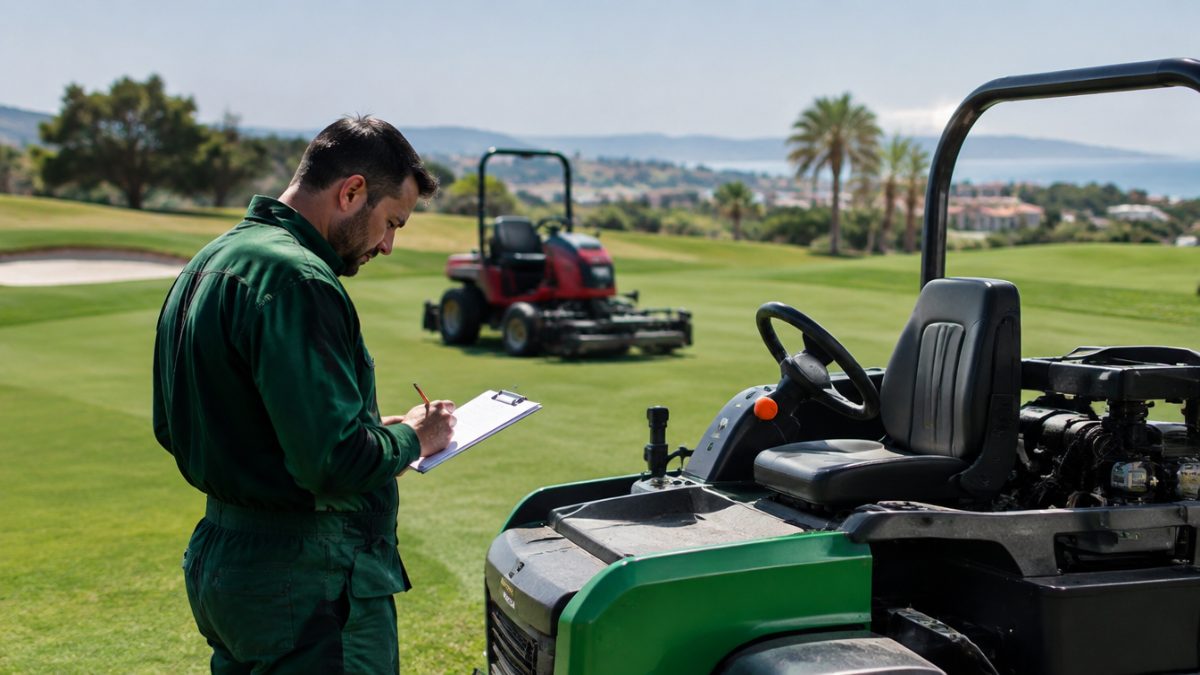
When replacing the machinery fleet, the best machine on the market is no use if the crew does not know how to use it or if it arrives in the middle of peak season. Schedule delivery for a lower-pressure period and set aside time to train operators and the mechanic in operation, adjustment and preventive maintenance.
Think about compatibility too: shared attachments, implements and spare parts across models reduce parts stock and simplify training. If you are going to replace the fleet in phases, try to keep some uniformity of brands and configurations, and decide what to do with the old units: sell them, keep them as backup or scrap them.
Build the case for the committee with your own data
To replace the machinery fleet, a committee or an owner responds better to numbers than to complaints. To defend the plan, present a summary with the accumulated maintenance cost per machine, downtime hours, the impact on cut quality, the safety risk and a proposed schedule with scenarios: what happens if you replace this year, next year or never.
Avoid promising exact savings; it is more honest to talk about ranges and risks. Also set out what is lost by postponing: more breakdowns in the middle of the season, poorer cut quality and extra pressure on the workshop. That comparison is usually more persuasive than any catalogue.
Keep the new fleet in good condition from day one
Replacing the machinery fleet makes sense only if the new fleet is looked after. From day one, define a preventive maintenance plan with hour-based servicing, blade sharpening and reel adjustment according to the manufacturer’s recommendations, and assign responsibilities. A new machine without a plan deteriorates just as fast as an old one.
Record every intervention and every breakdown, so that in a few years the next replacement decision is based on a complete history and not on the mechanic’s memory.
Further reading: GCSAA. To compare good practice in equipment management and maintenance budgets, you can consult the GCSAA superintendents' association.
Frequently asked questions
How often should the machinery fleet be replaced?
There is no universal timeframe. It depends on hours of use, the type of machine, the climate and how well it has been maintained. A useful reference is to watch when annual maintenance cost and downtime begin to rise steadily: that is usually the time to start planning the replacement.
Which machines should get priority?
Those that most affect playing quality and safety, such as greens and tee mowers, usually come first. Next come those with repeated breakdowns or long downtime. Support equipment can wait if it remains reliable. The real priority comes from crossing impact, reliability and maintenance cost.
Is rental worthwhile for replacing the machinery fleet?
It can be if the club prefers predictable instalments, needs maintenance included or does not want to tie up capital. You need to assess the total financing cost, the conditions of use, the maximum hours and what happens at the end of the contract. Compare it with purchase and other options before deciding.
Keep reading
- Complete guide to turf maintenance on golf courses Complete guide to turf maintenance on golf courses
- How to prepare a golf course for peak season How to prepare a golf course for peak season
- Software for greenkeepers Software for greenkeepers: 3 keys to the importance of software in golf course and facility maintenance management