
At seven in the morning the course belongs to the machines; at eight, to the players. In that shift change lie many of the complaints a head greenkeeper receives: the mower cutting right on the fairway where a group is playing, the bunker half raked, or the slow group that blocks the work. Coordinating pace of play and maintenance is, in practice, a logistics task.
We suggest five ways of approaching it with good judgement: schedules, routes, communication, clear rules and follow-up with data. There is no universal solution, but there are principles that work on most courses, from a private nine-hole course to a resort with heavy turnover.
Pace of play and maintenance: start with the clock
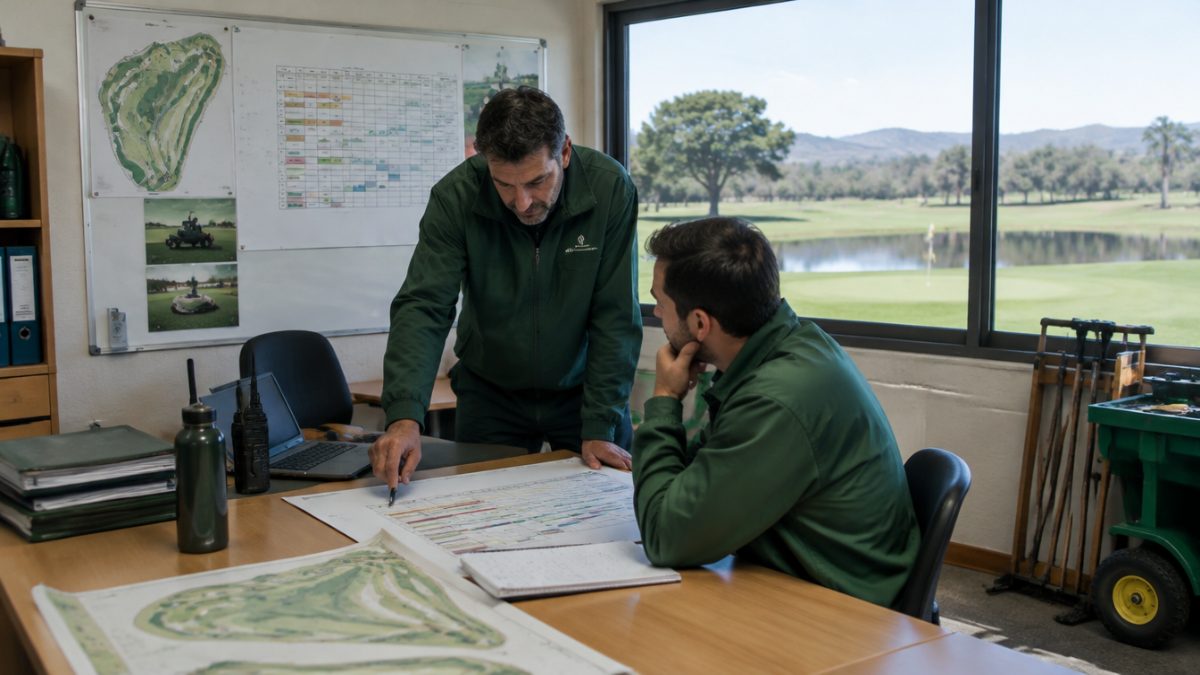
The basis of coordination is a realistic timetable. If the first tee times coincide with the end of green mowing, conflict is guaranteed. Draw up a schedule showing, hole by hole, when the course crew will be there and when the first groups will come through.
- Work out how long each task really takes, not how long it is believed to take.
- Leave a buffer between the last job on a hole and the arrival of the first players.
- Distinguish between low- and high-traffic days, and adjust the plan accordingly.
- Review the schedule when tee times or the season change, because sunrise moves.
- Include dead time in the schedule: transfers, refuelling and minor breakdowns tend to eat up the planned window.
A well-made schedule is the basic tool for making sure pace of play and maintenance do not depend on improvisation every morning.
A common case: in summer the crew starts earlier to avoid the heat, which helps the turf and the people, but means the entire sequence of tasks has to be reviewed.
Design routes that do not clash with groups
Not all tasks have to be done in course order. If the first group tees off on the first, starting at the tenth can free up space and avoid crossings. Likewise, noisy or slow tasks, such as mowing tee boxes, can be scheduled in areas away from the first tee times.
- Set work sequences that leave the starting holes clear as soon as possible.
- Avoid long tasks on the busiest holes during peak hours.
- Agree with the starter on the release of the first groups to respect the work window.
When a task runs long, it is better to interrupt it and leave a hole in good condition than to leave it half done in full view of the players. This logic is especially useful at weekends and on tournament days, when pressure on pace of play and maintenance is greater and any delay is felt throughout the round. A good trick is to always keep two or three holes in reserve where the crew can make up time without getting in the way.
Communicate with everyone before the problem arises
A large share of conflicts between players and the course crew stem from lack of information. Informing well is the cheapest way to protect pace of play and maintenance. A player who knows why the green is a little slow, or why an area is closed, usually accepts it; one who finds the surprise at the door does not.
- Post notices at reception, in the pro shop and on the club’s channels with the planned tasks.
- Inform the starter and marshals of closed areas or special works.
- Give the course crew signs and ropes to mark off areas under repair.
- Be clear in tone: a short, friendly message prevents more misunderstandings than a long rulebook.
Pace of play and maintenance improve when reception, the starter and greenkeeping speak the same language and share the same information every morning.
Set ground rules for players and operators
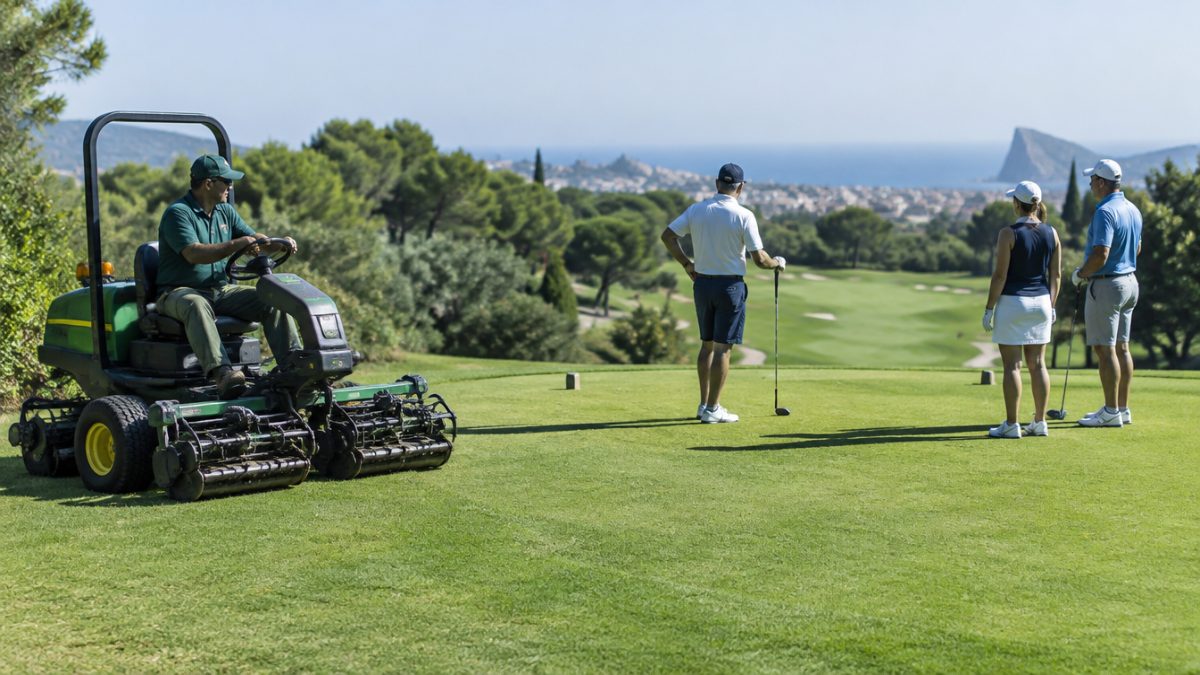
Ground rules protect both sides and are the backbone of any agreement on pace of play and maintenance. Operators need to know how to act when a group reaches the work area; players, how to behave around a machine. Putting it in writing avoids standards that change depending on who is on duty.
- Define whether the operator should stop and give way or carry on and signal to the group.
- Establish the standard signal or gesture to indicate that the player can play.
- Agree with management what to do about a slow group that prevents work.
- Include safety training: speed, minimum distance and visibility.
All of this should fit within the work procedures and the course’s occupational risk prevention policy.
Measure, review and adjust with data
Perceptions are no use for renegotiating schedules with management. Data is. Serious tracking of pace of play and maintenance lets you move from isolated complaints to concrete proposals. If you record the start and end times of each task, the interruptions and the source of the delay, you can decide sensibly whether to bring shifts forward, strengthen the team or reorganise the sequence.
- Note the real duration of tasks and the causes of interruption.
- Cross-reference that information with course occupancy and round times.
- Review from time to time whether the agreed time slots are still viable.
- Share a simple summary with management to make joint decisions.
Balancing pace of play and maintenance is not about one side always giving way, but about finding the split of time that protects the quality of the course without harming the player’s experience.
Further reading: R&A. The R&A gathers general guidance on pace of play on its website that can serve as a starting point for agreeing rules at the club.
Frequently asked questions
How does pace of play and maintenance affect course quality?
When pace of play and maintenance are not coordinated, if tasks are rushed or constantly interrupted by players, quality drops: poorly finished cuts, half-done bunkers and less time for detail. When coordination is good, the crew works more calmly. A realistic timetable protects both the condition of the course and the playing experience.
Who decides the order of tasks in the morning?
Usually the head greenkeeper defines it, in agreement with management and the person in charge of tee times. The order should take into account the time of the first tee time, expected traffic, the weather and the priority of each task. Documenting it in a daily plan helps the whole team know what is due each day.
What do I do if a slow group blocks the crew's work?
First, apply the protocol agreed with management: the operator politely gives way and alerts the marshal or starter if it keeps happening. It is not wise to argue with players on the course. What helps is recording the incident, because pace of play and maintenance are managed with facts, and then reviewing with management how to improve them in those time slots.
Keep reading
- Daily planning for the greenkeeper Daily greenkeeper planning: 6 effective steps
- Pin positions: how to rotate them well Pin Positions: 6 Criteria for Rotating Them Well
- How to prepare a golf tournament Preparing a Golf Tournament: 8 Maintenance Tasks