
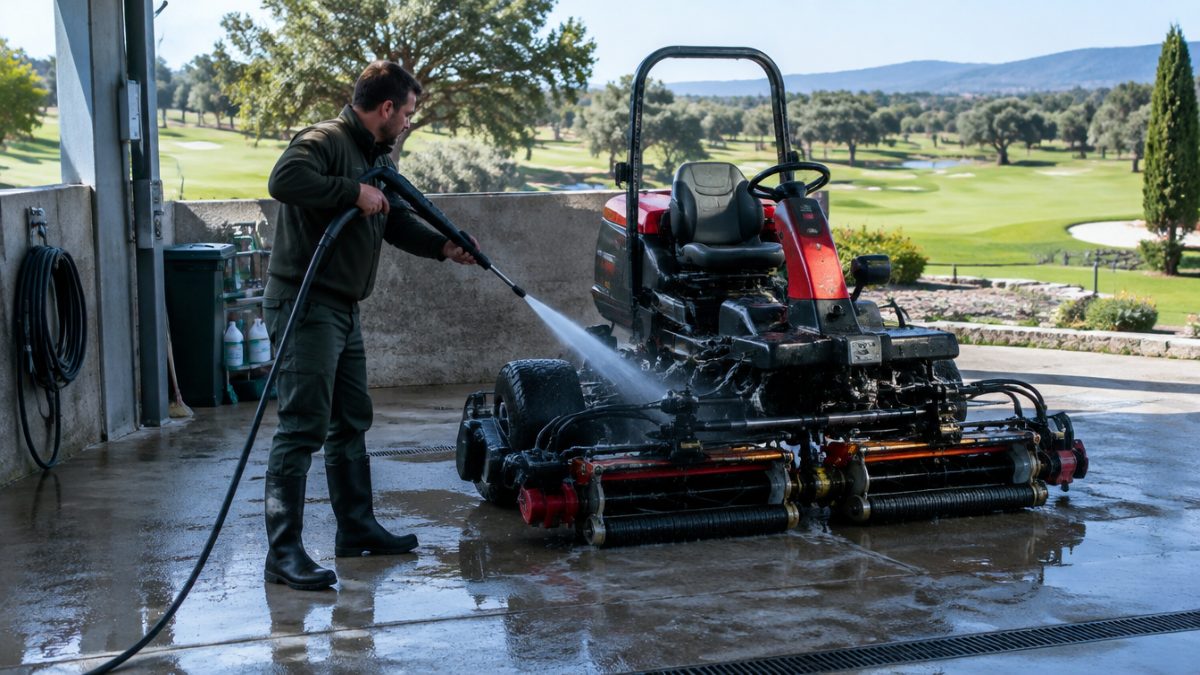
At the end of each day, the course machines return to the workshop covered in grass, mud, grease and, sometimes, residues of treatment products. Washing them is essential for cut quality and equipment life, but if it is done on any patch of open ground, the runoff ends up in the soil or the drainage. A good machinery wash area avoids that risk and organises daily work.
In this article we go through five environmental and practical requirements that a machinery wash area on a golf course must meet: location, slab, water collection and treatment, waste management and usage routines. It does not replace technical advice or the regulations that apply to you, but it gives you a clear guide to get started.
Choose a location designed for the machinery wash area
The place matters more than it seems. A poorly sited machinery wash area forces long manoeuvres, dirties paths and can bring wastewater close to sensitive points. When choosing the site, consider:
- Distance to lakes, watercourses and water intakes: the further away, the lower the risk of accidental contamination.
- Proximity to the workshop and the chemical store, so the machine circuit is short.
- Slopes: water must flow towards the collection system, not out of it.
- Manoeuvring space for mowers, tractors and spraying equipment.
- Access to water and electricity and to a sewer network, if there is one.
Think also about the operator’s day-to-day: if washing costs time and effort, the temptation to skip the machinery wash area grows. It pays to leave room to grow: it is common for the fleet to increase or change in size over the years, and redoing the area costs more than planning it well.
Impermeable slab and collection of all wash water
The floor of the machinery wash area must be a durable, impermeable surface, normally concrete with the right slope, that prevents oils, fuels or solids from reaching the ground. Joints and edges deserve special attention because they are where water usually seeps through.
A correct design includes:
- Slope towards channels or sumps that collect all the wash water.
- Perimeter kerbs or raised edges that prevent runoff to the outside.
- Separation between clean rainwater and wash water, so the treatment system is not overloaded.
- Partial roofing, if possible, to reduce the volume of rainwater coming into contact with the area.
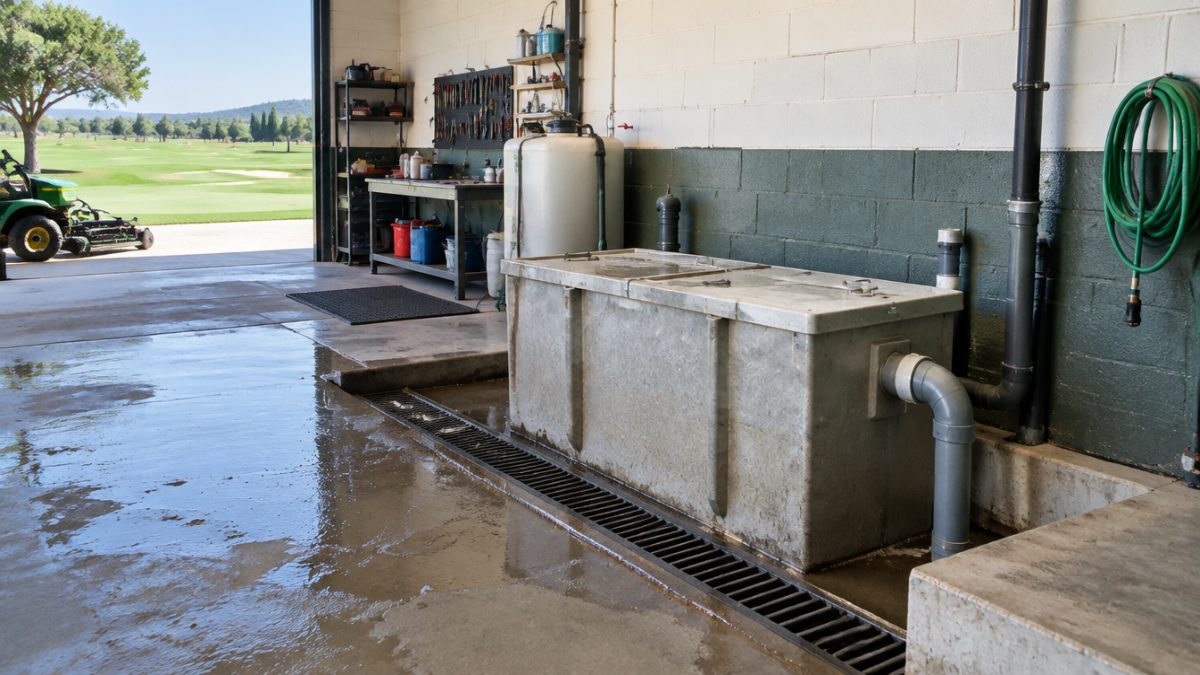
A field detail that gets overlooked is the size of the gratings: if they are too fine they clog with grass every day, and if they are too open they let solids through that end up filling the inspection chamber. Check the slab periodically: cracks and deteriorated joints are an environmental risk and should be repaired without delay.
Treat the water: settling, grease separation and reuse
What leaves a machinery wash area is not clean water. It carries solids such as soil, grass and sand, as well as hydrocarbons and, in the case of sprayers, possible traces of plant protection products. Before any final destination, it must be treated appropriately.
Common systems include:
- Settling chamber to retain solids.
- Oil-water separator for grease and oils.
- Filtration or biological treatment systems, depending on the volume and type of waste.
- Recirculation of treated water for further washing, which reduces consumption.
The destination of the effluent, whether sewer network, authorised waste handler or reuse, depends on local regulations and the permits you hold. Check with the environmental technician or the competent authority before designing the installation.
Manage waste and separate special washes
A machinery wash area generates sludge, filters and absorbents that cannot go into the ordinary bin. Sludge from the chambers and waste containing traces of oil must be removed at the interval set by the system manufacturer and handed to an authorised waste handler.
The cleaning of application equipment deserves separate mention. Tank-mix residues, tank rinsing and the exterior washing of sprayers require a specific procedure, following product labels, current regulations and the advice of an authorised technician or adviser. Whenever possible, tank rinsing should be done in a dedicated area and not mixed with the general washing of mowers.
Label the containers, keep the handler’s delivery notes and define who is responsible for each collection. It is the way to show that the system works beyond the physical installation.
Usage rules, maintenance and record keeping for the installation
Even the best slab is no use if the team does not know how to use it. Write a short set of usage rules and put them where they can be seen. For example:
- First remove dry grass with a blower or brush, before washing with water.
- Use moderate-pressure water and avoid unauthorised cleaning products.
- Do not wash engines or leaking areas without first checking the cause.
- Do not pour oils, brake fluids or coolants into the wash area.
- Leave the area clean and the gratings clear when finished.
Include the installation in your maintenance plan: cleaning of gratings and chambers, checking separators, checking pumps and inspecting the slab. Note dates, tasks and responsible people.
With a simple record you will know when it is time to empty, how long the installation has gone without inspection and which incidents have repeated. A well-kept machinery wash area protects the surroundings, extends machine life and leaves a professional impression during audits or visits.
Further reading: MITECO. For the general framework on water and waste management in Spain, you can consult the Ministry for the Ecological Transition (MITECO)
Frequently asked questions
What should a machinery wash area on a golf course have?
At a minimum, an impermeable sloped slab, a water collection system, settling of solids and separation of hydrocarbons, plus an authorised destination for the effluent. It also pays to have usage rules, accessible gratings and a maintenance plan with a record of cleanings and removals.
Can the water from a machinery wash area be reused?
In many cases it is possible to recirculate treated water for further washing, which reduces consumption. It depends on the treatment system installed and the applicable regulations. It is worth validating the design with an environmental technician and frequently checking the condition of the treated water and the filters.
Where should the sprayer be washed compared with a general machinery wash area?
The recommended approach is to have a specific area or a separate procedure for tank rinsing and the washing of application equipment, following labels, current regulations and the advice of an authorised technician. This avoids product residues ending up in the general wash area system.
Keep reading
- Preventive machinery maintenance: key tasks Preventive Equipment Maintenance: 7 Key Tasks
- Biodegradable hydraulic oil: reasons to use it Biodegradable Hydraulic Oil: 5 Reasons to Use It
- The greenkeeping workshop: order and safety Greenkeeping Workshop: 7 Keys to Order and Safety