
Many golf courses, especially near the coast or in arid areas, irrigate with water that carries more salts than is desirable. Irrigation water salinity rarely gives a dramatic warning: it shows up as dull turf, burnt leaf tips, soils that harden and growing spending on corrections. By the time it is noticed, the problem has been building for a while.
This article proposes six control measures: measure regularly, interpret the analysis properly, manage leaching, look after soil structure, choose species and zones wisely, and protect the system. All can be applied without large investments, although some should be validated with a specialist.
Measure Irrigation Water Salinity Often and at the Right Point
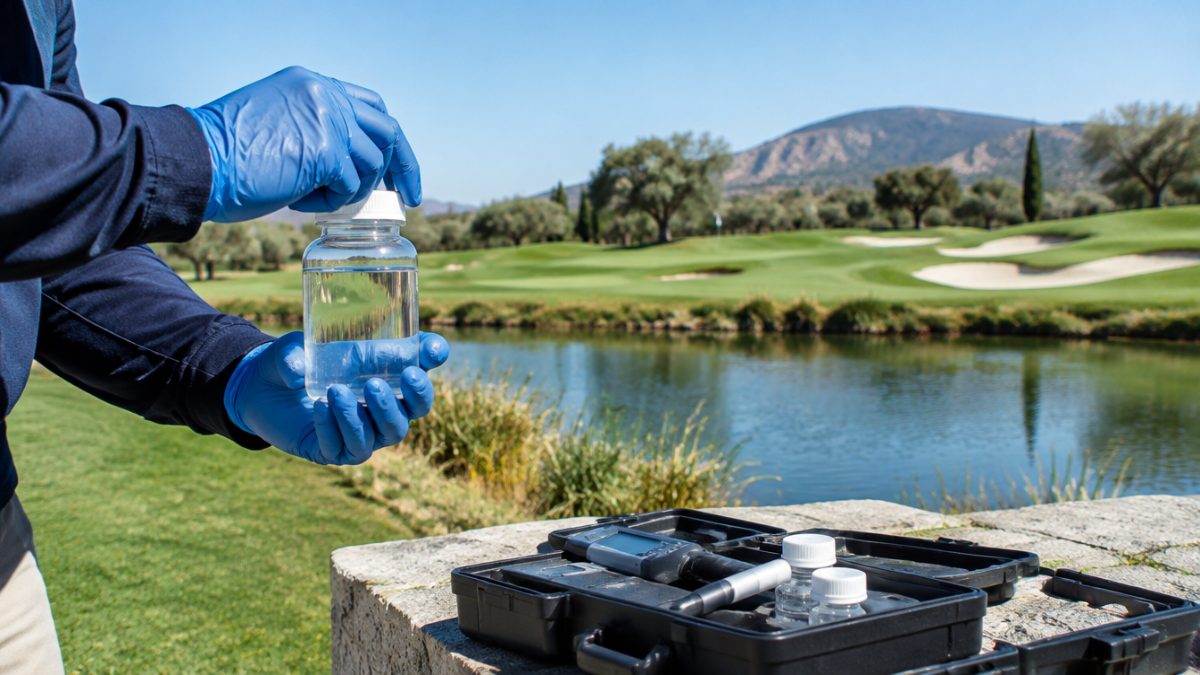
What is not measured is not controlled, and irrigation water salinity is no exception. Irrigation water salinity can vary with the season, the level of the wells or the contributions from the mains supply, so a one-off analysis falls short. It pays to set a testing schedule and always keep the same sampling points.
Start with the basics:
- Measure the electrical conductivity of the water with a well-calibrated conductivity meter.
- Take samples at the source and also in the network, after the tank or pond.
- Occasionally order a full analysis from a laboratory, including the main ions.
- Record date, place, result and conditions, to detect trends.
Measuring soil salinity with the same rigour lets you compare what goes in with what accumulates in the profile. That is the key to making well-founded decisions.
Interpret the Results: Beyond a Single Number
When analysing irrigation water salinity, conductivity is a good first indicator, but it does not tell the whole story. Two waters with the same conductivity can behave very differently depending on which salts they carry. Sodium, chlorides and boron have specific effects, and the ratio of sodium to calcium and magnesium determines soil structure.
To interpret an analysis, ask yourself:
- What is the total salt level and how does it compare with the tolerance of my species?
- Is there a risk of sodicity, that is, loss of soil structure?
- Are there specific toxic ions that affect the turf or trees?
- How is it evolving compared with previous analyses?
A soil and water specialist can help you translate the report into practical decisions. Investing in that advice is usually far cheaper than correcting a degraded soil.
Manage Salt Leaching with a Suitable Leaching Fraction
The best-known measure for controlling irrigation water salinity is to leach the profile: apply slightly more water than the turf consumes to push salts below the root zone. It is simple in theory, but it depends on the soil draining well and on there being somewhere for the excess water to go.
Some general guidelines:
- Calculate the leaching fraction according to water salinity and the species’ tolerance.
- Prefer deeper, less frequent irrigation, which leaches better than light, repeated watering.
- Schedule heavier leaching in periods of lower demand or after periods of accumulation.
- Take advantage of rainfall, which helps flush the profile, as long as drainage works.
If drainage is poor, leaching can make things worse. In those cases, improving water removal first is the priority.
Look After Soil Structure So Water Can Move
A compacted or sodic soil prevents leaching and concentrates salts in the root zone. That is why controlling irrigation water salinity also means maintaining a porous, aerated and stable profile. Regular aeration, thatch control and suitable sands in top-dressing improve infiltration.
Common measures:
- Aeration programmes adapted to the species and the level of compaction.
- Control of surface organic matter, which holds salts and moisture.
- Calcium amendments when the analysis shows a sodicity risk, always with technical advice.
- Avoiding machinery traffic when the soil is saturated.
A good profile not only makes leaching easier but also reduces the turf’s overall stress and gives it more margin to tolerate water that is not perfect.
Choose Species and Distribute Water According to Each Zone's Tolerance
Not all species withstand the same. Bermudagrass, paspalum and kikuyu usually tolerate salts better than ryegrass or Poa annua, and bentgrass greens are among the most sensitive. Knowing this hierarchy lets you decide which water goes where.
Options to consider:
- Reserve the best-quality water for greens and tee boxes, and the saltiest for fairways and rough.
- Blend sources to reduce the final concentration in the most delicate sectors.
- Opt for more tolerant species or varieties in renovations and overseeding.
- Review trees and hedges, which are sensitive to certain ions such as sodium or chloride.
These decisions are usually cheaper than trying to compensate for irrigation water salinity with more fertiliser or more water. The sooner they are made, the sooner the effect on the overall condition of the course shows.
Protect the System and Watch for Symptoms on the Course
Irrigation water salinity does not only affect the turf: it also punishes valves, sprinklers, filters and pumps, and encourages scaling. Checking the system frequently helps maintain uniformity, which in turn avoids areas that receive less water and accumulate more salts.
Useful routines:
- Inspect nozzles and emitters for deposits or corrosion.
- Clean filters regularly and watch for pressure losses.
- Check the condition of metal pipes and sensitive components.
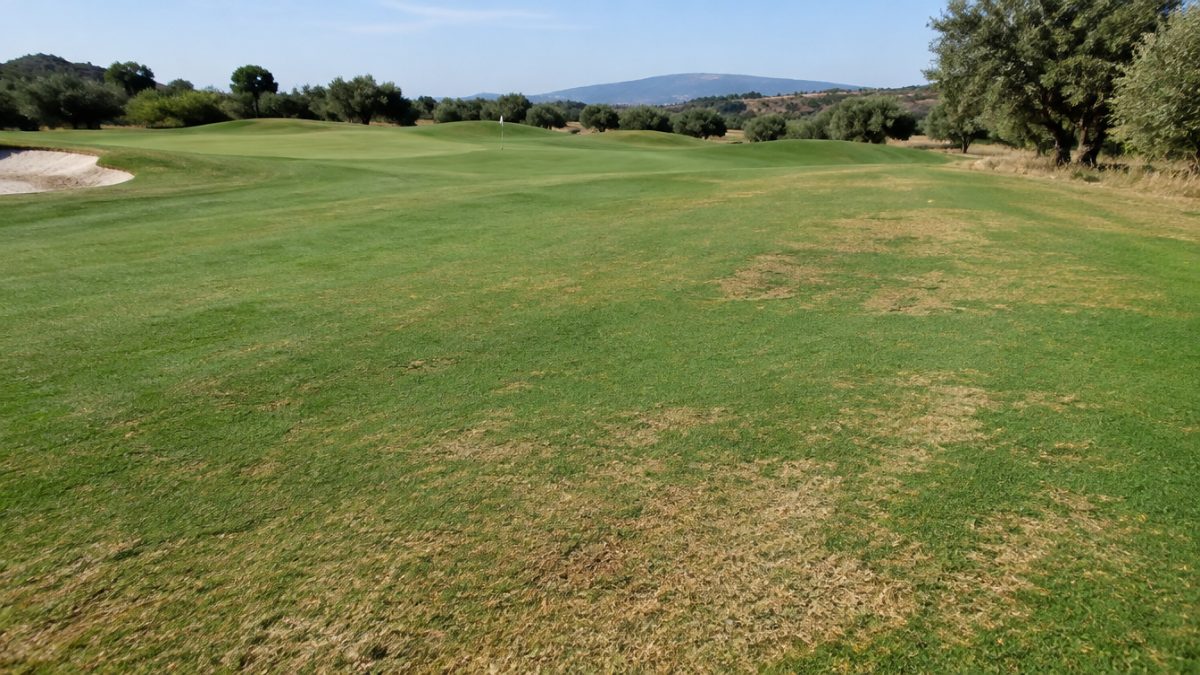
- Walk the course looking for burnt tips, white crusts or patches that follow the irrigation pattern.
Note symptoms with date and location. If you compare those records with water and soil analyses, you will discover which sectors are most sensitive and which measures really work in your specific case.
With constant monitoring, irrigation water salinity stops being a silent threat and becomes one more factor that is managed methodically.
Further reading: FAO. The FAO publishes reference guides on irrigation water quality and salinity management that serve as technical support.
Frequently asked questions
How can I tell if irrigation water salinity is a problem?
The analysis confirms it, but there are field signs: dull turf, burnt tips, white crusts, hard soil and areas that recover poorly. Measure the conductivity of the water and soil frequently, compare with the tolerance of your species and consult a specialist in soils and water.
Can the salinity of the course's irrigation water be reduced?
Reducing it at the source is usually complex, but you can blend it with better-quality water, address certain aspects with a specialist and, above all, manage its effects with leaching, good drainage and aeration. It is also possible to direct the saltiest water to the least sensitive areas of the course.
Which turf tolerates salinity best?
As a general reference, paspalum, bermudagrass and kikuyu usually tolerate it better than ryegrass, Poa annua or bentgrass. Real tolerance depends on the variety, the soil and the management, so it is advisable to check with a specialist before deciding on a renovation or overseeding.
Keep reading
- reclaimed water for irrigation Reclaimed Water for Irrigation: 6 Keys for Your Course
- how to carry out an irrigation audit Irrigation audit: 7 steps to detect water losses
- evapotranspiration and irrigation scheduling Evapotranspiration in golf: 5 keys to watering just right