

You only need to look at the area around a tee box or the crossing beside a green to see the effect of repeated traffic: strips of thinned turf, ruts, mud after rain and crumbling path edges. Buggy paths should protect the course, but when they are neglected they become one of the main sources of damage.
Here are five care tips you can apply to your buggy paths without major investment: review the layout, watch the drainage, maintain the surface and edges, set clear traffic rules and record wear to decide with data when to intervene.
Review the layout of the buggy paths and the conflict points
Before repairing, understand where people really drive. A path that is well laid out on paper may not match the most convenient route, and drivers end up opening shortcuts across the turf. Observe for a few weeks where the wear occurs.
The most frequent conflict points are:
- Tee box exits and entrances, where all the buggies turn at the same point.
- Green surrounds and collars, where people park for convenience.
- Crossings with fairways or playing areas.
- Steep slopes and tight bends.
- Stretches beside bunkers, lakes or banks.
When a wear pattern repeats, the solution is not usually to repair the turf over and over, but to change the layout or add a section of surfacing or a waiting area.
A common example: the path reaches a raised tee box through a tight bend and the buggies always brake and turn on the same metre of turf. Widening the bend slightly and providing a hard-surfaced pad to stop on spreads the load and protects the turf. With these adjustments, buggy paths go from being a recurring problem to infrastructure that supports the course.
Look after drainage: water is the path's great enemy
A path with standing water deteriorates quickly. Traffic on a saturated surface causes ruts, displaces material and leaves unstable edges. In addition, mud is carried onto the turf and dirties it.
It pays to check frequently:
- The cross slope of the path, which must shed water to the sides.
- The ditches, channels and culverts under crossings, kept free of sediment.
- The low points where puddles form and the cause behind them.
- The edges, which must not hold water like a small dam.
A check after heavy rain detects damage early, while it can still be fixed with little material. Letting time pass usually means rebuilding the whole section.
After heavy rain, dedicate a specific round to walking the buggy paths with a shovel and a wheelbarrow: clearing a ditch in time takes minutes and prevents washed-out material that later takes hours of cleaning on the turf. If there are sections that always flood, note them down to consider a structural fix.
Maintain the surface and edges of buggy paths
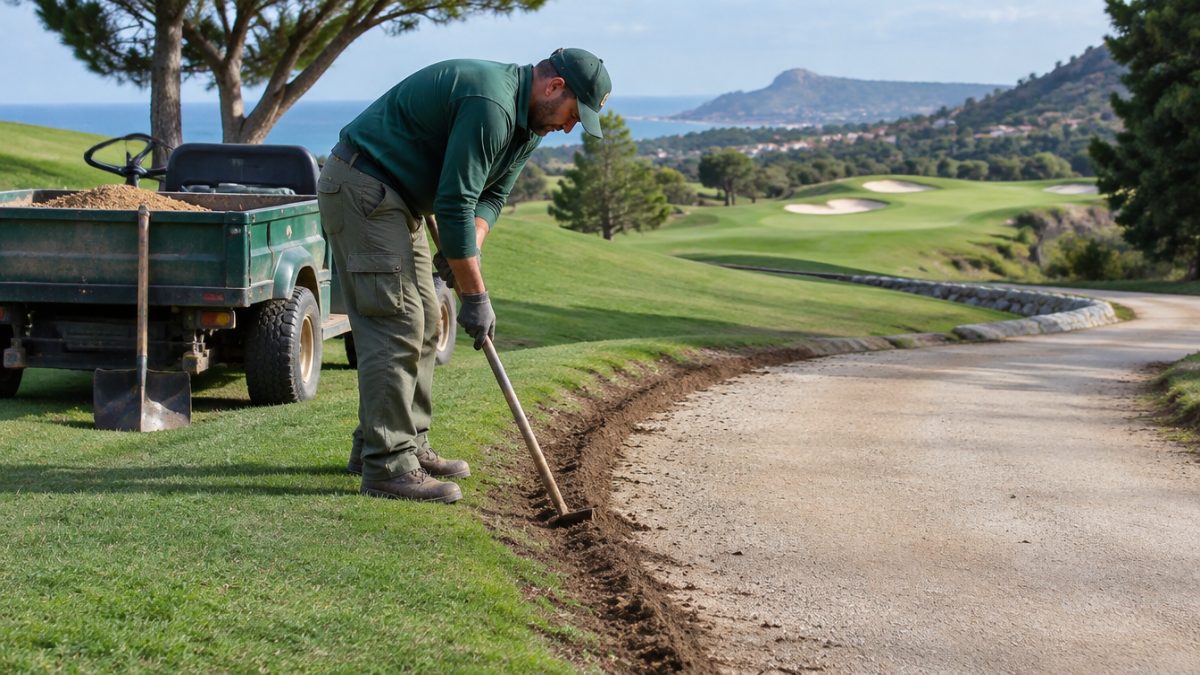
The type of surface determines the maintenance. A concrete, asphalt, compacted crushed-stone or loose granular path needs different care, but they all share one principle: small problems get fixed early or they become big.
Some recurring tasks:
- Fill and compact potholes and ruts before they grow.
- Replace material on granular sections and regrade the path regularly.
- Seal cracks in hard surfaces to prevent water infiltration.
- Trim and keep edges clean so water can leave without obstacles.
- Repair at once any subsidence near an inspection chamber or pipe.
At the edges, the turf often suffers from trampling and from wheels that stray off the path. Occasional reseeding or replanting, together with a small physical barrier at critical points, prevents that deterioration. These measures reduce compaction of the adjoining ground, which would otherwise spread metres inward.
Set clear traffic rules and sign them well
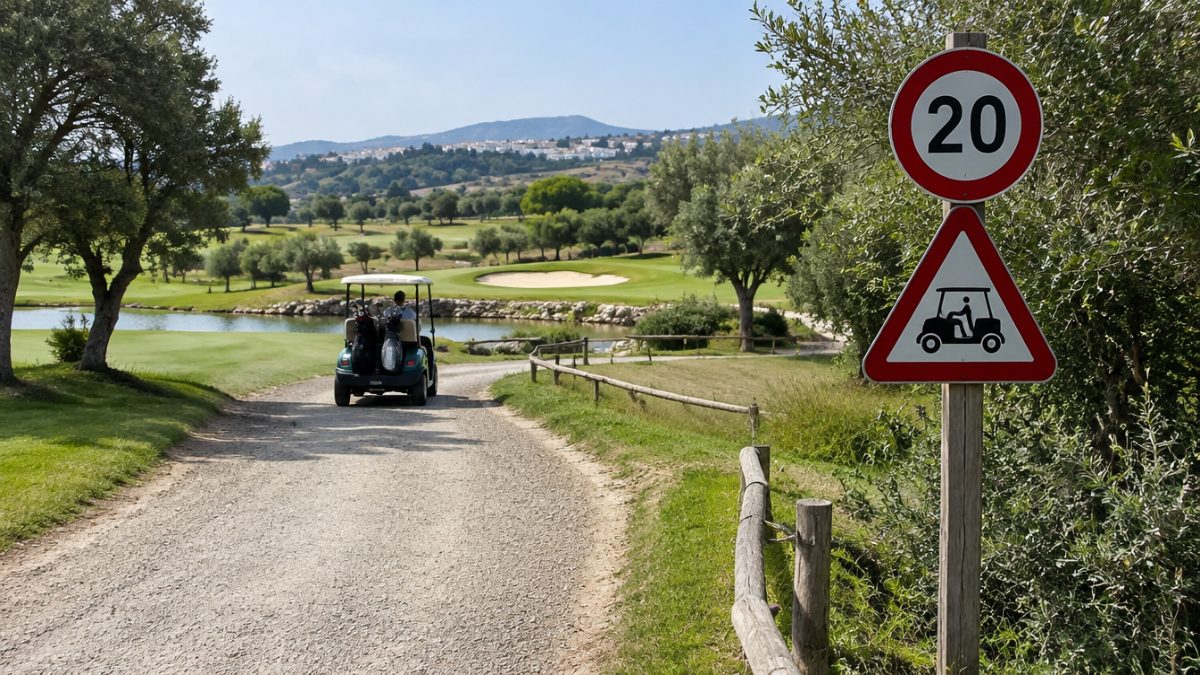
Rules nobody knows are not followed. To protect the buggy paths and the turf, the club needs simple, well-communicated rules, adapted to the condition of the course at any given time.
Measures that tend to work:
- General rules: stay on the path, signed crossings and a minimum distance from greens and tee boxes.
- Temporary restrictions when the soil is saturated or the turf is weakened, communicated in advance.
- Ropes, stakes, markers or signs at diversion points.
- Rotating the fairway crossing points to spread the wear.
- Information at reception and on the buggy itself, in short, positive language.
A good approach is to explain the reason: when members understand that restricting access on the buggy paths protects the turf they will later enjoy, compliance improves a lot. The decision to limit traffic should be taken by an identified person, normally the head greenkeeper, and relayed uniformly by reception and starter staff.
Record the wear and plan the interventions
Buggy paths age gradually and, if nobody notes it, the problem always seems new. A simple log lets you move from firefighting to planning.
Note, by section or by hole:
- Date and type of repair carried out.
- Hours and materials used.
- Incidents due to rain or misuse.
- Before and after photographs.
With a few seasons of data you will see which sections need more attention, which justify a structural improvement and how much it really costs to maintain the buggy paths. It is the basis for presenting management with a reasoned investment proposal, with clear priorities and realistic deadlines.
That information also helps you adjust the buggy usage policy and decide whether it is worth extending or redesigning part of the route.
Further reading: R&A. To broaden general criteria for sustainable course management, the R&A publishes leading resources
Frequently asked questions
How often should buggy paths be checked?
Ideally, include a visual check in the weekly round and a more detailed inspection after heavy rain. This detects potholes, ruts, blocked ditches or damaged edges while they can still be fixed with little material and without rebuilding the whole section.
How do you stop buggies damaging the turf next to the buggy paths?
By combining a logical layout, good drainage and clear rules. Signing diversions, rotating crossing points, restricting traffic when the soil is saturated and replacing edge turf in time reduce trampling and compaction in the adjoining areas.
What surface is best for the buggy paths of a golf course?
There is no single answer: it depends on the climate, the slope, the budget and the traffic volume. Hard surfaces last longer but cost more; granular ones are cheaper, although they need topping up and regrading. It is best to decide with a technician and trial first on specific sections.
Keep reading
- Soil compaction: causes and solutions Soil Compaction: 5 Causes and Fixes on Golf Courses
- Keys to good fairway maintenance Golf Fairways: 6 Keys to Quality Maintenance
- Effective drainage solutions for golf courses Golf Course Drainage: 6 Effective Solutions