
In the maintenance facility of any golf course there is a space that only authorised staff should enter: the pesticide store. What is kept there demands respect, and the way it is organised says a lot about the professionalism of the team. A well-kept store prevents accidents, avoids product losses and makes any inspection easier.
We propose seven safety rules designed for day-to-day use: where to locate it, how to build it, how to organise the contents, what to control in the inventory, how to act in case of a spill, what protective equipment to keep at hand and how to document everything. For exact requirements, always consult current regulations and an authorised technician or adviser.
Rule 1: Locate the Pesticide Store Away from Risks
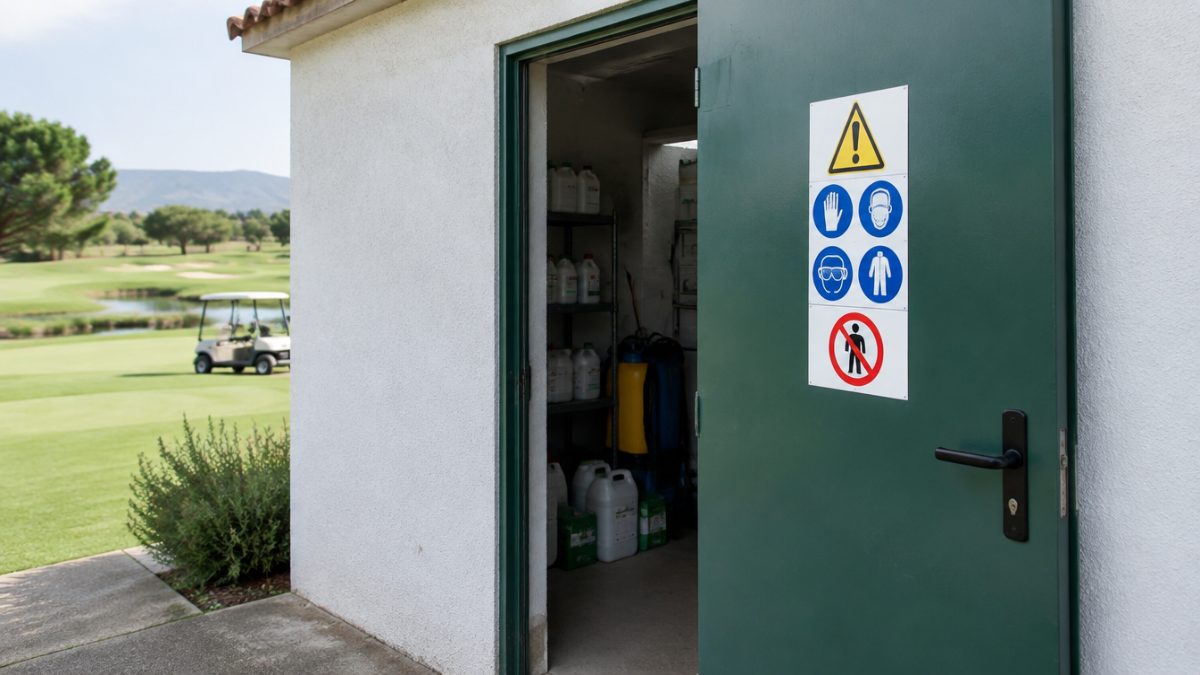
The location of the pesticide store conditions everything else. A good store is placed in an area accessible to workshop vehicles but away from what needs protecting: watercourses, wells, ponds, housing, dining areas and public zones. It is also advisable to avoid flood-prone ground or areas at risk of runoff.
When deciding on the site, consider:
- The distance from water sources and inhabited areas.
- Controlled access, with a locked door and visible signage.
- The ability to contain a spill so that it does not reach drains or the ground.
- Ease of entry and exit for emergency services.
If your current store is in a less than ideal place, plan its relocation or upgrade before an incident forces you to.
Rule 2: Construction, Ventilation and Temperature Control
The interior must be solid and stable. Every pesticide store needs impermeable, crack-free floors, smooth walls that are easy to clean, and a structure that resists fire to the extent required by current regulations. Lighting must be sufficient and safe.
Key aspects:
- Natural or forced ventilation to prevent vapour build-up.
- Protection against extreme temperatures, both heat and frost, which can alter the products.
- A bund or containment sill to hold possible leaks.
- Suitable electrical installation, with spark protection where applicable.
Periodically check the condition of roofs, doors and drains. Damp, rust on shelving or deformed containers often warn that something is wrong before a bigger problem occurs.
Rule 3: Sort by Type and Respect Incompatibilities
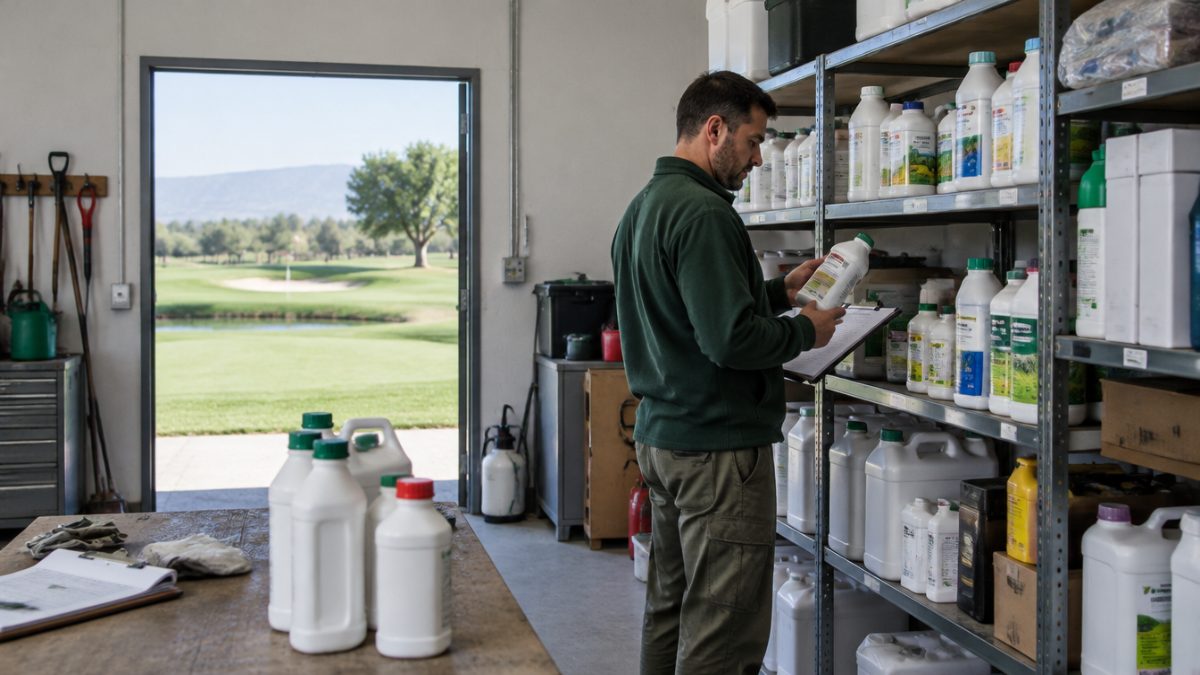
A well-organised pesticide store is recognisable at a glance. It is not about looks but about safety: certain products must not be stored together, and poor placement can make a spill or fire worse.
Good organisation practices:
- Keep products in their original containers, with legible labels and tightly closed.
- Separate by hazard category and product type, following the safety data sheets.
- Place liquids on the lower shelves and solids on the upper ones, to avoid drips onto other containers.
- Keep aisles clear and shelving stable and non-combustible.
Do not store food, drinks, street clothes or material unrelated to the store. And never decant into unlabelled containers, as this is one of the most frequent causes of serious mix-ups.
Rule 4: Control Inventory and Apply First In, First Out
What is not controlled piles up, and the pesticide store is no exception. Expired products, leftovers from previous seasons or half-used containers are a safety issue and a hidden cost. A live inventory lets you buy only what is needed and spot deviations.
A reasonable routine includes:
- Recording every entry and exit with date, quantity and destination.
- Periodically checking stock against the record.
- Using first what has been stored longest and checking expiry dates.
- Managing obsolete or unusable products through authorised waste handlers.
Buying small quantities matched to the treatment plan reduces the space needed and the risk. A pesticide store with little stock is safer and easier to manage than one full of unnecessary reserves.
Rule 5: Have a Clear Plan for Spills and Emergencies
Accidents in the pesticide store can happen even when everything is well organised, and what makes the difference is knowing what to do in the first minutes. It pays to prepare a simple procedure, in writing and known to all staff, and to practise it from time to time.
It should include at least:
- Containment material at hand: absorbent, sacks, a dustpan and waste bags.
- Instructions on how to raise the alarm and whom to call, with emergency numbers clearly displayed.
- First-aid guidelines and the location of eyewash stations or water points.
- Suitable fire extinguishers, inspected and with clear access.
After any incident, write down what happened, how it was resolved and what changes are being made so it does not happen again. That reflection is the best way to learn without paying a high price.
Rule 6: Protective Equipment, Hygiene and Training
The pesticide store is also a workplace, with people coming and going every week. Personal protective equipment must be available, in good condition and suited to each task. And anyone who enters must have received the relevant training and, where applicable, hold the applicator certification required by regulations.
Remember:
- Gloves, mask, goggles and suitable clothing, as indicated on each product label.
- A space to clean, dry and store equipment without contaminating other areas.
- Clear hygiene rules: no eating, drinking or smoking, and wash after handling products.
- Access only for authorised and trained staff.
Review these guidelines with the team at the start of each season and whenever someone new joins.
Rule 7: Document the Pesticide Store So You Can Prove It
The best organisation loses value if it cannot be demonstrated. Faced with an inspection or an incident, you must be able to show up-to-date safety data sheets, inventory, treatment records, staff certifications and checks of the store itself.
A well-kept pesticide store file, paper or digital, can contain:
- Safety data sheets for each product in use.
- An up-to-date inventory and movement log.
- Periodic checks of facilities, extinguishers and protective equipment.
- The emergency plan and training records.
Ideally, link the store with the treatment logbook: what leaves through the door must match what was applied on the course. That consistency is one of the clearest signs that the course operates with rigour and safety.
Further reading: Ministry of Agriculture, Fisheries and Food (Spain). Official information on the storage and use of plant protection products can be checked with the Spanish Ministry of Agriculture, Fisheries and Food.
Frequently asked questions
What basic requirements must a pesticide store meet?
It must be well located, with restricted access, an impermeable floor, sufficient ventilation, a leak containment system and secure shelving. It also needs signage, emergency equipment and products arranged in their original containers. The specific requirements depend on current regulations, so it is advisable to consult an authorised technician.
What should be done with expired products in the pesticide store?
They must not be used or stockpiled. The right approach is to identify them, separate them and dispose of them through an authorised waste handler, keeping a written record. An inventory with expiry dates and purchases matched to the treatment plan helps prevent leftovers from building up.
Who can access the pesticide store?
Only authorised, trained staff who, where applicable, hold the applicator certification required by regulations. The door must stay locked and access controlled, so that no visitors or untrained people enter. It is advisable to keep a log of who enters and why.
Keep reading
- pesticide treatment records Pesticide Application Records: 6 Key Data Points
- integrated pest management Integrated pest management in golf: 6 key steps
- the pesticide applicator licence Pesticide Applicator Licence: 5 Steps to Get It