
More and more clubs are considering how to reduce pesticides in golf, whether from environmental conviction, regulatory pressure, cost or the sensitivities of members and neighbours. The good news is that you can make a lot of progress without giving up quality turf; the bad news is that there is no magic solution that replaces applications overnight.
What does exist is a set of perfectly realistic practices that reduce the need to treat. In this article we review six and explain how to combine them, how to measure progress and where you should always turn to the advice of a licensed technician.
Alternative 1: improve cultural management to reduce pesticides in golf
The first line of defence is strong turf. A well-aerated green, with controlled thatch, tuned irrigation and balanced nutrition, defends itself better than a stressed one. Many health problems are, at root, management problems: excess moisture, compaction, mowing too low or mismatched fertilisation.
- Regular aeration and top-dressing to maintain porosity.
- Deep, infrequent irrigation when the soil allows it.
- Mowing heights suited to the species and the season.
- Nutrition based on analysis, without excess.
If you want to reduce pesticides in golf, start here: it is the measure with the most effect in the medium term and the one with the fewest risks.
Alternative 2: choose species and varieties adapted to the climate
Treating a species poorly suited to the site every summer is a recipe for spending more. In a renovation or overseeding, assess varieties with good tolerance to local diseases, water stress and heat. There is no perfect species, but there are decisions that reduce dependence on treatments.
Consult variety trials from technical institutions and your seed supplier, and compare the information with the experience of other courses in a similar climate. In a Mediterranean climate, adaptation to heat and salinity weighs as much as looks.
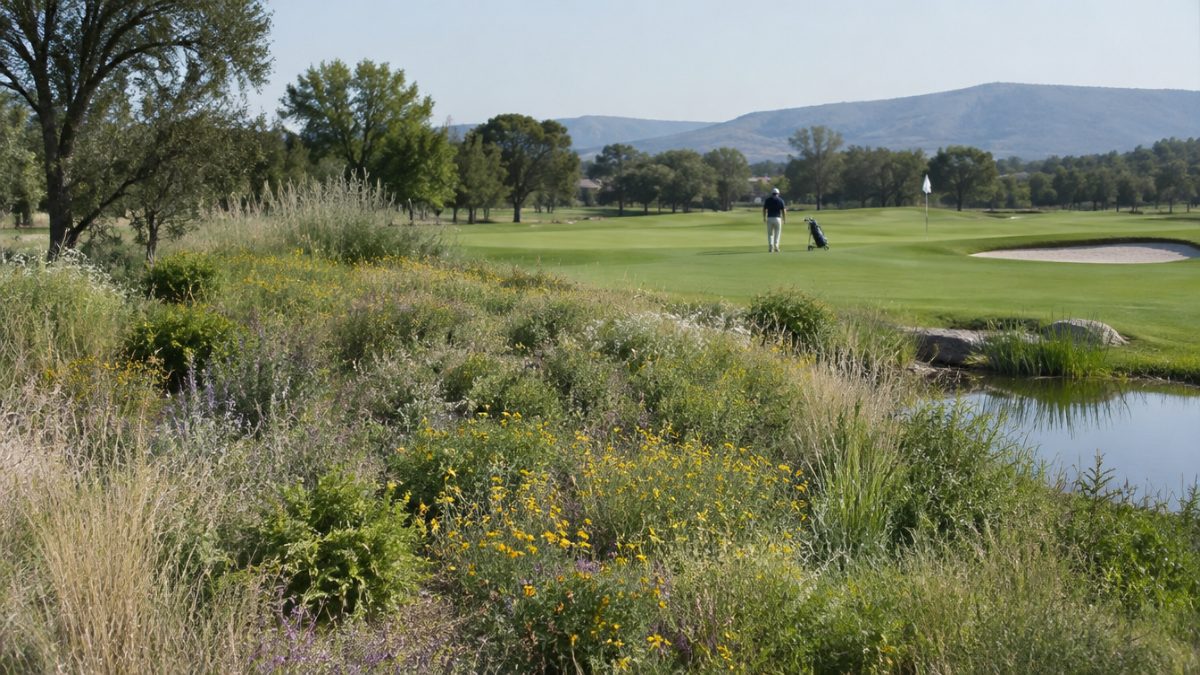
This decision comes too late if it is taken only when the turf is already diseased. Planning it into tee renovations, winter overseeding and the design of new areas is the most discreet way to reduce pesticides in golf in the long term: you do not see it, but every year it shows in the number of interventions needed.
Alternative 3: monitor and act only when needed
A rigid preventive programme, scheduled without looking at the course, applies more product than necessary. A monitoring programme, on the other hand, is based on regular observation: checking weak spots, noting symptoms, knowing the weather conditions that carry risk and deciding with judgement. This approach is the heart of integrated pest management.
- Define reasonable action thresholds for each zone.
- Check the hot spots daily: greens, shaded areas, depressions.
- Note symptoms and take photographs before deciding.
- Consult a licensed technician when the diagnosis is not obvious.
To reduce pesticides in golf methodically, each intervention is decided with data: unnecessary applications are avoided and the effectiveness of those that are made improves.
A common example: after a few nights of high humidity, the crew inspects the most susceptible greens at dawn, checks the condition of the leaf and weighs up whether adjusting irrigation, improving air movement or delaying a fertiliser application is enough. Often, that cultural response avoids the treatment and lets you reduce pesticides in golf without compromising the surface.
Alternative 4: accept a reasonable level of tolerance
Not everything seen on the course is a problem that demands a treatment. A small patch in a rough area, a minimal presence of weeds at an edge or a passing cosmetic change does not justify an application. The key is to agree with the committee and members a quality standard that is achievable and sustainable.
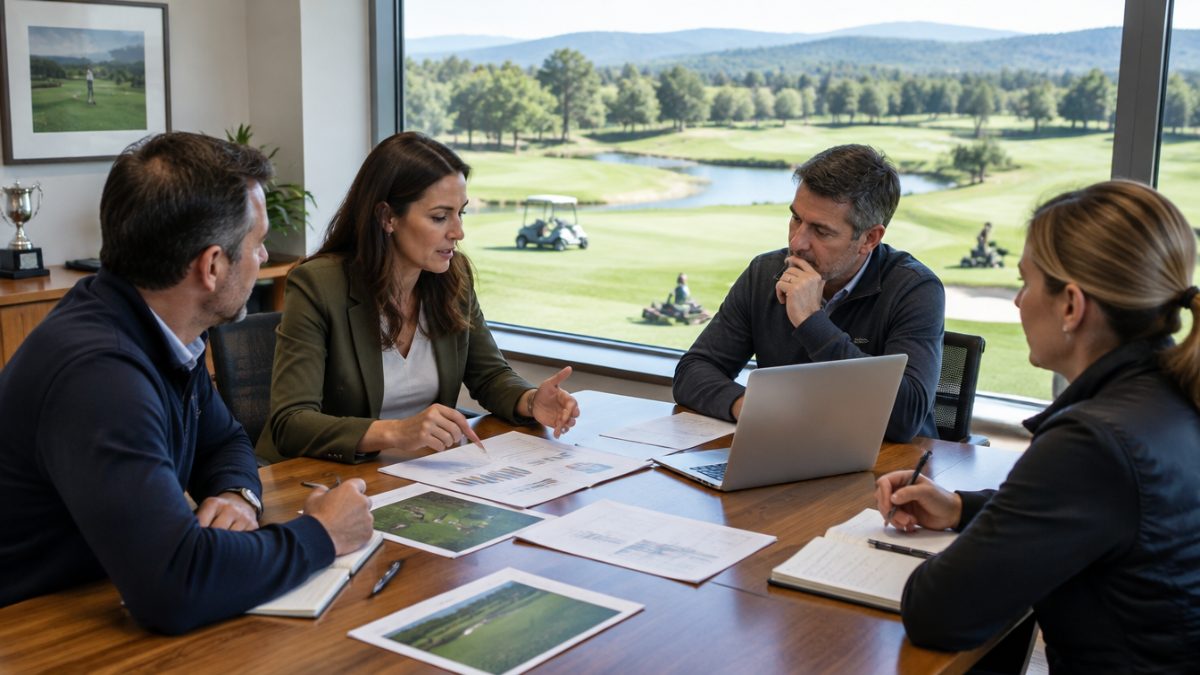
To reduce pesticides in golf, sometimes the most important work is communication: explaining what is tolerated, where and why, and showing with data that the course maintains its playing quality.
A good agreement is usually specific: for example, tolerating some colour variation on the banks in exchange for guaranteeing the best possible surface on greens and tee boxes. When everyone understands the deal, the pressure to over-apply disappears, and clubs that want to reduce pesticides in golf gain room to work calmly.
- Distinguish critical zones (greens, tee boxes) from tolerant ones (rough, banks).
- Communicate the criteria to members and management.
- Review the results each season.
Alternative 5: complement with other tools, always with advice
There are biological management options and lower-impact products that can complement a programme, but their effectiveness depends on the case, the species and the conditions, and they are not an automatic substitute for a conventional application. Before adopting them, trial them in a small area and evaluate the results rigorously.
Any product, conventional or alternative, must be used following the label and current regulations, and under the advice of a licensed technician or adviser. Small, well-recorded trials avoid changing strategy on fashions and let you decide with your own data.
- Pilot tests in a defined zone.
- Comparative evaluation against an untreated control, where feasible.
- Detailed record of what was applied and the result.
Alternative 6: measure, record and report progress
Reducing pesticides in golf is only credible if it can be demonstrated. Record each application with date, area, reason and result; analyse the trend by season and communicate achievements clearly. The data let you distinguish between what has really worked and what only seemed to work.
A simple report, with the number of applications per zone and how it has changed, is surprisingly persuasive with the committee, members and authorities. It also helps spot areas where treatment continues out of inertia.
- Simple indicators: applications per zone and per season.
- Year-on-year comparison to see trends.
- A short, visual report for the green committee.
Further reading: Ministerio para la Transición Ecológica (Spain's Ministry for the Ecological Transition). Official information on the sustainable use of products and on biodiversity from Spain's Ministry for the Ecological Transition (MITECO) provides a framework for planning your strategy.
Frequently asked questions
Can pesticides be reduced in golf without losing quality?
Yes, in most cases gradually. Good cultural management, adapted species, monitoring and reasonable tolerances reduce the need to treat without sacrificing playability. Set realistic goals by zone, starting with the least critical, and rely on the advice of a licensed technician.
Where do I start to reduce pesticides in golf?
With a record of what is applied today and with cultural management: aeration, irrigation, mowing and nutrition. Knowing how many applications are made, where and why is the essential starting point for identifying the unnecessary ones. After that you can introduce changes by zone and evaluate their effect.
Do biological alternatives replace pesticides?
Not automatically. They can complement a programme and reduce the use of conventional products in some cases, but their effectiveness depends on the specific situation. Before adopting them, trial them in a small area, record the results and consult a licensed adviser, always following the label and regulations.
Keep reading
- Integrated pest management on golf courses Integrated pest management in golf: 6 key steps
- Biostimulants for turf: what to expect Turf Biostimulants: 5 Uses with Sound Technical Judgement
- Sustainable pesticide use in golf Sustainable Pesticide Use: 6 Obligations for Golf Courses