
Behind a fast, uniform green are people with well-defined roles. An effective greenkeeping team does not depend only on having more hands, but on everyone knowing what is expected of them, who they report to and what information they work with.
In the following lines we describe six key roles, how responsibilities are shared out according to the size of the course and which coordination habits avoid the typical first-thing-in-the-morning misunderstandings.
Greenkeeping team: structure first, names second
Before talking about people it helps to draw the organisation chart the course needs. An eighteen-hole layout with high play pressure is not organised like a nine-hole one with moderate occupancy, and a resort with several courses requires an additional layer of coordination.
A useful rule: functions exist even if the position does not. In a small team one person may take on several, but it is worth putting in writing who is responsible for each area so that nothing falls into no-man’s land. A greenkeeping team without defined roles depends on memory and goodwill, two resources that run out.
Head greenkeeper: the technical leadership of the course
This person is ultimately responsible for the condition of the turf and the use of resources. They define the maintenance programmes, negotiate the budget, represent the team before management and the green committee and make the most delicate technical decisions.
- Plans the season and major interventions.
- Supervises the quality of the work and compliance with workplace safety.
- Tells the club clearly what is being done, why and what result to expect.
Their greatest risk is the bottleneck: if everything goes through them, the team loses autonomy and the course depends on their presence.
The assistant or second-in-command
The assistant covers for the head in their absences and takes on daily management: allocates tasks, controls schedules and resolves incidents. On many courses they are also the person who best knows the details of the terrain, because they walk it first thing and check that what was planned has been carried out.
A good practice is to train them in planning and data handling, so that they can make reasoned decisions when the head is away. They are also the natural profile to take over the lead in future. In a well-built greenkeeping team, there is always someone ready to take the next step.
Irrigation manager: control of the water
On courses with complex installations, the irrigation technician becomes a central piece. They manage scheduling, check uniformity, repair breakdowns and record consumption. Their work has a direct impact on cost and on the health of the turf.
- Checks pressures, nozzles and valves with a fixed routine.
- Attends to dry spots with hand watering.
- Reports on consumption and any anomalies detected.
When there is no dedicated position, this function must be assigned to a named person, not spread among everyone.
Mechanic: keeping machinery available
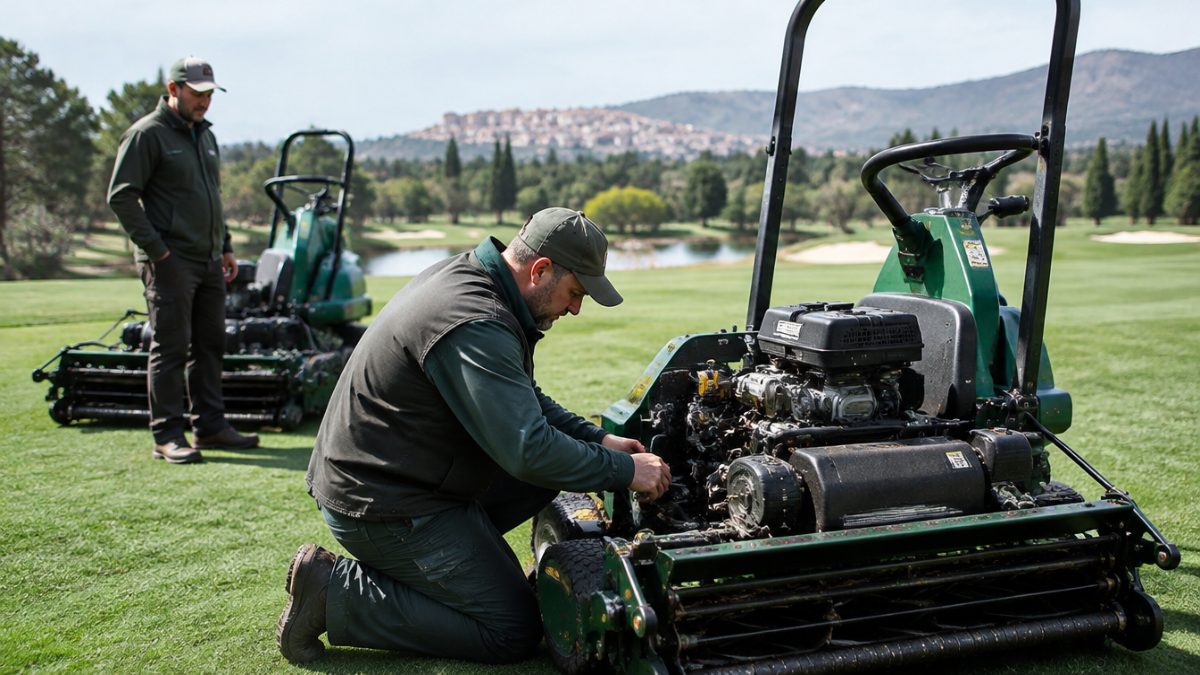
A fleet that is down means a badly cut course. The mechanic keeps the reels sharp, checks fluid levels, monitors wear and plans preventive maintenance. The better documented the condition of each machine, the fewer unexpected breakdowns there will be.
It is advisable for the mechanic to take part in purchasing or replacement decisions, because they know the real maintenance costs of each model. And they should receive a clear notice each morning of the machines that will be used, so they can anticipate checks.
The relationship between the mechanic and the rest of the greenkeeping team must be fluid: if the operator reports a strange noise or an uneven cut the same day, the repair is simple; if they mention it a week later, it has probably already damaged the turf.
Specialist operators for greens and bunkers
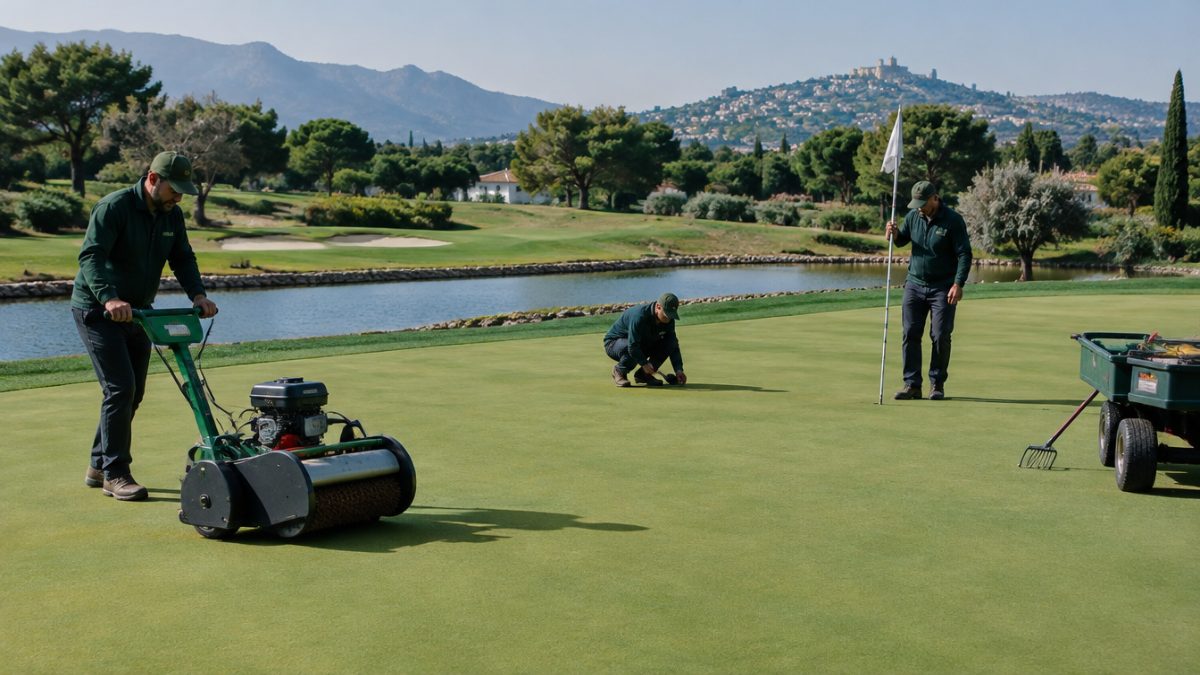
Green and bunker operators are the people closest to the quality the player perceives. A good cut, consistent rolling and uniform care of edges require trained hands and close supervision.
It pays to assign an owner for each area, with a common quality standard:
- What counts as a correct cut and what counts as a defect.
- What is noted when each task is finished.
- Who is told when there is an anomaly.
Rotating between tasks encourages versatility, although without sacrificing someone who has mastered a delicate job.
A greenkeeping team that shares standards prevents the green being cut differently depending on who has the shift, something the regular player notices immediately even if they cannot explain it.
Support staff, seasonal workers and training
The sixth role is the most variable: fairway operators, seasonal staff and reinforcements in peak periods. Integrating them well is part of the greenkeeping team’s job, and a few simple measures help:
- A welcome protocol covering safety, sensitive areas and machinery rules.
- Clear tasks from day one, with a buddy to turn to.
- Brief, periodic training on quality standards.
Investing a few hours in training saves costly mistakes, especially in precision cutting or when handling delicate equipment.
Recognising good work also counts: a motivated greenkeeping team looks after machinery better, reports problems sooner and tends to stay longer at the club.
Coordinate the team without losing control of operations
Having the roles defined is not enough without coordination. Three habits work well: a brief first-thing meeting to allocate the day’s work, a closing report where each area notes what was done and what is pending, and a weekly review of incidents and priorities.
In addition, the greenkeeping team needs accessible information: task calendar, machinery status, weather forecast and course notes. When everyone sees the same thing, repeated questions fall and decisions are made faster. And if incidents are recorded, each new member inherits knowledge that used to be lost when someone left.
Further reading: GCSAA. Professional associations such as the GCSAA publish resources on team organisation and professional development in the industry.
Frequently asked questions
How many people does a greenkeeping team need?
It depends on the size of the course, the turf species, the quality level demanded and the play pressure. There is no single valid figure. It is advisable to calculate the hours needed per task and per area, and compare them with the available staff before deciding on reinforcements or seasonal hires.
Which roles are essential in a small greenkeeping team?
Even if one person takes on several functions, someone should be responsible for technical direction, irrigation and machinery. On a small course, the head and a versatile operator can cover many tasks, as long as responsibilities are written down and reviewed periodically.
How do I improve communication within the greenkeeping team?
Set a short meeting at the start of the day, a closing report per area and a weekly review of incidents. Put quality standards and notification channels in writing. With shared, accessible information, duplication, oversights and misunderstandings between shifts and specialities are avoided.
Keep reading
- daily greenkeeper planning Daily greenkeeper planning: 6 effective steps
- keys to replacing the machinery fleet Replacing the machinery fleet: 6 key decision factors
- software for greenkeepers Software for greenkeepers: 3 keys to the importance of software in golf course and facility maintenance management