
When irrigation water carries salts, the course starts to suffer before the budget does: patches, burnt leaf tips, soils that seal up. In that scenario, paspalum comes up again and again in technical conversations, because it tolerates salinity better than most turfgrasses commonly used in golf.
That does not make it a magic solution. This article explains five advantages of paspalum when the water is less than perfect, what precautions its management requires and how to approach its use, whether on a new course or in the conversion of a few specific surfaces.
Advantage 1 of paspalum: salinity tolerance
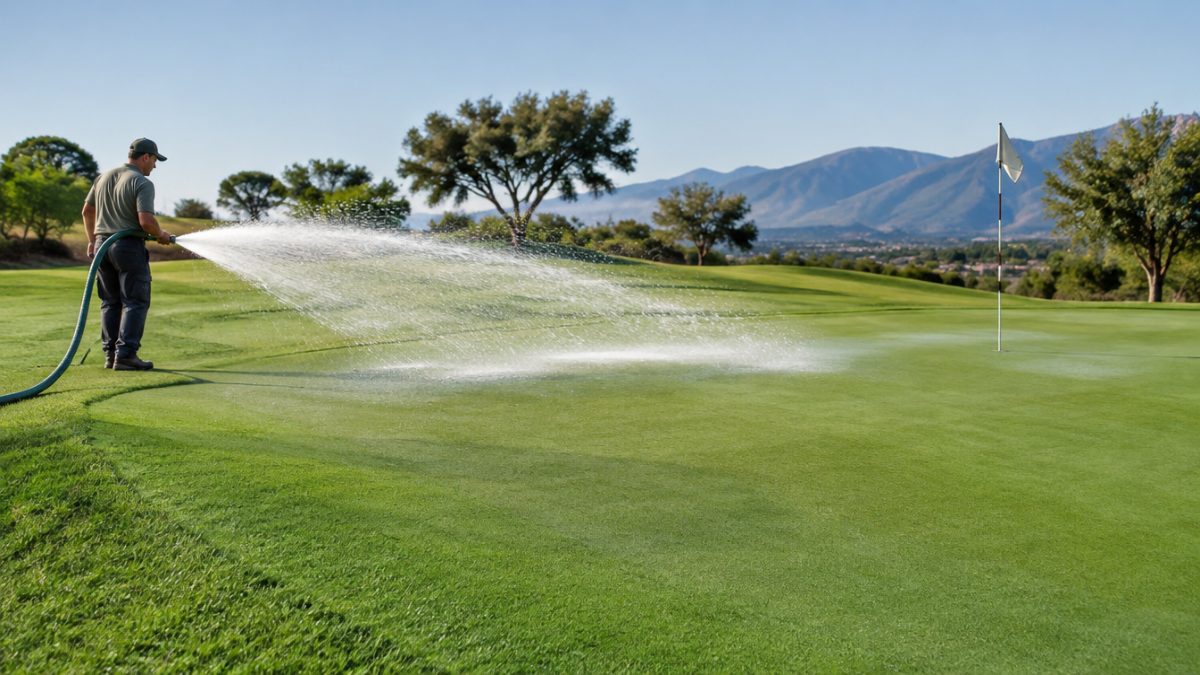
The main reason to consider paspalum is its ability to keep growing at water conductivities that would leave other species struggling. This widens the options on coastal courses, in areas with salinised aquifers or at facilities that depend on recycled water.
A caveat is in order: tolerating is not ignoring. A tolerant species still needs periodic leaching, good drainage and analytical monitoring of the water and the soil. The difference is that the margin for error is wider, which gives you time to correct before the damage becomes visible.
In practice, a course with saline water should regularly test the conductivity of the water at the pump station and the condition of the soil in the most sensitive areas. Trends matter more than a single day’s figure: a slow rise goes unnoticed if nobody compares with previous months, and by the time it shows in the leaf it has already cost weeks of accumulation.
Advantage 2: good performance in heat and high radiation
Paspalum is a warm-season species, with active growth when temperatures are high. In a Mediterranean summer, this translates into quick recovery after play and a density that, when well managed, allows quality surfaces.
Its weak point lies at the opposite extreme: with prolonged cold it goes dormant and loses colour, something to bear in mind depending on the area of the course. In areas with mild winters the dormancy is short, but where nights are cold you need to plan how the transition is handled with the club and the players. Explaining in advance that a colour change in winter is normal avoids unnecessary complaints and reduces the temptation to force the surface with out-of-season fertiliser applications.
Advantage 3: surface quality and density
Well managed, paspalum produces a fine, dense sward, with a playing quality highly valued on greens, tee boxes and fairways. Its texture allows low mowing heights and a ball that settles consistently.
That quality comes with a management cost that is best accepted from the start:
- Frequent mowing and well-sharpened blades, because the leaf has tough fibre.
- Scheduled verticutting and aeration, since it tends to build up thatch if neglected.
- Balanced fertilisation, without nitrogen excesses that trigger growth and organic matter.
If the course is not prepared to sustain that intensity of work, paspalum loses a good part of its appeal.
Another aspect that is often underestimated is mowing height. A turf this dense accepts low heights, but not without limit: cutting too low in the middle of summer, with no room for recovery, stresses the plant and can cause scalping. Adjust the height to the season and the real use of each surface, and keep a record of the changes so you can relate them to the turf’s response.
Advantage 4: less dependence on high-quality water
By accepting poorer-quality water, paspalum lets you reserve better sources for other uses or simply reduce the pressure on them. In contexts of scarcity, this flexibility is a strategic advantage and also an opportunity for communication with the surrounding community.
That said, irrigation management changes: you work with salt-leaching criteria, you monitor soil conductivity profiles and you record the volumes applied rigorously. A course with paspalum and saline water needs well-organised irrigation data, because the margin between good management and salt accumulation is measured in small deviations. If the course also uses recycled water, it is worth adding to the monitoring the parameters set by the supplier, so that the whole history is available when you need to explain a decision.
Advantage 5: resistance to wear and traffic
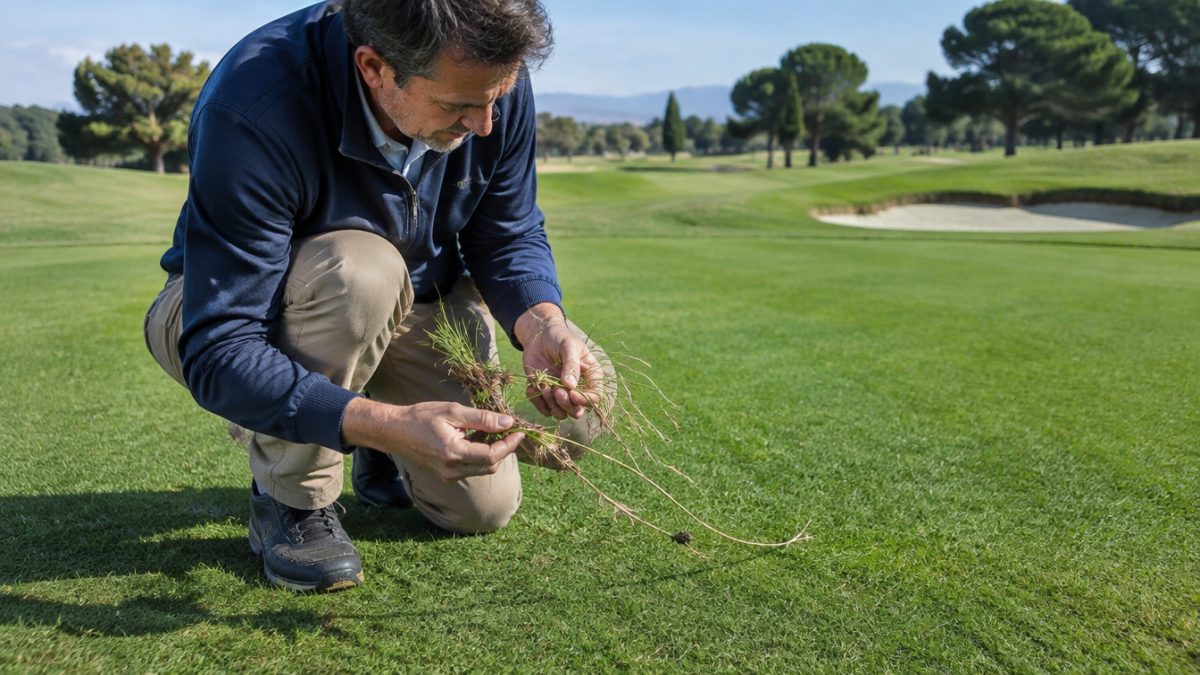
Its growth habit, with stolons and rhizomes, helps recover areas damaged by traffic, such as green aprons and fairway entries and exits, buggy paths or heavily used tee areas. With correct management, the turf closes wounds quickly during the active growing season.
The flip side is that the same vigour requires you to control thatch and lateral growth. It is best to set a routine of light, frequent verticutting instead of aggressive, widely spaced interventions, and to prevent edges from invading bunkers or adjacent areas with other species.
How to decide whether paspalum fits your course
Before changing species, it is worth answering a few basic questions. What is the real conductivity of the water and how does it change through the year? What minimum temperatures are recorded in winter? Does the team have the machinery and hours for the intensive management it requires? What does the club expect from the surface in the cold season?
A good practice is to start with a pilot surface, such as a tee or a couple of fairways, and document over several seasons how paspalum performs compared with the rest of the course. That data helps you decide with sound judgement, avoids rushed transitions and lets you explain the decision to the green committee with facts and not just impressions.
Further reading: STRI Group. The STRI institute offers independent technical information on turfgrass species and the management of sports surfaces.
Frequently asked questions
Is paspalum suitable for any course with saline water?
Not necessarily. Although it tolerates salts better, its viability also depends on the climate, especially winter minimum temperatures, on drainage and on the team's capacity for the management it requires. The recommended approach is to test the water and soil and trial it first on a small surface.
What maintenance does paspalum need on greens?
It requires frequent mowing with well-sharpened equipment, regular verticutting and aeration to control thatch, and balanced fertilisation that avoids excessive growth. You also need to watch for salt build-up with planned leaching. Without that consistency, surface quality declines quickly.
How does paspalum behave in winter?
As a warm-season species, it slows its growth and loses colour when temperatures drop for a sustained period. In areas with mild winters the dormancy is short, but in colder areas it can be very noticeable. It is best to anticipate this with the club and to consider overseeding only if the course is prepared to manage it.
Keep reading
- managing the salinity of irrigation water Irrigation Water Salinity: 6 Control Measures
- kikuyu, another warm-season option Kikuyu on Golf Courses: 5 Tricks to Control Its Invasion
- recycled water for course irrigation Reclaimed Water for Irrigation: 6 Keys for Your Course