
More and more courses are setting aside strips, slopes and corners that are no longer mown at rough height. Naturalised areas in golf have become a management tool: they reduce mowing, irrigation and fertilisation hours, and in return provide landscape, wildlife refuge and an image consistent with sustainability. But naturalising is not the same as abandoning.
A poorly planned area ends up full of invasive weeds, is a fire risk in summer or slows the pace of play because balls get lost. These six keys help you decide where, how and with what monitoring it makes sense to create and maintain this type of surface.
Decide Where Naturalised Areas in Golf Make Sense
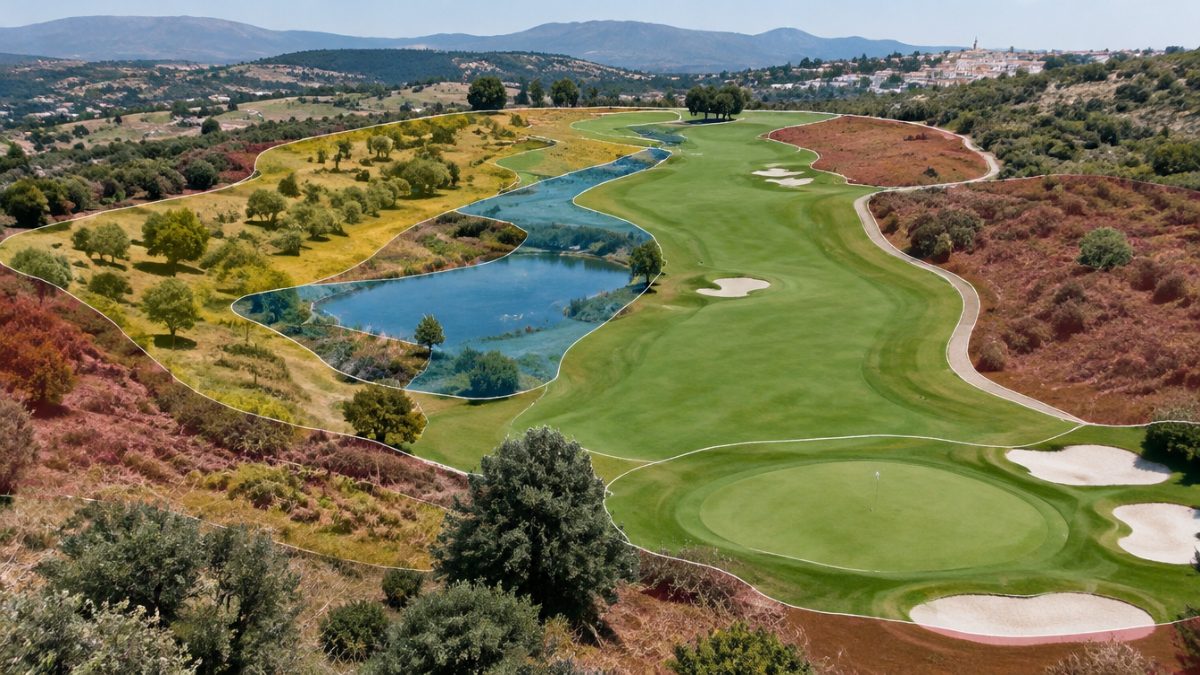
The starting point is a map, not a hunch. The best candidates are usually surfaces that cost a lot to maintain and add little to play: steep slopes, lake edges, shaded areas where the turf struggles, corners inaccessible to machinery or strips outside a reasonable line of play.
- Mark on the plan the playing areas, ball-recovery areas and safety areas.
- Avoid naturalising where the average golfer tends to land: very thick rough a few metres from the fairway penalises and slows play.
- Consider connectivity between areas: continuous corridors are far more useful for wildlife than isolated patches.
Talking to management and the green committee before acting avoids surprises and misunderstandings with members. It pays to present the proposal with specific areas, expected savings and the work calendar, so that naturalised areas in golf are perceived as a technical decision and not as a cutback.
A good trick is to start with one or two pilot zones for a full season. This lets you see how they evolve, what work they really require and how players react before extending the idea to the whole course.
Choose Vegetation Suited to Your Climate
In a Mediterranean environment, the best option is almost never to sow an imported mix. It works better to rely on native vegetation: drought-adapted perennial grasses, aromatic plants, low scrub and herbaceous plants typical of the area. They reduce water demand, withstand heat and fit the landscape.
Some practical ideas:
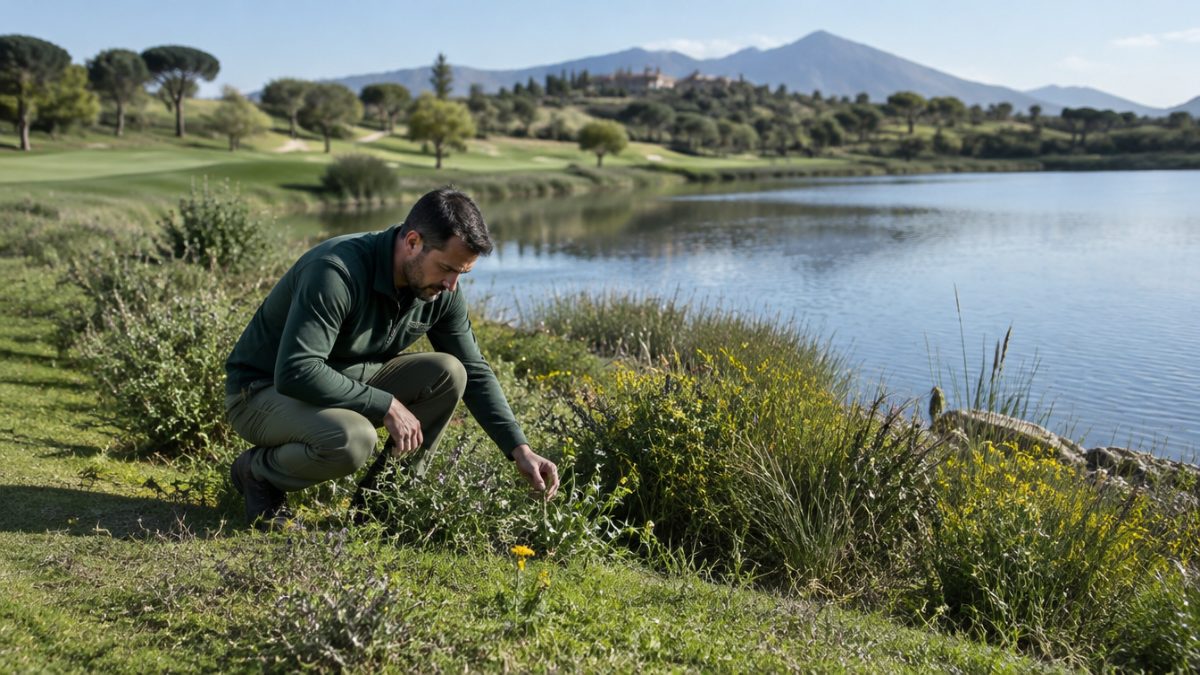
- Observe what grows spontaneously at the edges of the course and in the immediate surroundings.
- Consult an environmental technician or a local botanist to avoid invasive species.
- Plan a gradual transition between the rough and the naturalised area, with an intermediate band of medium height.
It is preferable for the area to evolve slowly towards a stable cover than to establish quickly and with many weeds. Naturalised areas in golf take several seasons to reach their balance, and the first years tend to be the most uneven, so it pays not to judge them by the first spring.
Define a Mowing Regime for Naturalised Areas in Golf
A naturalised area is not mown at rough height, but it is not left untouched either. The usual approach is a regime of one or two cuts a year, at a high height, removing or mulching the material depending on the objective. The date matters: mowing before the vegetation has set seed prevents regeneration, and doing it in the middle of the breeding season can harm soil fauna and nesting birds.
- Set the calendar and cutting height of each zone in writing.
- Avoid cutting everything in a single day: leave uncut refuges.
- Consider collecting the cut material so that organic matter does not build up and favour only a few species.
This regime should be part of the course’s annual plan, along with the rest of the work.
Control Invasive Species and Fire Risk
The main threat to naturalised areas in golf is invasive species and the build-up of dry fuel in summer. It pays to walk the areas several times a year with a critical eye, note invasive outbreaks and act early, when the intervention is simple and local.
- Remove or cut invasives at the root before they set fruit.
- Keep visible firebreaks near buildings, paths and power lines.
- Coordinate with the club’s safety officer on emergency access and water points.
If a chemical treatment is ever needed, it must be applied by authorised staff, following the label and current regulations and with the advice of a competent technician. In a naturalised area, most problems are solved sooner with management than with product.
Communicate the Value of Naturalised Areas to Members and Players
Tall, dry rough without explanation is read as neglect. Naturalised areas in golf work best when the club explains why they exist: less water, less fertiliser, more biodiversity, less machinery noise. Communication is part of management.
- Install discreet signs at key points explaining the purpose of each zone.
- Share photos of species that appear, nests or wildlife tracks on the website or in the club newsletter.
- Offer guided visits to members or school groups.
If players understand what they see, they tolerate a lost ball better and appreciate the crew’s effort. It also helps if the maintenance staff themselves know the reasons and can explain them naturally when a member asks.
Measure and Record Naturalised Areas in Golf
Without data, naturalisation stays an impression. A few simple variables tell you whether it is worthwhile and whether you need to correct course:
- Total naturalised area and its evolution over the years.
- Mowing, irrigation and fertilisation hours saved compared with the previous situation.
- Presence of birds, pollinators or small mammals, noted on periodic visits.
- Incidents: invasives, fires, player complaints, lost balls.
With that information you can adjust the boundaries of naturalised areas in golf, expand those that work and reverse those that do not. It is also the basis of a clear environmental report for management, the committee or a possible certification.
Further reading: FAO. To learn more about the importance of biodiversity and pollinators in managed ecosystems, you can consult the FAO documentation.
Frequently asked questions
What are naturalised areas in golf?
They are areas of the course managed with much lower intensity than the rough or fairways: they are mown little, not irrigated or fertilised routinely, and spontaneous or native vegetation is encouraged. Their aim is to reduce inputs and increase biodiversity without harming play.
Do naturalised areas in golf really reduce costs?
They usually reduce mowing hours, water use and fertilisation on the affected surfaces, although they require specific maintenance: occasional cuts, invasive control and monitoring of fire risk. The real saving depends on the course design, which is why it pays to measure hours and consumption before and after.
How do I prevent balls from getting lost in these areas?
Design the areas outside the reasonable line of play, leave a medium-height transition band between the rough and the tall vegetation, and avoid naturalising where the average golfer tends to land. Clear signage of ball-recovery areas also helps maintain the pace of play.
Keep reading
- Biodiversity on golf courses Biodiversity on Golf Courses: 7 Practical Actions
- Tree management on the course Tree management on golf courses: 6 pruning criteria
- How to measure the course's carbon footprint Carbon Footprint in Golf: 6 Steps to Measure It