
People are usually promoted to head greenkeeper because they know more about turf than anyone else, and that makes sense. But the day after the appointment you discover the job has changed: it is no longer enough to get the mowing or irrigation right, you have to get twenty people, a budget and a management team pulling in the same direction.
These are seven skills that set a good head greenkeeper apart. There are no magic formulas, but there are concrete habits that can be trained, and that improve the course, the team atmosphere and the relationship with management.
Solid, up-to-date agronomic vision
The foundation of any head greenkeeper is still knowledge of turf, soil and water. But there is a difference between knowing how to do and knowing how to decide: it is about understanding why each task is done and what determines whether it works.
- Know the physiology of the species on your course and their response to stress.
- Read soil and water analyses and turn them into a plan.
- Keep learning through technical days, associations and colleagues in the industry.
Whoever stops learning ends up repeating recipes from years ago on a course that is no longer the same, in a climate that is no longer the same either.
A common example: two greens with the same symptom of weakness may need opposite solutions, one because of too much water and the other because of compaction. Someone who understands the mechanism diagnoses sooner and spends less on trying remedies at random.
People leadership: lead by example and delegate
A good head greenkeeper knows the course is worked by others. Leadership shows in small things: arriving first, explaining the reasons behind instructions, recognising a job well done and correcting in private.
Delegating is the hardest part for someone who is used to doing everything. It is worth assigning clear responsibilities by zone or area, giving real autonomy and reviewing results, not every step. A team that feels trusted makes more effort and spots problems sooner.
Another key aspect is in-house training. Spending ten minutes at the start of the day explaining a new task, teaching how to recognise a symptom or going over a safety rule costs very little and builds a culture of craftsmanship. It also prepares future area managers and reduces dependence on a single person.
Planning and time management for the head greenkeeper
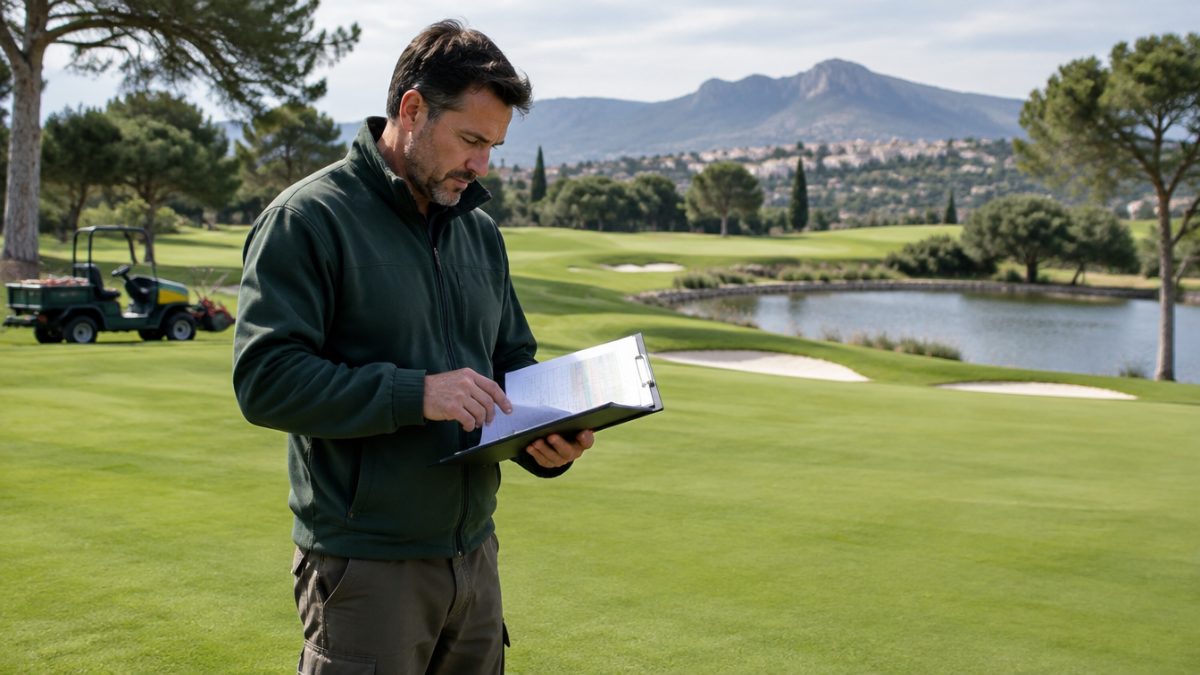
A head greenkeeper’s day looks more like an emergency board than a plan. Without a routine, the urgent devours the important, and preventive work, which does not shout, goes undone.
- Reserve some time each week for planning, even if it is short.
- Separate what must be done today from what can wait.
- Leave gaps for the unexpected, because it always arrives.
- Close the day with a brief review of what was done and what is pending.
Whoever plans ahead saves overtime and relies less on their own memory.
Financial management: budgeting with judgement
Increasingly, a head greenkeeper takes part in drawing up and defending the maintenance budget. That requires knowing the real cost of tasks, of machinery hours and of water, energy and materials consumption.
A defensible budget rests on data: what was done, how much it cost, what result it gave. When management asks for cuts, whoever has the numbers can explain what is sacrificed with each cut and propose alternatives. Without data, the conversation comes down to a clash of opinions, and maintenance usually loses.
It is also worth separating fixed costs from variable ones and keeping track of the most sensitive items, such as fuel, water, fertiliser and repairs. With that picture, it is easier to anticipate mid-year deviations and correct them in time, rather than discovering them at year end.
Communication with management, members and players
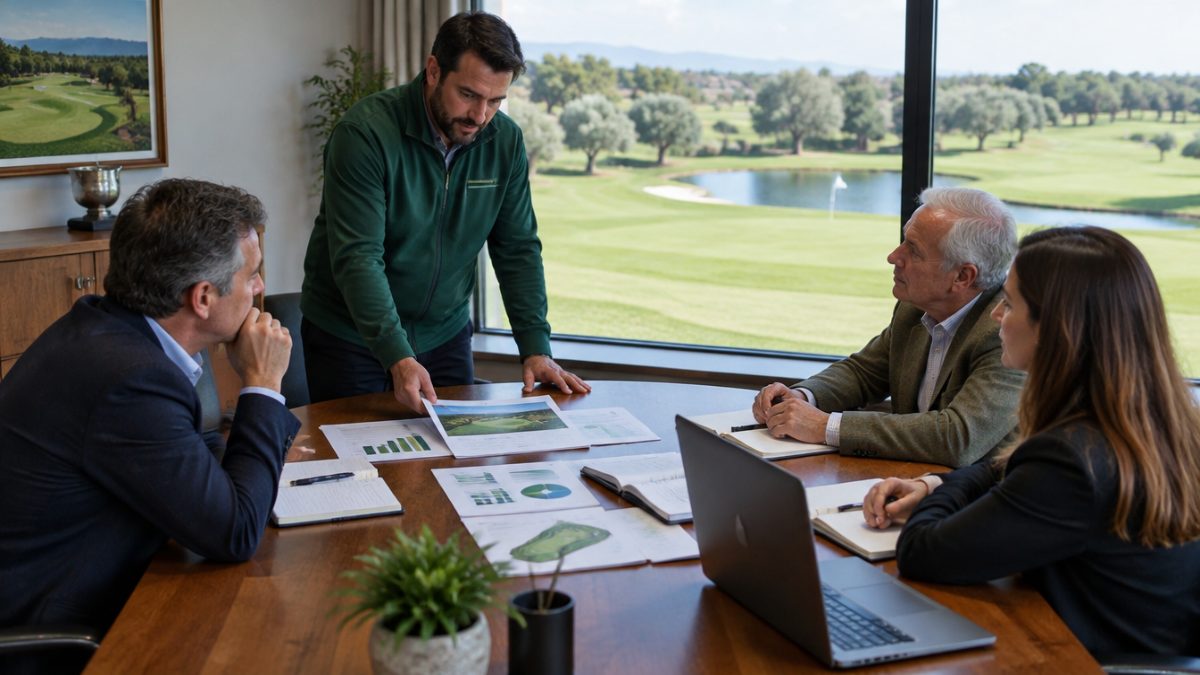
The course speaks, but it does not always explain itself. A head greenkeeper who communicates well avoids many conflicts: they give notice of work that affects play, explain why a green will be slower for a couple of weeks and listen respectfully to a reasonable complaint.
- Translate technical jargon into language the committee can understand.
- Report closures and work before, not after.
- Present short reports, with facts and proposals.
Trust is built through transparency, especially when things do not go well.
A simple practice is to walk the greens committee round the course for half an hour once a quarter. Seeing the course with the person who works it changes the conversation: it moves from complaining about one specific point to understanding the priorities and the real limits of resources, time and weather.
Safety, regulations and environmental management
Part of the head greenkeeper’s job is to ensure the course operates safely and complies with the applicable regulations: machinery handling, use of plant protection products, waste, discharges and water use. All of this must be done with staff training, orderly records and advice from authorised technicians.
Environmental management, moreover, is no longer an extra: members, institutions and the community expect a course that looks after water, biodiversity and its surroundings. Whoever builds it into the working routine, rather than treating it as a one-off action, gains credibility and reduces risk.
Adaptability and decision-making under pressure
An irrigation breakdown in the middle of August, a storm before a tournament, an unexpected absence in the team. The final skill of the head greenkeeper is to decide calmly and with the information available.
Some habits help:
- Identify the critical points on the course and have a plan B for each.
- Listen to the team before deciding, because they often know details that others miss.
- Own mistakes, analyse them without looking for someone to blame and document the lesson learned.
A well-managed course is not one that never fails, but one that recovers quickly and learns from every failure.
Further reading: GCSAA. Professional associations such as the GCSAA (Golf Course Superintendents Association of America) offer continuing education and a community for those who lead course maintenance.
Frequently asked questions
What training does a head greenkeeper need?
The usual route combines technical training in agronomy or sports turf management with years of practical experience on the course. Increasingly this is topped up with training in team management, budgeting and communication. A good head greenkeeper never stops learning and makes use of technical days and professional networks in the industry.
What is the difference between a head greenkeeper and a greenkeeper?
The greenkeeper carries out and supervises specific tasks on the course; the head greenkeeper takes overall responsibility: plans, leads the team, manages the budget, coordinates with management and answers for the final result. It is a step from a technical profile to a management profile that demands new skills.
How can a head greenkeeper improve the relationship with club management?
By communicating regularly and with data. Short reports, clear explanations of the work, anticipating problems and offering alternatives when cuts are proposed all build trust. A head greenkeeper who reports transparently, even when there is bad news, is usually valued more than one who only appears when there are complaints.
Keep reading
- Greenkeeping team: key roles and duties Greenkeeping team: 6 key roles and responsibilities
- Daily greenkeeper planning: effective steps Daily greenkeeper planning: 6 effective steps
- Software for greenkeepers Software for greenkeepers: 3 keys to the importance of software in golf course and facility maintenance management