
A golf course is maintained while the players sleep. Greens must be ready before the first tee time, and that shapes the whole organisation of the work. Designing greenkeeping crew shifts well affects surface quality, overtime spending and something just as important: the morale of the people who keep the course going every day.
In this article we compare five common scheduling models, with their advantages and limitations, and review the criteria for choosing and adjusting the one that best suits your club: size of the workforce, seasonality, tournament calendar and the applicable collective agreement.
Model 1: continuous working day with a dawn start
This is the most widespread and simplest scheme: the whole team starts at the same time, before the first play, and finishes in the afternoon with a short break for lunch. For greenkeeping crew shifts, its advantages are obvious: everyone overlaps, communication is easy and the most precise tasks are concentrated in the best hours.
However, it has limitations:
- In summer, the final hours of the shift coincide with the most intense heat.
- Weekends require a separate system, because the course is used more.
- If the group is small, green mowing, pin changes and irrigation compete for the same hands.
This model of greenkeeping crew shifts works well with small crews and in low-activity seasons, provided that breaks and the legal working-hour limits set by the collective agreement and current employment regulations are respected.
Model 2: staggered greenkeeping crew shifts with two start times
It consists of dividing the team into two groups that start one or two hours apart. The first takes care of the urgent work before play, such as greens, pins and tee markers, and the second takes on tasks that can be done with the course already in use or in full daylight.
Usual advantages of this scheme:
- The pressure of the start-up is reduced and a queue of machines at the workshop is avoided.
- Part of the team finishes earlier, which eases the hours in the full heat.
- A wider slice of the day can be covered with the same workforce.
In return, it requires good coordination of handovers and passing on what has been done to those who start later. A brief handover report avoids duplicating tasks or forgetting one. It is a highly valued formula for greenkeeping crew shifts on medium-sized courses with regular competition.
Model 3: split shift in summer, continuous in winter
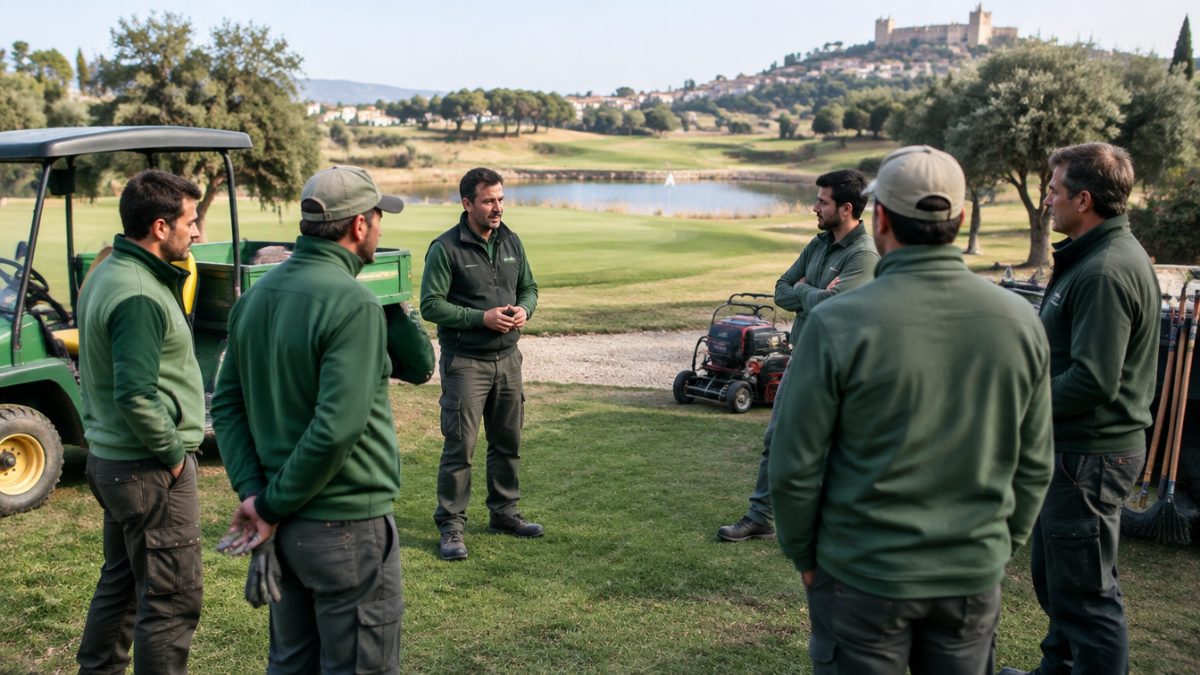
Many courses adapt the schedule to the season. In summer the work is concentrated in the early morning hours and light tasks are resumed in the late afternoon, avoiding midday heat. In winter, with fewer hours of daylight and cooler weather, a continuous working day is preferred.
To make this model work well:
- Define the dates for changing the schedule clearly and communicate them in good time.
- Reserve heavy or precision tasks for the most favourable hours.
- Take care of safety, with hydration, shade and breaks on days of intense heat.
Seasonal greenkeeping crew shifts improve occupational health and cut quality, but require a clear agreement with the workforce and respect for the terms of the collective agreement. It is worth checking with the human resources department or the labour adviser.
Model 4: rotation of weekends and public holidays
The course is played more when everyone else is working, and that means covering Saturdays, Sundays and public holidays. In greenkeeping crew shifts, rotation means sharing those shifts fairly among team members, so that nobody always carries them. It is usually combined with compensatory days off during the week.
To make the rotation fair:
- Publish the calendar with enough notice, so each person can organise their life.
- Define a minimum weekend team, with the essential tasks.
- Balance the distribution, taking experience and abilities into account.
- Record hours worked so they can be compensated correctly.
Good management of weekend greenkeeping crew shifts reduces absenteeism, avoids conflict and ensures the course is ready on the busiest days, such as tournaments and member competitions.
Model 5: reinforcement team for tournaments and high season
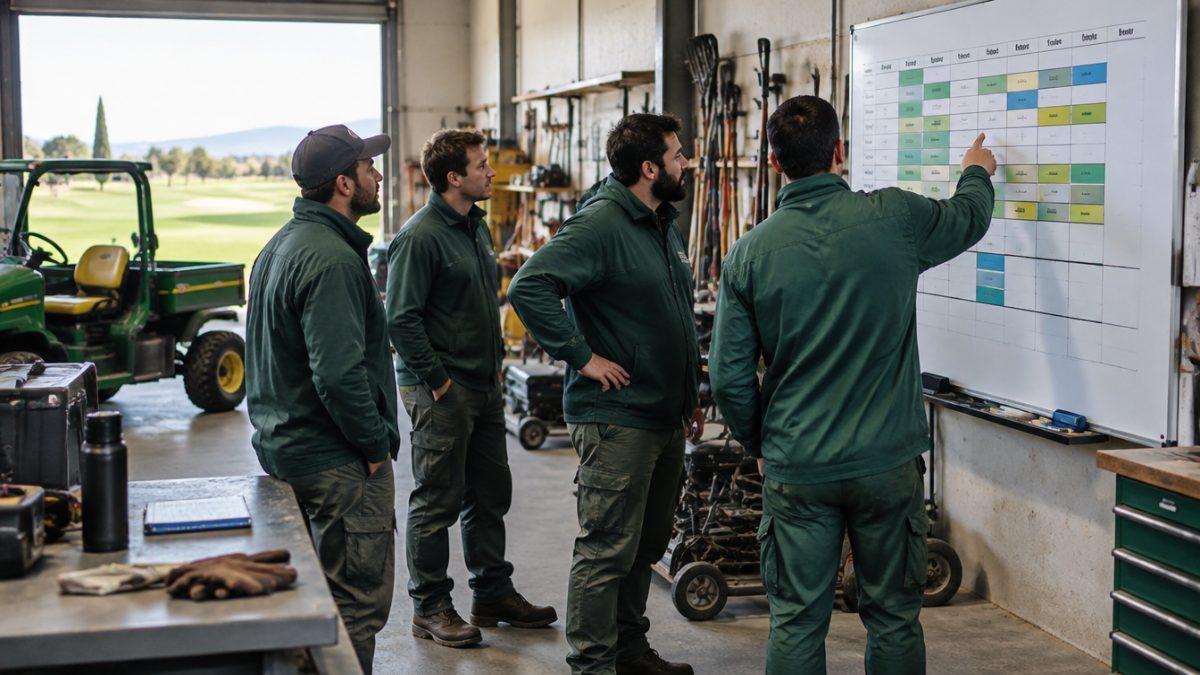
The work peaks that overwhelm the usual greenkeeping crew shifts, such as an important tournament, preparation for the high season or an intensive operation like aeration, are not solved with the ordinary schedule. At those times a reinforcement model usually works: temporary staff, scheduled overtime or collaboration with other clubs and specialist companies.
Some practical ideas:
- Plan peaks weeks in advance, using the club’s events calendar.
- Quickly train temporary staff in safety and basic tasks.
- Concentrate reinforcements on the tasks that contribute most, such as mowing, bunkers and pins.
- Watch the hour limits and mandatory rest periods.
This model of greenkeeping crew shifts avoids oversizing the workforce all year to cover a few days, but it needs foresight. Improvising reinforcements at the last minute usually proves expensive in money and in quality.
How to choose and adjust the scheduling model for your course
No model is perfect in the abstract; the good one is the one that fits your course and your people. To choose, start from the data: which tasks must be done before the first tee time, how many hours each requires and how many machines can work at once without getting in each other’s way.
A simple decision method:
- Make a list of tasks by time slot and their approximate duration.
- Cross that list with the available workforce and its foreseeable absences, such as holidays or sick leave.
- Trial the chosen model for a few weeks before fixing it.
- Listen to the team: those who live the schedule detect problems the rota does not show.
Review the shifts at least once a season. The tournament calendar, the evolution of the turf and staffing changes may call for adjustments. And always leave a margin for the unexpected, such as a breakdown or a storm, which upset any forecast.
Further reading: BOE (Spain's Official State Gazette). The employment regulations applicable to working hours and rest periods can be consulted in Spain's Official State Gazette.
Frequently asked questions
Which greenkeeping crew shifts work best in summer?
Those that concentrate demanding work in the first hours of the day and reduce exposure to midday heat, whether with a split shift or staggered start times. Take care of hydration, shade and breaks, and always respect the terms of the collective agreement and current employment regulations.
How do I share weekends fairly?
With a rotation published in advance, a defined minimum team and clear compensation in days off or hours. Recording who works each weekend avoids grievances and lets you check that the distribution is balanced. What matters is that the rules are known and applied equally to everyone.
How many people do I need on each course shift?
It depends on the size of the course, the machinery available and the playing calendar. A useful method is to list the essential tasks for each time slot, estimate their duration and calculate the people needed. Review that calculation each season to adjust the greenkeeping crew shifts to reality.
Keep reading
- steps for effective daily planning by the greenkeeper Daily greenkeeper planning: 6 effective steps
- key positions and roles in the greenkeeping team Greenkeeping team: 6 key roles and responsibilities
- maintenance tasks to prepare for a tournament Preparing a Golf Tournament: 8 Maintenance Tasks