

After a hard summer, September brings some relief and a lot of work at the same time. Nights cool down, the turf picks up its pace and it is time to repair what heat and play have left behind. The greenkeeper tasks in September largely decide how the course will look throughout the autumn.
This practical calendar for a Mediterranean climate covers seven priority jobs: assessing the condition of the course, aeration, overseeding, nutrition, irrigation adjustment, disease monitoring, and preparing machinery and crew. Adapt it to your grass species and to the reality of your area.
Assess the Course Before the September Greenkeeper Tasks
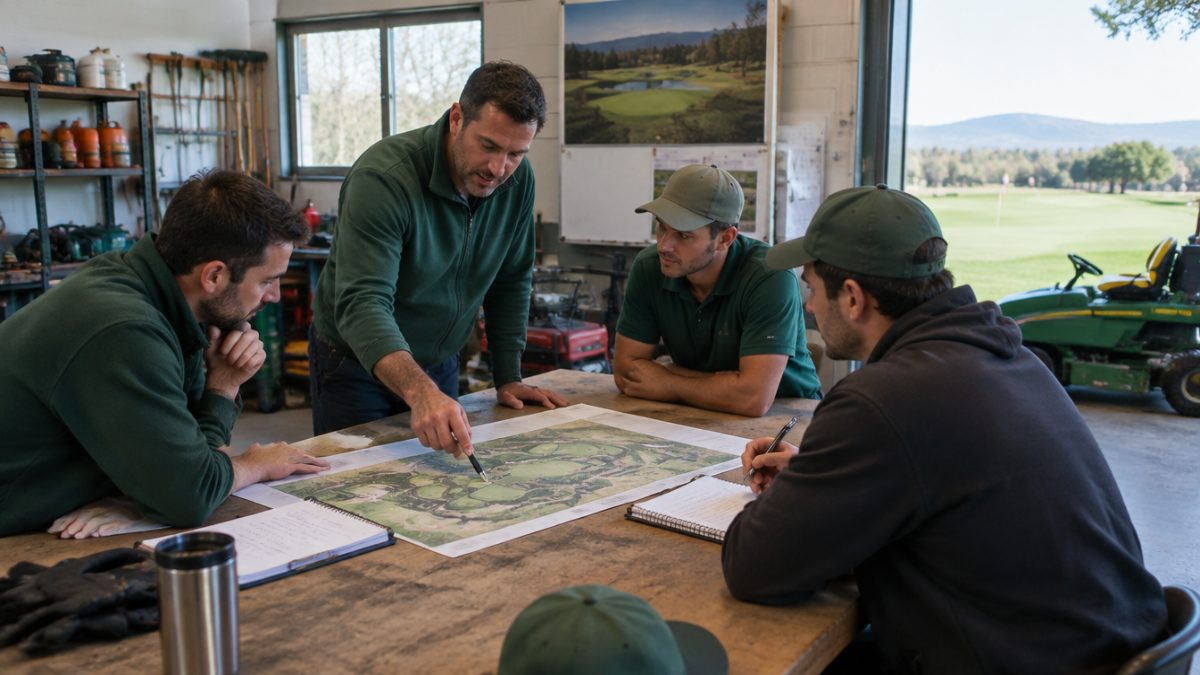
The first of the greenkeeper tasks in September is not done with a machine. Before you start aerating or overseeding, spend a few days making a serious diagnosis. Walk the course with a plan in hand and mark bare patches, compacted areas, dry spots, uneven ground and areas with excess thatch. That way you prioritise what really needs intervention and avoid working blind.
It is worth noting down:
- Areas damaged by heat, drought or disease during the summer.
- The holes with the heaviest traffic wear, such as tee boxes and green approaches.
- The condition of bunker edges, buggy paths and green surrounds.
- Drainage problems that have become obvious with the first rains.
With that map, the rest of the tasks organise themselves: you decide which job goes where and in what order.
Aeration and Top-Dressing to Bring the Soil Back to Life
Among the greenkeeper tasks in September, aeration is usually the star. With milder temperatures and moisture in the soil, the turf recovers quickly from the perforations, which makes this one of the best times to relieve the compaction built up over the summer.
The most common options are:
- Solid or fine-tine aeration, minimally invasive and very useful on greens.
- Core extraction to renew the profile and reduce organic matter.
- Top-dressing with sand compatible with the profile, to level the surface and dilute thatch.
- Verticutting or scarifying, depending on the state of the organic layer.
Choose the intensity according to the expected play: if tournaments are coming up, go for less aggressive operations. Let the club know in advance so that the temporary marks on the surface are understood.
Overseeding and Recovery of Damaged Areas
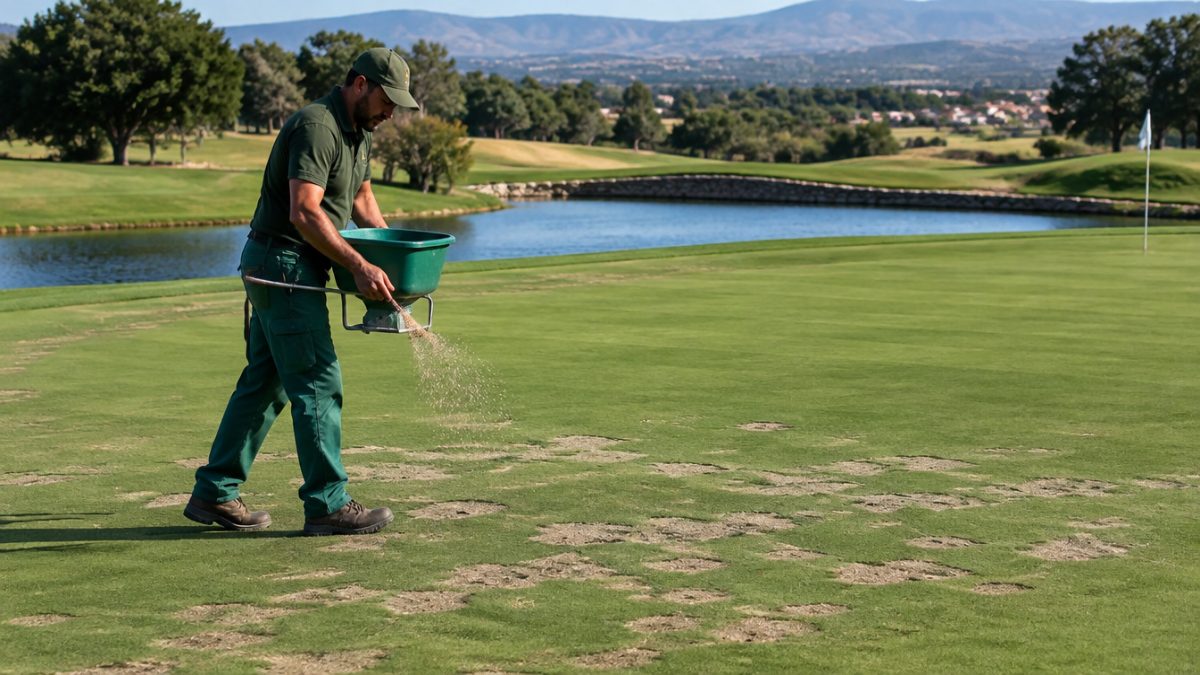
Among the greenkeeper tasks in September, closing bare patches is one of the most rewarding, and September is the ideal month to do it for many species. For cool-season grasses such as ryegrass or Poa annua, it is an excellent germination window. For warm-season grasses such as bermudagrass, recovery relies more on lateral growth that is still active, although the window narrows as the month goes on.
To make overseeding work:
- Prepare the seedbed well: aerate beforehand and ensure good seed-to-soil contact.
- Choose varieties adapted to the climate and compatible with the existing turf.
- Keep the surface moist with light, frequent irrigation until emergence.
- Protect the areas with ropes or signage while they establish.
Record the dates and seed rates used in each area, because in a few weeks they will help you judge which overseeding gave the best result.
Autumn Nutrition: Prepare the Turf for What Comes Next
When temperatures drop, turf uses nutrients better and stores reserves for the winter. Within the greenkeeper tasks in September, a good fertilisation plan supports recovery and strengthens the roots, without forcing excessive growth that would then suffer in the cold.
A few ideas:
- Rely on soil analysis to decide what to apply, instead of repeating last year’s programme.
- Look after potassium and micronutrients, which influence stress tolerance.
- Adjust nitrogen to the species and the goal: recovery, colour or simple maintenance.
- Take into account the nutrients in irrigation water and rainfall so you do not overload the turf.
Fertilisation should be planned together with overseeding and aeration, because the three operations reinforce one another.
Readjust Irrigation to the New Evapotranspiration
Adjusting irrigation is also among the greenkeeper tasks in September. With shorter days and milder temperatures, water demand drops noticeably. Keeping the August schedule in September means overwatering: it creates surface moisture, favours disease and wastes resources unnecessarily.
Review:
- Run times per zone, comparing them with current evapotranspiration.
- Areas that become waterlogged with the first heavy rains.
- Coordination between irrigation and forecast rainfall, so you do not irrigate right before a storm.
- The condition of the system after the summer workload, including pending repairs.
To close out these greenkeeper tasks in September, check the sensors or rain gauges on the course, if you have them, and analyse summer consumption to draw useful conclusions for next year.
Watch for Disease and Pests as Humidity Rises
Long nights, dew and the first rains create a favourable environment for fungi and certain insects. Among the greenkeeper tasks in September, the daily early-morning inspection is one of the most cost-effective, because spotting a patch early avoids having to treat large areas.
Good practices:
- Always identify the cause before acting.
- Encourage leaf drying with timely mowing and good air movement.
- Prioritise cultural measures within an integrated management approach.
If a plant protection product has to be applied, it must be done following the label, current regulations and the advice of an authorised technician, with properly certified staff and keeping a record in the treatment log.
Machinery, Crew and Autumn Calendar
The last of the greenkeeper tasks in September looks at the workshop and the people. After months of intensive use, the machines need a service: sharpening cylinders, changing filters and oil, greasing and checking hoses. It is better to find problems now than in the middle of an aeration campaign.
Also take the opportunity to:
- Bring the crew together after the holidays and assign responsibilities.
- Set the autumn work calendar and share it with management.
- Check stocks of sand, seed and fertiliser before they run out.
- Prepare partial closures for tournaments and course events.
A calendar of greenkeeper tasks in September shared by everyone, with owners and dates, avoids oversights and makes it easier to adjust on the fly when the weather does not cooperate.
Further reading: AEMET. Before scheduling aeration and overseeding, it is worth checking the forecasts of AEMET, the Spanish State Meteorological Agency, to avoid heavy rain or heat episodes.
Frequently asked questions
What are the most important greenkeeper tasks in September?
The most important are usually assessing the condition of the course after summer, aerating and top-dressing, overseeding damaged areas and adjusting fertilisation. Added to these are reducing irrigation to the new demand, watching for disease as humidity increases and servicing machinery before the autumn campaign.
Is September a good time to overseed?
Generally yes, especially for cool-season species, which germinate very well in mild temperatures and moist soil. For warm-season species the window is tighter and depends on the area. It pays to prepare the seedbed well, keep the surface moist and protect the areas until they establish.
How should the crew be organised for the greenkeeper tasks in September?
The most practical approach is a shared calendar with owners, zones and dates, reviewed in a short weekly meeting. This way intensive jobs are distributed, partial closures are coordinated with management and plans can be adjusted when the weather forces a change of order.
Keep reading
- greenkeeper tasks in August Greenkeeper Tasks in August: 7 Key Jobs
- winter overseeding Winter overseeding: 6 steps for a green course
- how to control thatch on greens Thatch in greens: 6 warning signs and how to reduce it