
The golf rough is the largest surface on many courses and yet the least planned. It is mown when there is time, at whatever height the last person to adjust the machine left it, and the problem is discovered when members complain that they cannot find the ball or that the course looks like a meadow.
A well-defined rough penalises errors without ruining the round, protects the fairways and is maintained at a reasonable cost. These five rules help you set the height, frequency and transition of your golf rough, with criteria you can adapt to the species and climate of your course.
Rule 1: Define the Function of the Golf Rough Before the Height
Before touching the machine, it pays to answer one question: what role should the rough play on this course? A tournament layout, which seeks to penalise inaccuracy, is not the same as a members’ course that is mostly recreational, where pace of play weighs more. The answer shapes every other decision.
- On championship courses, the golf rough can be taller and more demanding, especially around the greens.
- On courses with a brisk pace, a moderate height is preferred that lets players find the ball and play a reasonable shot.
- On resort courses, with many occasional visitors, playability is usually the priority.
Document the decision and share it with management and the green committee, so that the height does not depend on each season’s personal taste.
Rule 2: Step the Height in Bands, Not a Single Figure
Almost every course works better with rough in two or three bands. A first band, next to the fairway, at an intermediate height that penalises little; a second, taller one, that punishes more severely; and, sometimes, a third towards the naturalised areas or the edges of the course.
The benefit of stepping is twofold. For the player, the penalty grows progressively with the error. For the crew, the work is easier, because the machine passes more often over the inner band and less over the outer one.
- A narrow first band, next to fairways and around greens, mown frequently.
- A wider second band, with lower frequency and greater height.
- Out-of-play areas, converted into low-maintenance zones.
It is useful to draw the bands on a course plan and adjust them after observing where the ball really lands. A week of observation on key holes, noting where balls are lost or poorly played, provides more information than any general rule about the golf rough.
Rule 3: Adjust the Height to the Species and the Season
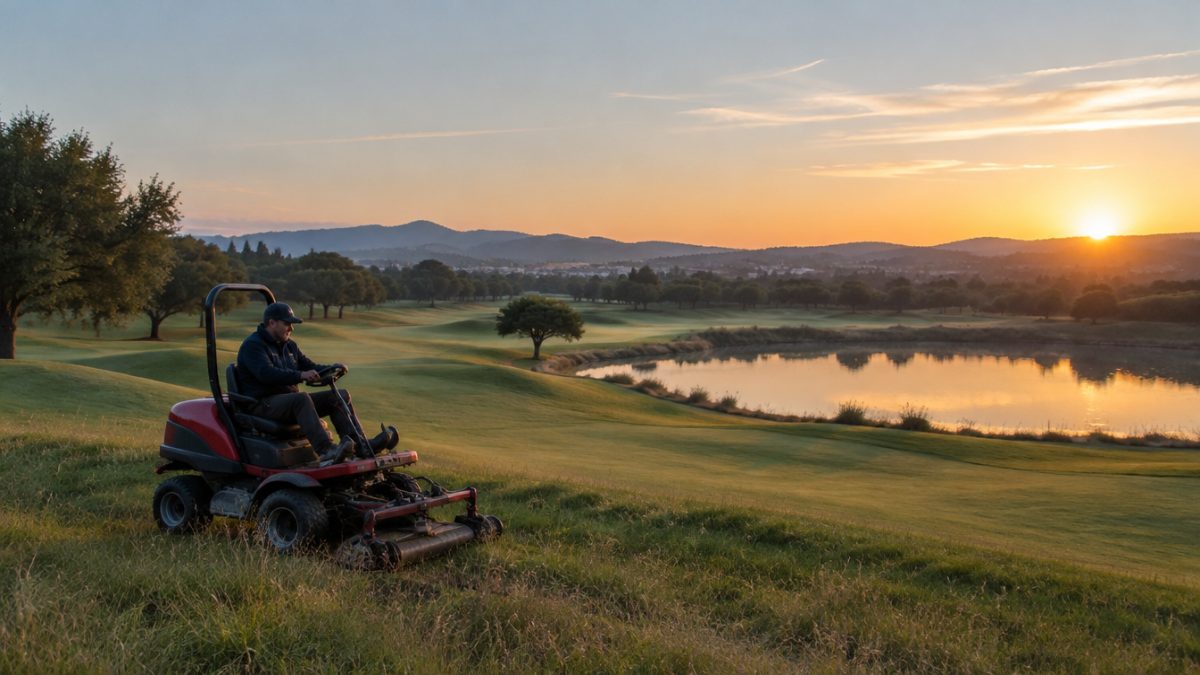
The same height does not behave the same way in bermudagrass, kikuyu, ryegrass or fescue. In warm-season species, the rough tends to thicken quickly in summer and can become an impossible trap after a week of rain. In cool-season species, growth is more intense in spring and autumn.
- Watch the relationship between growth and frequency: a rough that is too tall and cut all at once leaves a lot of clippings and looks messy.
- Avoid removing more than a third of the leaf in a single pass.
- Raise the height slightly in the most stressful months to protect the plant from heat and drought.
Note the actual height after each adjustment and compare it with what the machine indicated; with use, cylinders and blades wear and the real reading changes.
Rule 4: Take Care of the Transition to Fairways and Greens
The area where the golf rough meets the fairway or the green collar is where sloppy work shows most. An abrupt jump in heights produces an uneven look and makes the ball behave unpredictably. A careful transition improves both appearance and playability.
- Define an intermediate band of medium height between the fairway and the tall rough.
- Keep edges well aligned: clean, curved lines give the feeling of a well-kept course.
- Avoid running the rough mower over wet or freshly treated areas so as not to drag mud or product.
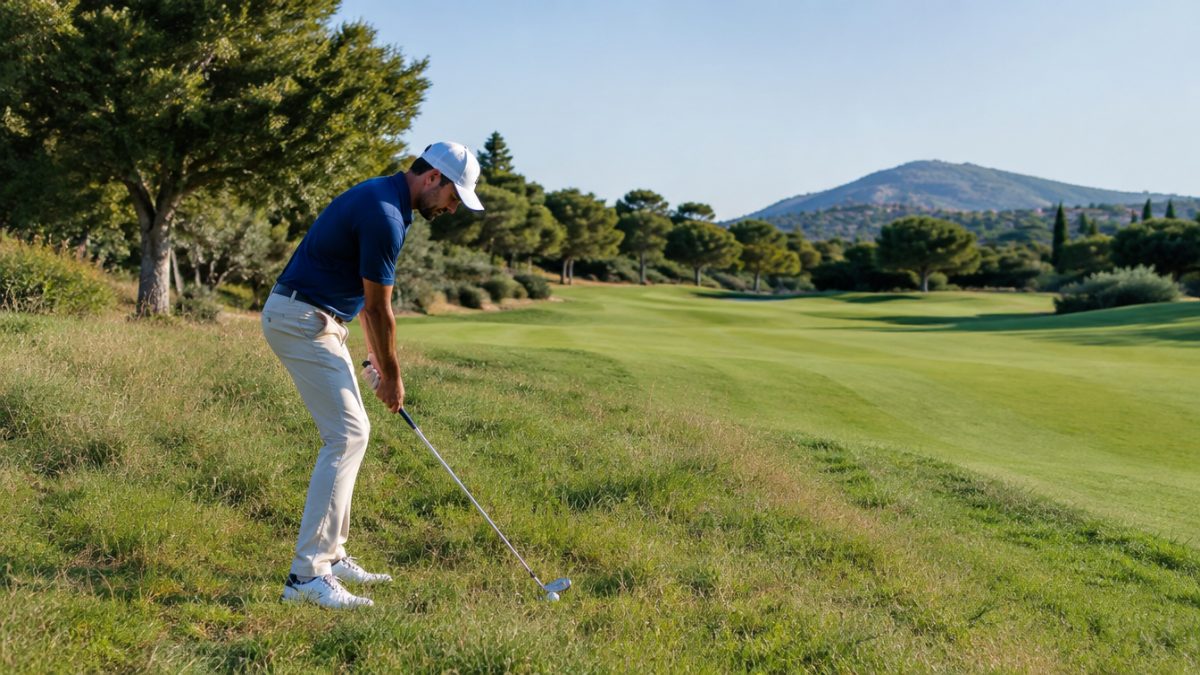
Also check the rough near bunkers and water hazards. There, excessive height can prevent any recovery, and the feeling of unfairness affects how the course is rated. Listen to players too: if several agree that a certain side of a fairway feels disproportionate, the golf rough in that area probably needs review.
Rule 5: Plan Frequency, Machinery and Records
Maintaining the golf rough consistently demands more organisation than power. A course can have the perfect height on paper and still fail because mowing is delayed week after week.
To avoid this:
- Set a minimum frequency per band and season, and check that it is met.
- Alternate the mowing direction to prevent the turf from lying flat and lines from showing.
- Check the sharpness of blades or cylinders; mowing with a poor edge tears the leaf and yellows the surface.
- Record hours, machine and operator to know how much it really costs to maintain each hectare.
That record helps compare with the cost of converting part of the rough into a low-maintenance zone, a common decision on courses seeking to cut costs or environmental impact. It pays to do it gradually, starting with the least-played surfaces, and to check for a full season how the course responds before expanding it.
Further reading: R&A. To understand how playing conditions and the balance between difficulty and pace of play are conceived in competitions, it is useful to consult the resources of the R&A.
Frequently asked questions
What height should the golf rough be?
There is no universal figure. It depends on the species, the climate and the type of course. As a guide, golf rough is stepped in bands: an intermediate one next to the fairway and a taller one towards the outside. What matters is that it penalises errors without preventing recovery, and that the height is documented and consistently maintained.
How often should golf rough be mown?
It depends on the season and the growth rate. In periods of strong growth, the inner band may need weekly mowing, while the outer areas are cut less often. It is advisable not to remove more than a third of the leaf in each pass and to adjust the schedule according to the weather.
How do I reduce the cost of the golf rough without harming play?
The most effective approach is to reduce the area under intensive maintenance: keep narrow, well-kept bands next to fairways and greens, and convert out-of-play areas into low-maintenance zones. Measuring hours and consumption per band lets you decide with data and avoid cuts that affect the player's experience.
Keep reading
- How to choose the mowing height of turf Mowing height: a complete guide by course zone
- Fairway maintenance on golf courses Golf Fairways: 6 Keys to Quality Maintenance
- Managing naturalised areas on the course Naturalised Areas in Golf: 6 Management Keys