
Golf courses run on tight margins: few staff, a lot of surface area and turf that does not wait. When something goes wrong, every hour counts. That is why a golf course contingency plan is not bureaucracy, but the difference between solving a problem in one morning or dragging it on for weeks.
In this article we review six critical situations that are worth planning for, what each protocol should include and how to keep the document alive so the team really uses it when the pressure is on.
What a golf course contingency plan should contain
A good golf course contingency plan is brief, concrete and accessible. If it runs to fifty pages, nobody will open it at seven in the morning with a problem on their hands. Structure it with one sheet per scenario that always answers the same questions:
- How the problem is detected and who raises the alarm.
- Who decides and who carries out each action.
- What resources are needed: machinery, materials, suppliers, emergency contacts.
- What is communicated, to whom and within what timeframe.
- How to return to normal and what is reviewed afterwards.
Add an up-to-date list of phone numbers and the location of stopcocks, electrical panels and main valves. It seems obvious until the only person who knew is on holiday.
Situation 1: pumping failure or supply cut
This is the most feared scenario in summer. Without irrigation, greens can suffer within days, especially on cool-season turf or sandy soils. The protocol should say which areas take priority (greens and tees before rough), how to switch to hand watering and which shifts are organised.
Also define a list of critical spares in the store and a technical contact with quick availability. If there is a reservoir, calculate how many days of autonomy it provides under reduced irrigation. That figure, noted in the golf course contingency plan, guides all later decisions.
It pays to rehearse the switch to hand watering before you need it: check that there are enough hoses and portable sprinklers, that staff know how to use them and that the water distribution does not cause waterlogging in the lowest areas.
Situation 2: storms, flooding and wind
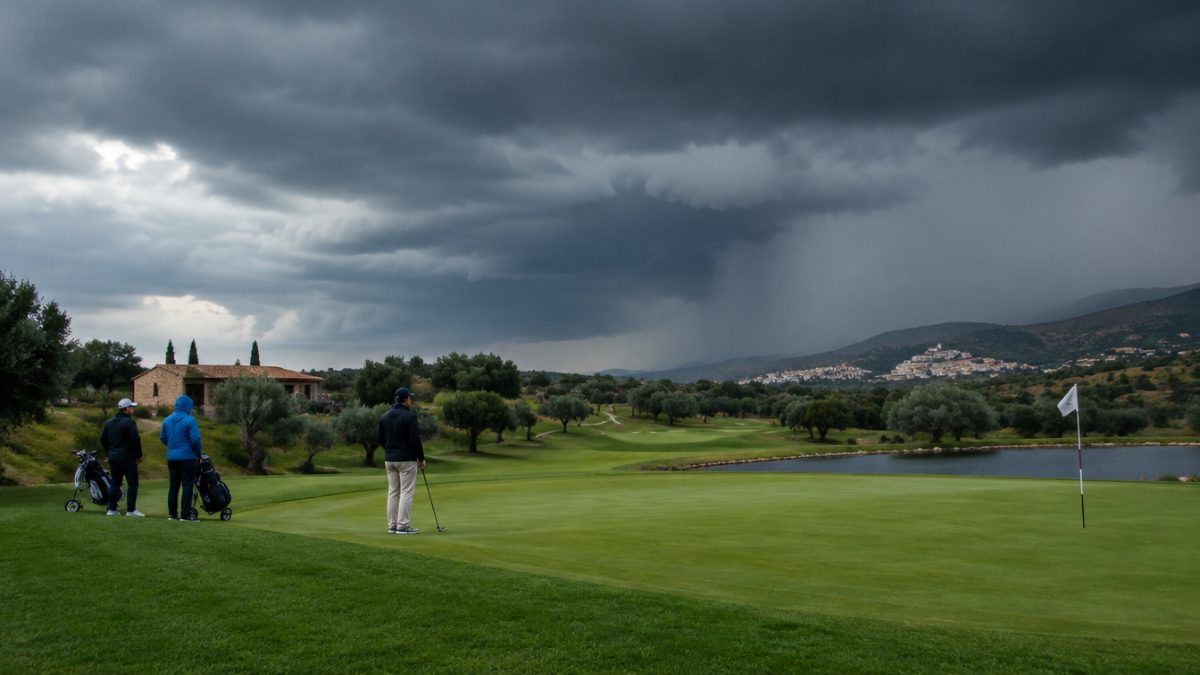
Heavy rain leaves bunkers washed out, paths eroded and drains saturated; wind brings down branches and trees. Plan a sequence of action: safety of players and staff, closing off areas, inspecting trees, clearing drains and repairing bunkers in order of importance.
For weather monitoring, set alert thresholds that trigger the protocol. When the warning arrives in advance, you can remove movable items, secure machinery and bring forward tasks to minimise damage. Document the condition after the event with photographs, because it will help with insurance and with future drainage decisions. This section of the golf course contingency plan should also record which areas are most vulnerable, so you check them first.
Situation 3: disease outbreak or pest
A sudden fungal attack in hot, humid conditions, or an insect pest, demands a quick but orderly reaction. The golf course contingency plan should set out who diagnoses, when a second opinion is sought and how to contact an authorised adviser.
Any plant protection treatment must follow the label, current regulations and the instructions of an authorised technician or adviser. What the golf course contingency plan can provide for is the organisational side: isolating the area, reducing cultural stress, adjusting irrigation and mowing, and recording each intervention to have full traceability.
Situation 4: staff shortages at key moments
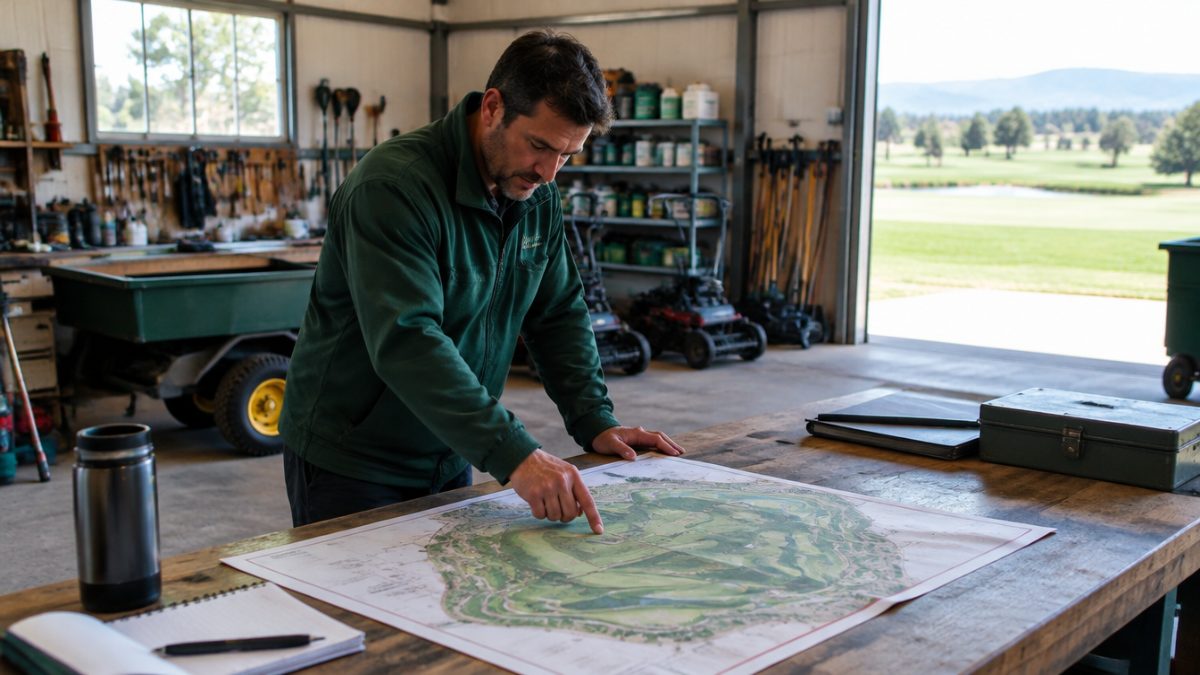
Sick leave, poorly coordinated holidays or staff turnover can leave the course short-handed in the most delicate week. A good response combines multi-skilling (more than one person knows how to do each critical task), a list of priorities and a prior agreement with companies or reinforcement staff.
Establish a hierarchy of tasks: essential, deferrable and dispensable. That way, when resources are short, nobody has to decide under pressure what gets done first. Practising this matrix in a calm drill saves arguments when the problem is real.
Include in the golf course contingency plan the contact details of reinforcement staff and service companies, with a note on their usual availability and how long they take to start. An up-to-date address book is a simple resource that often makes the difference in the first hour.
Situation 5: problems before a tournament
An important event multiplies the exposure of any failure. Prepare an alternative version of the work plan in advance: what to do if it rains the day before, if a mower fails or if green speed does not reach the target agreed with the committee.
- Reserve machinery checked and with cutting units adjusted.
- Calendar of cutting-height adjustments and rolling with room to manoeuvre.
- Clear communication with the sports director about changes to pin positions or the course layout.
Anticipation is the best contingency: the less you depend on a single perfect day, the more robust the result. A golf course contingency plan geared to tournaments should also include a single communication channel with the organisers, so that decisions reach everyone involved at the same time.
Situation 6: safety incidents and fire
In summer, the fire risk in areas bordering dry vegetation means you need evacuation routes, water points, checked extinguishers and a protocol for alerting the emergency services. You also have to plan for machinery accidents, fuel or oil spills and contact with chemical products.
Plan periodic training and leave written instructions next to each critical point. And remember that the golf course contingency plan does not end when the incident is resolved: review what worked and what did not, update the sheets and share the lessons with the whole team. A document that is touched up after each episode becomes, over the years, the operational memory of the club.
Further reading: AEMET. To set your weather alert thresholds, it is wise to rely on the official warnings from Spain's State Meteorological Agency (AEMET).
Frequently asked questions
How often should the golf course contingency plan be reviewed?
At least once a year, before the period of greatest risk, and always after a real incident or a significant change: new machinery, changes in staffing or modifications to the irrigation system. An outdated plan can be more dangerous than having none.
Who should write the golf course contingency plan?
The head greenkeeper leads it, but it works best if the manager, the mechanic, the irrigation manager and, in some scenarios, the sports director take part. The more course staff who know it and validate it, the more likely it is to be applied correctly.
Can contingency drills be run on a golf course?
Yes, and they are highly recommended. A short drill, for example a pumping failure or a storm warning, lets you check whether phone numbers are up to date, whether everyone knows where the valves are and whether responsibilities are well distributed before the problem is real.
Keep reading
- Daily planning for the greenkeeper Daily greenkeeper planning: 6 effective steps
- Risk prevention in greenkeeping Risk Prevention in Greenkeeping: 7 Practical Measures
- How to prepare a golf tournament from the course side Preparing a Golf Tournament: 8 Maintenance Tasks