
When a greenkeeper looks abroad for inspiration, the GCSAA comes up straight away. It is the association that brings together golf course superintendents in the United States and which, over its history, has built a very solid professional culture around training, certification and communicating the value of course work.
The point is not to copy a model from another country, with a different climate, different rules and different budgets. It is to extract applicable ideas. Below we review five lessons from the GCSAA approach that can improve the professionalism and visibility of a maintenance team anywhere, including in Spain.
Idea 1: professionalising the role, a hallmark of the GCSAA
One of the most characteristic features of the GCSAA is that it treats the superintendent as a professional with a career, not just an inherited trade. It promotes training pathways, a code of conduct and voluntary certification routes that accredit experience and knowledge.
Applied to your own course, this invites you to consider:
- What competencies you expect from a head greenkeeper and how they are assessed.
- Which courses, qualifications or experience are relevant for each position.
- How the employee who trains and takes on more responsibility is recognised.
When the club understands that greenkeeping is a technical profession, it values the team’s decisions differently, from a machinery budget to a temporary closure of an area. That perception is part of the association’s legacy.
Idea 2: continuing education, the superintendent's hallmark
Continuing education is probably its best-known contribution: seminars, field days, online resources and annual conferences where colleagues share experiences. The message is clear: no superintendent knows everything, and the industry evolves too fast to stop learning.
You can adapt this philosophy with modest steps:
- Set aside a small annual training budget per person.
- Attend technical days and then share what was learned with the whole team.
- Visit other courses and compare methods with colleagues.
- Follow the technical publications of national and international associations.
A culture of learning is contagious. Someone who comes back from a field day with a new idea and tries it on a tee box or a small green shows the rest that training pays off.
Idea 3: best practices and sustainability according to the GCSAA
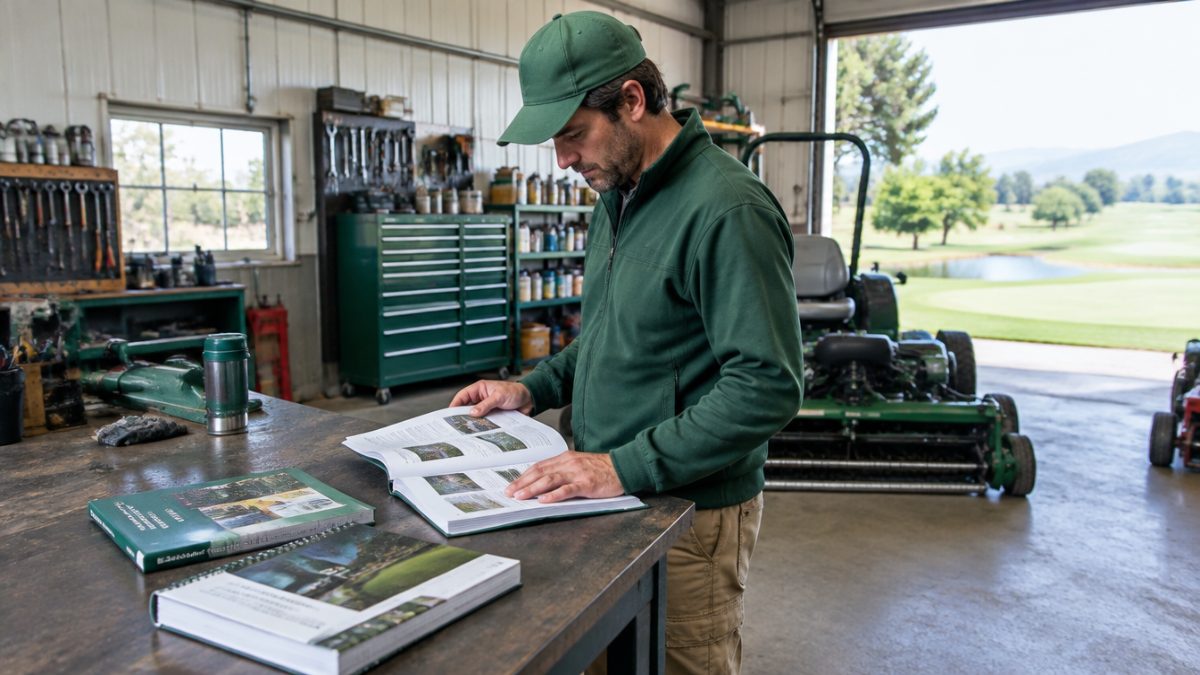
Another pillar of the association is environmental management. It publishes best management practice guides for water, nutrients, plant protection products and biodiversity, with the aim that each course can document that it looks after its surroundings.
The transferable idea is simple: turn general principles into concrete, verifiable practices on your course.
- A water management plan with consumption targets.
- A protocol for storing and handling products.
- An inventory of naturalised areas and their improvements.
- A schedule for monitoring and periodic review.
In Spain, these plans must be adjusted to local and regional regulations, but the framework is useful anywhere. What this model reminds us is that sustainability is demonstrated with recorded facts, not with statements.
Idea 4: communicating the value of course work
The association has devoted a lot of effort to getting members, players and managers to understand what lies behind a course in good condition. It offers materials to explain why you irrigate, why a tee is closed or why you aerate in the middle of the season. Communication is part of the superintendent’s job.
You can apply this at your club with simple tools:
- A short weekly report for management, with tasks carried out and planned.
- Clear notices to members about aeration and area closures, and the reasons for them.
- Before-and-after photographs to illustrate the results of an intervention.
- A regular meeting with the green committee, with data on the table.
An informed member complains less and supports more. Its communication approach can be summed up in one sentence: if it is not explained, it is not valued.
Idea 5: measuring and sharing data, as the GCSAA community does
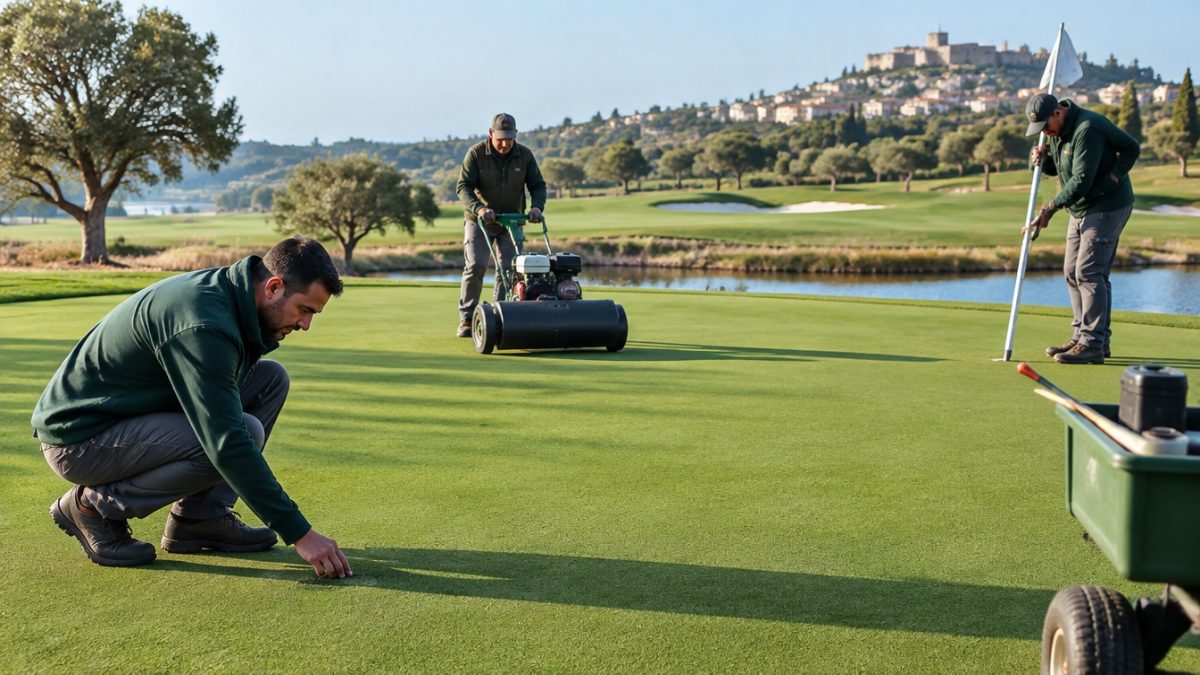
The last lesson is cultural. In its community it is common to compare results, costs and methods between similar courses, always with an intention to improve. Measuring lets you negotiate budgets, justify investments and detect deviations before they become a problem.
To start measuring on your course, choose a few indicators and maintain them over time:
- Work hours by zone and by task.
- Water consumption by sector and by month.
- Maintenance cost per hole or per hectare.
- Machinery incidents and downtime.
You do not need dozens of data points. With a few reliable indicators that are comparable from one year to the next, a team can already talk to its management in a common language. That transparency is, at heart, the great lesson of benchmarks like the GCSAA: what is measured and communicated can be defended.
How to start applying these ideas on your course
None of the five ideas requires a large structure. The sensible approach is to choose one and start with it for a quarter, instead of trying to change everything at once. A team that tries, measures and adjusts learns more than one that drafts ambitious plans and does not carry them out.
A realistic sequence could be:
- Meet with the team and ask what they feel is missing in training and information.
- Choose a single indicator and a single regular report for management.
- Set a review date and assess what has worked.
- Bring in the next idea when the previous one is established.
Remember that adapting a foreign model is always an exercise in translation: same principles, different context. What is valuable is the working method, the discipline of recording and the humility to learn from other colleagues.
Further reading: GCSAA. You can explore its education, certification and best practice programmes directly on the GCSAA website.
Frequently asked questions
What is the GCSAA and whom does it represent?
The GCSAA is the association that brings together golf course superintendents in the United States. It offers training, technical resources, voluntary certification and representation of the industry. Although its context is American, its materials and its way of understanding the profession serve as inspiration for greenkeepers in other countries, including Spain.
Can a greenkeeper in Spain use GCSAA resources?
Yes, many of the GCSAA's technical and educational contents are a good reference on agronomy, water management or communication. They do, however, need to be adapted to the climate, species and regulations of each country, and local regulations and an authorised technician should always be consulted before applying products.
What can a small club learn from the GCSAA?
The most useful things do not require big budgets: continuing education, orderly records, clear communication with members and a few well-chosen indicators. A small club can apply the GCSAA approach by starting with a weekly report for management and a realistic annual training plan for the team.
Keep reading
- useful USGA Green Section resources for greenkeepers USGA Green Section: 5 useful resources for greenkeepers
- skills of a good head greenkeeper Head Greenkeeper: 7 Skills of a Good Leader
- useful indicators for measuring course maintenance Course Maintenance KPIs: 8 Useful Indicators