

In February the course seems asleep, but the days are lengthening, the first rises in temperature bring out the weeds and the spring calendar starts to tighten. The greenkeeper tasks in February decide how much work March will bring: what is done now is greatly appreciated when the turf wakes up.
Below we go through seven common jobs in temperate and Mediterranean climates. Not all will apply to your course or at the same time; order them according to your species, your altitude and your tournament schedule, and use them as a guide to build your own February list.
Review the winter's toll and the condition of the turf
The first of the greenkeeper tasks in February is to take stock: walk the course with a notebook and note what winter has left behind. Bare patches, compaction at buggy path entrances and exits, frost marks, cart tracks, wildlife damage, disease spots that have stabilised.
Photograph each finding and classify it by urgency. Some damage will call for immediate repair, such as filling worn areas with quality material; other damage will wait until the turf resumes growth. Keeping this list in view avoids forgetting problems when temperatures rise and work piles up. Share it with the crew: whoever works every day on each hole often knows details that appear on no inspection round.
Adjust mowing, among the greenkeeper tasks in February, as the days lengthen
Among the greenkeeper tasks in February, mowing changes pace. With more light and slightly higher temperatures, ryegrass and Poa annua speed up, and you may need to restore mowing frequency on greens and tee boxes. Lower cutting heights gradually, not all at once, to avoid stress and scalping.
- Check the sharpening and adjustment of all cutting units before stepping up the work.
- Watch cut quality at edges and corners, where loose adjustment shows most.
- Avoid mowing frozen or very wet leaves, because it tears the tissue and favours disease.
In February it is common for areas that are already growing to coexist with others still dormant; treat each at its own pace.
Plan spring aeration and top-dressing
Spring is the big window for aeration and top-dressing sand, and February is the month to organise them. Decide which areas will need deep work, which only surface work, how much top-dressing material you will need and when you can close greens without clashing with tournaments or major events.
Placing orders early avoids surprises in lead times and prices, and lets you check the quality of the sand. If any green has a history of compaction or thatch, give it priority in the plan. Among the greenkeeper tasks in February, this planning is the one that gives the most peace of mind later.
Anticipate weeds and schedule fertilisation
Another of the greenkeeper tasks in February is to look at the ground. Winter and spring weeds take advantage of gaps and moisture. Identify which have appeared on your course, in which areas and at what density, and assess with your adviser the timing and type of action. Any herbicide or plant protection product must be applied following the label, current regulations and the advice of an authorised technician.
On fertilisation, do not rush: applying too early, into cold soil, is money badly spent and can cause soft growth. Rely on the soil analysis, the species and the forecast to set a cautious start-up programme. Recording what was applied and the results will help you next year.
Test the irrigation before it is needed
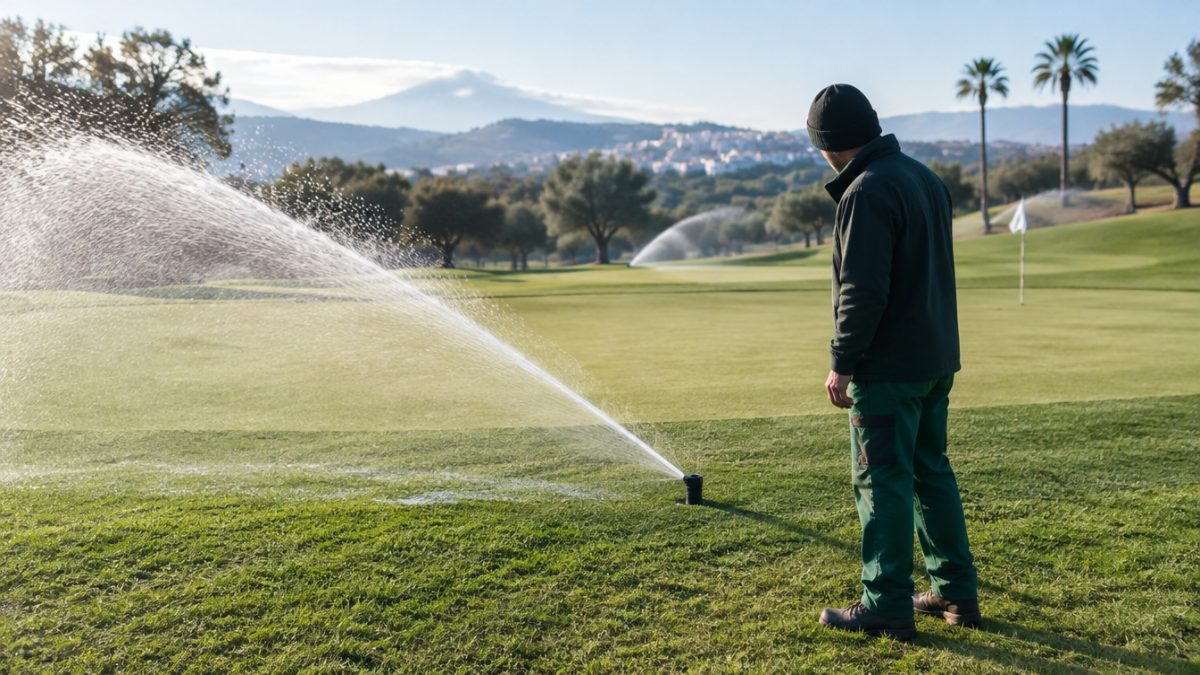
Even though little irrigation happens in February, testing the system is among the greenkeeper tasks in February: run the system sector by sector and check that everything works before the spring demand. Check sprinklers, valves, controllers and pressures, and note any incidents in a report.
Any leak or fault detected now can be fixed calmly. If it is discovered in April or May, with turf growing and players on the course, it becomes an emergency. Use the opportunity to update irrigation schedules to the real needs of the season, without carrying over run times inherited from summer.
Look after bunkers, paths and the details players see
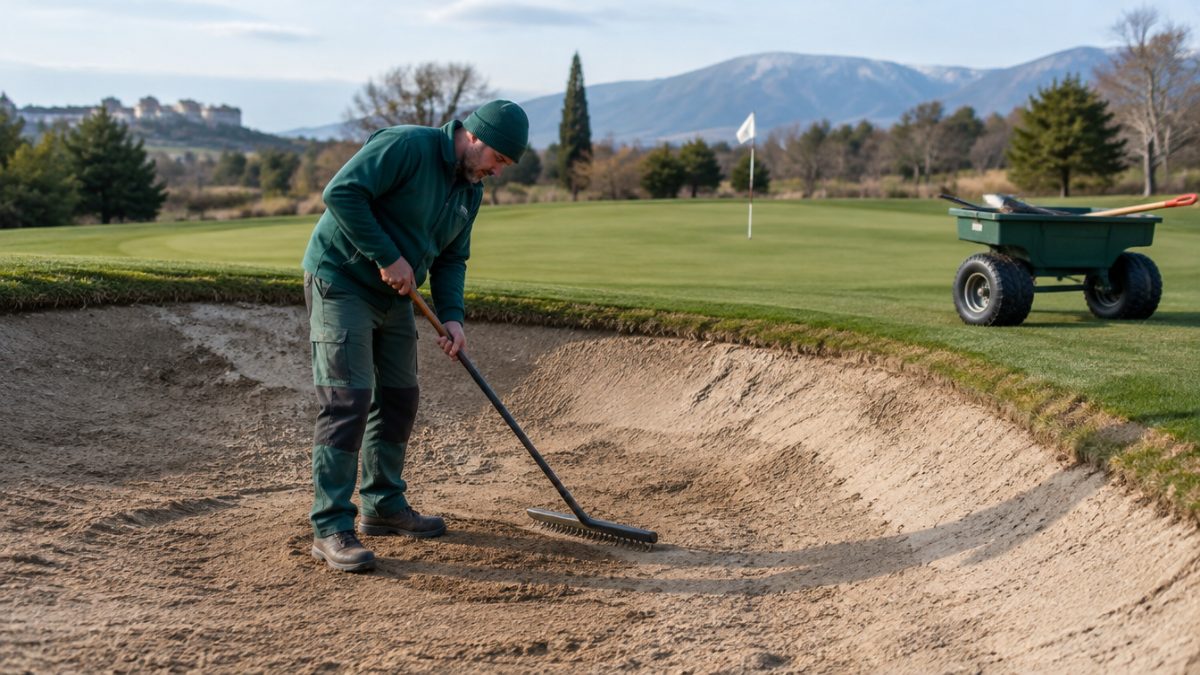
Among the greenkeeper tasks in February, the details players notice count. After months of rain, bunkers often need attention: contaminated sand, eroded edges, blocked drains or compacted areas. It is a good time to top up sand, rake and repair faces. It is also a good time to check paths, signage, benches, bins and markers, which accumulate wear and give an impression of neglect if not attended to.
A course that reaches March with the details looked after shows there is a team behind it, even if the turf is not yet at its best. Prioritise what is most visible and what affects the safety of players and buggies.
Close out the greenkeeper tasks in February by preparing the team and the calendar
The last of the greenkeeper tasks in February is a human one: review staffing, seasonal hires, holidays and training needs. Schedule the arrival of extra staff with enough time to train them in safety, machinery and the course’s quality standards.
Use the opportunity to fix the tournament and event calendar into the work plan, so that heavy jobs do not clash with them. End the month with a brief meeting with each person in charge and put the allocation of March tasks in writing. When the whole team knows what is expected of them, the season gets off to a good start.
Further reading: AEMET. To adjust the task calendar to temperature trends, consult the forecasts of Spain's State Meteorological Agency (AEMET).
Frequently asked questions
Which greenkeeper tasks in February cannot be delayed?
Those that affect safety and those that get more complicated if left for later: checking irrigation, sharpening and adjusting cutting machinery, planning sand and seed purchases, and hiring or training seasonal staff. The rest is ordered by the urgency set by the condition of the course.
Is February a good time to fertilise?
It depends on the area and the species. On many courses it is still cold and the turf grows little, so it is best to wait or apply cautiously. It is advisable to base the decision on a soil analysis and a technician's advice, and always follow the label and current regulations.
How do you organise the greenkeeper tasks in February without losing control?
Use a list prioritised by urgency and impact, with an owner and a date for each job. Review progress once a week and readjust the plan if the weather changes. Noting what is done and what is pending stops tasks being forgotten when activity picks up in March.
Keep reading
- Greenkeeper tasks in January: 7 key jobs Greenkeeper tasks in January: 7 key jobs
- Thatch in greens: warning signs and how to reduce it Thatch in greens: 6 warning signs and how to reduce it
- Daily greenkeeper planning: effective steps Daily greenkeeper planning: 6 effective steps