
There is a lot of talk about artificial intelligence in the industry, and on the course the usual reaction swings between enthusiasm and scepticism. The truth lies in between. Generative AI for greenkeepers does not replace the experience or the trained eye of someone who knows every hole, but it can lighten the desk tasks that steal time from managing the course.
In this article we review six practical uses that any crew can try with caution, which mistakes to avoid and what data should never be entered into an external tool. No hype: what works and what still needs human supervision.
Use 1: drafting reports and notices for the green committee
The first natural territory for generative AI for greenkeepers is text. From your notes, you can ask for a monthly summary, a notice to members about an aeration operation or an explanation of why the greens are running slower. You supply the facts; the tool helps with structure and tone.
- Turn loose notes into an organised report.
- Adapt the same message for members, management or suppliers.
- Always check figures and dates: the draft is yours, not the machine’s.
A good habit is to save a set of instructions that works for you, for example “write a two-paragraph report for the committee, in clear language with no jargon”, and reuse it every month. With generative AI for greenkeepers, consistency in how you ask makes the difference to the quality of what you get back.
Keep in mind that a well-written text is not necessarily a correct one. If the report says a number of greens were aerated, that figure must come from your records, not from the tool’s imagination.
Use 2: preparing training material for the crew
Training new operators takes time. With the help of an AI tool you can turn a procedure into an illustrated sheet, a short check quiz or a checklist for the workshop. It can also adapt technical language to a simpler level for someone joining with no experience.
That said, the technical content must be validated by the head greenkeeper before it is handed out. An instruction on mowing heights or safety that contains an error is worse than having none.
One effective way to use generative AI for greenkeepers in training is to ask it for review questions based on your own procedures: ten questions on the mowing protocol, for example, which you can put at the morning meeting. It turns learning into a short, regular conversation instead of a long, infrequent session.
- One-page sheets per machine or per task.
- Review questions on safety and operation.
- Simple glossaries for new staff.
Use 3: organising and summarising data you already have
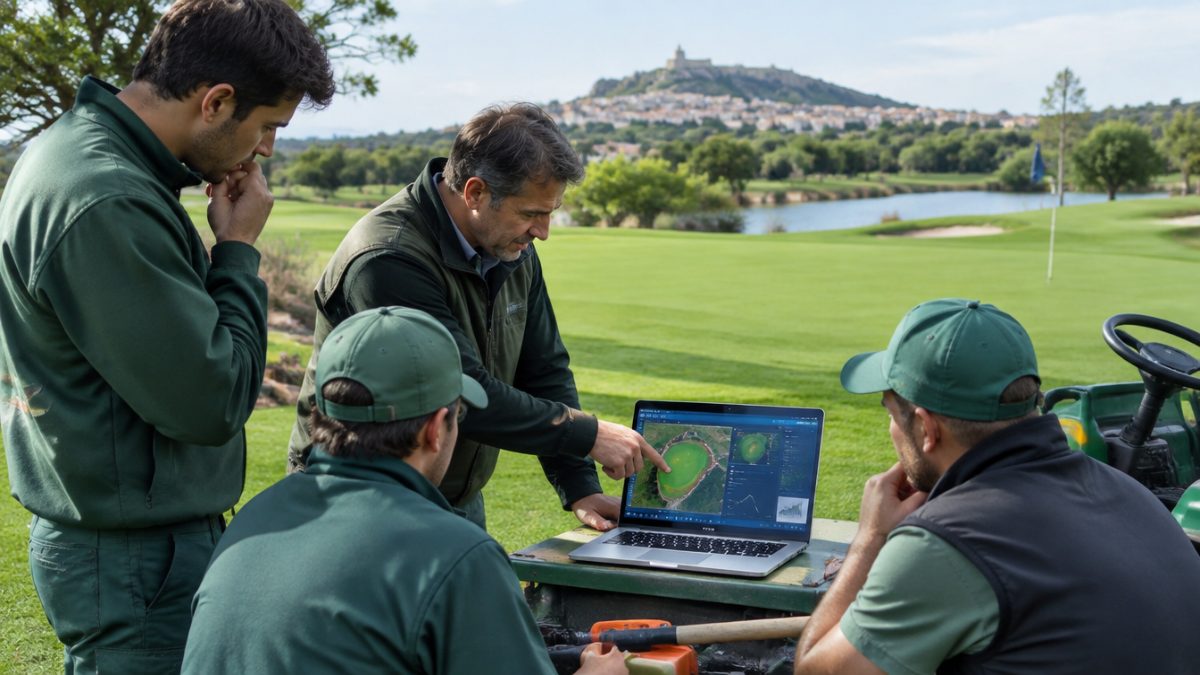
Many courses accumulate spreadsheets, notes and messages that nobody reviews. Generative AI for greenkeepers can help summarise a series of records, spot obvious inconsistencies or suggest a clearer table structure for next year. It is especially useful when you inherit data from someone else.
- Ask for a summary of irrigation incidents over a period.
- Request ideas for classifying tasks and zones consistently.
- Compare versions of an operations calendar to spot gaps.
Remember that the quality of the result depends on the quality of the data. If the source record is incomplete, the tool will not fix it.
That is why, before thinking about generative AI for greenkeepers, it pays to sort out the basics: every task, every zone and every date recorded consistently. A course with clean data gets useful summaries; one with chaotic data gets chaotic summaries, just better written.
Use 4: translating and communicating with suppliers and foreign staff
On many courses, operators, technicians and suppliers from different countries work side by side. A quick translation of a manual, a notice or a safety procedure helps ensure nobody works without understanding what they have to do. For critical documents, have someone with a good command of the language check the final text.
It is also handy for writing emails to suppliers, requesting quotes with a clear structure or preparing questions for a technical visit. Less time at the desk, more time on the course.
Another simple application of generative AI for greenkeepers is turning a long message conversation into brief minutes: what was decided, who will do it and by when. Anyone who has coordinated a tournament knows how many agreements get lost between phone calls and messaging groups.
Use 5: generating ideas, checklists and contingency plans
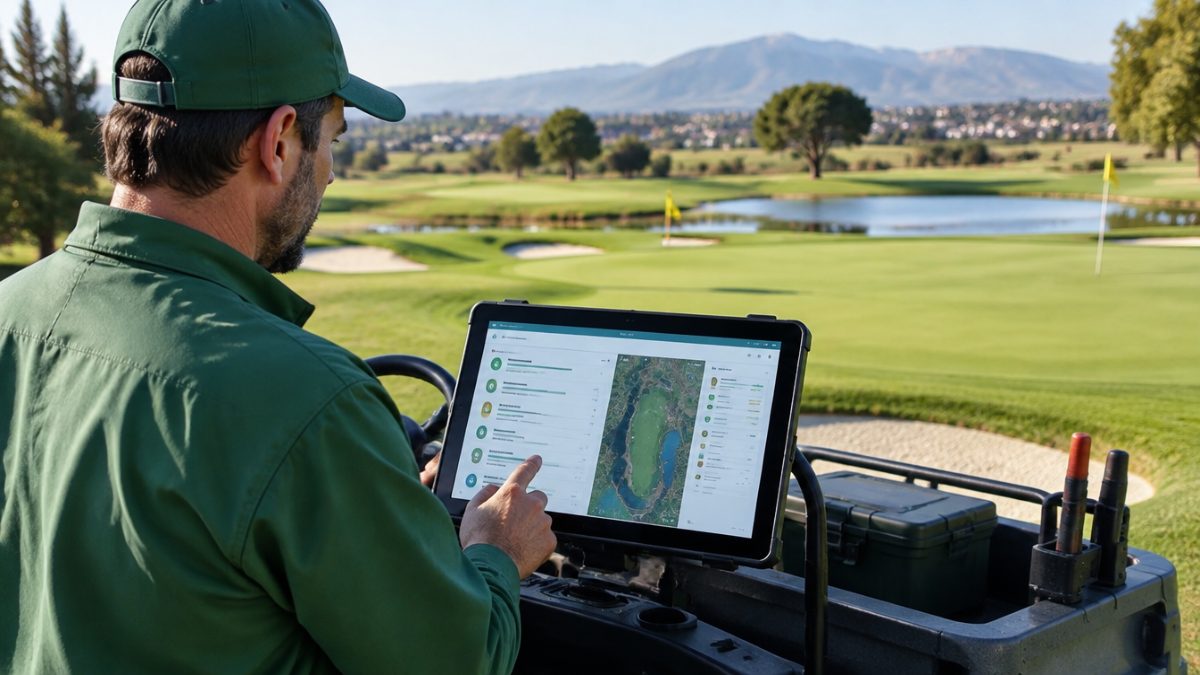
When you are preparing a tournament, a hot season or a partial closure of the course, the tool can help you forget nothing. Just ask it for a checklist and then adapt it with your own judgement. It works as a colleague who asks questions, not as a technician who decides.
- Ask for an initial list of tasks for the event or situation.
- Remove what does not apply and add what is specific to your course.
- Validate the result with the crew before assigning tasks.
This use of generative AI for greenkeepers is especially interesting on small courses, where one person carries a lot of responsibility and benefits from checking their planning against a second pair of eyes.
Use 6 and the limits of generative AI for greenkeepers
The sixth use is learning: asking for simple explanations of concepts you want to brush up on, such as evapotranspiration or the relationship between pH and nutrient availability. It serves as a starting point, never as a definitive source.
And now the limits, which matter. Generative tools can invent data with complete confidence, they do not know the specific conditions of your soil and they do not replace the advice of a licensed technician, above all for pesticide treatments, where you must always follow the label and current regulations.
- Do not enter personal data or confidential club information.
- Do not make agronomic decisions on its answer alone.
- Check figures, product names and legal references against official sources.
- Define who reviews texts before they are published.
Further reading: OECD. The OECD publishes analysis and general principles on the responsible use of artificial intelligence that serve as a reference framework.
Frequently asked questions
What is generative AI for greenkeepers?
It is the use of artificial intelligence tools that generate text, summaries or ideas from the instructions they are given, applied to course management tasks: reports, training, communications or checklists. It does not make agronomic decisions or know your course; it is desk support that always needs human review.
Can AI diagnose turf problems?
Not reliably. It can explain general concepts or suggest what to check, but it does not replace field observation, soil analysis or a technician's judgement. With generative AI for greenkeepers, use it to organise information and prepare questions, not to decide treatments.
What data should I not share with an AI tool?
Avoid personal data of members or employees, contracts, sensitive financial figures and any confidential club information. If you need examples, anonymise them. Also check with management the policy on using these tools and review the terms of the service you use.
Keep reading
- Artificial intelligence in greenkeeping: what it brings Artificial intelligence in greenkeeping: 7 real uses
- An app for greenkeepers: what it should offer Greenkeeper App: 7 Features That Save Hours
- The greenkeeper's dashboard Greenkeeper Dashboard: 7 Key Metrics to Track