
A green that wakes up with yellowish areas, dull leaves and an increasingly pale sward in the middle of summer tends to set off every alarm. Among the possible causes, turf anthracnose is one of the biggest concerns on low-cut surfaces, especially on Poa annua and on greens under prolonged stress.
Rather than a disease that appears for no reason, anthracnose is the result of a combination of conditions. In this article we review six risk factors, how to tell its symptoms from other problems and which management decisions are worth recording so you can act before the damage is visible.
What turf anthracnose is and how to recognise it
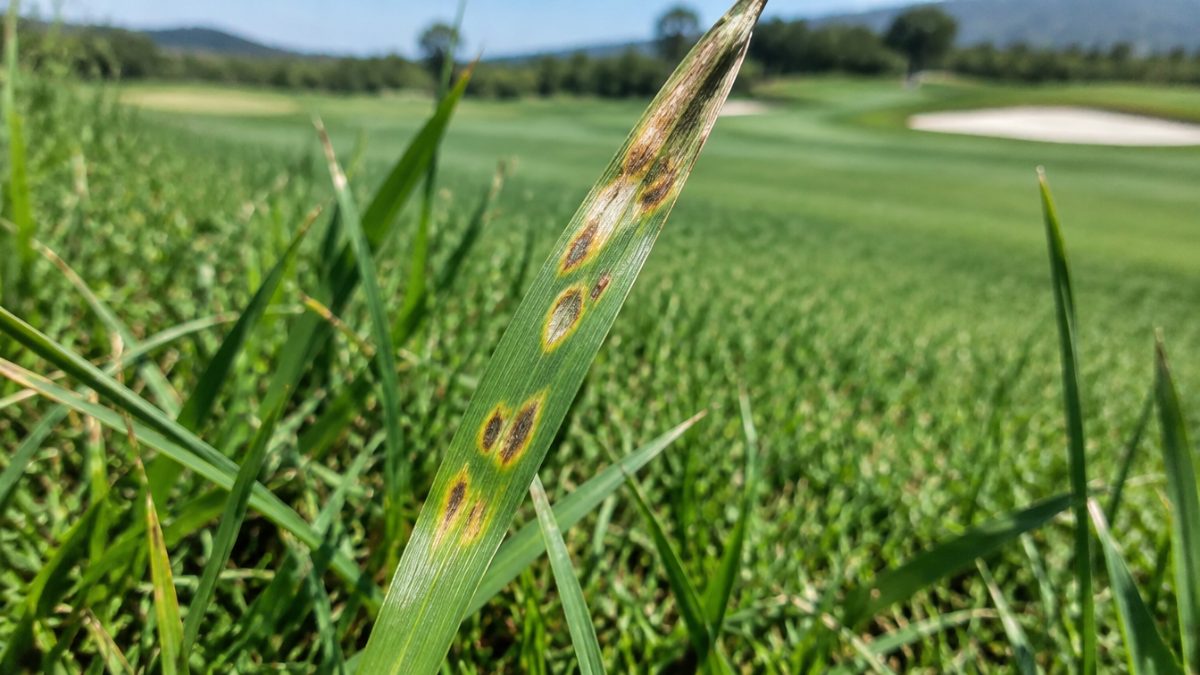
Turf anthracnose is caused by a fungus that mainly affects weakened plants. It shows up in two forms: a more foliar one, with yellowing and progressive thinning of the leaf, and a more basal one, in which the base of the stem is damaged and the plant loses density and vigour.
Some clues help you suspect it:
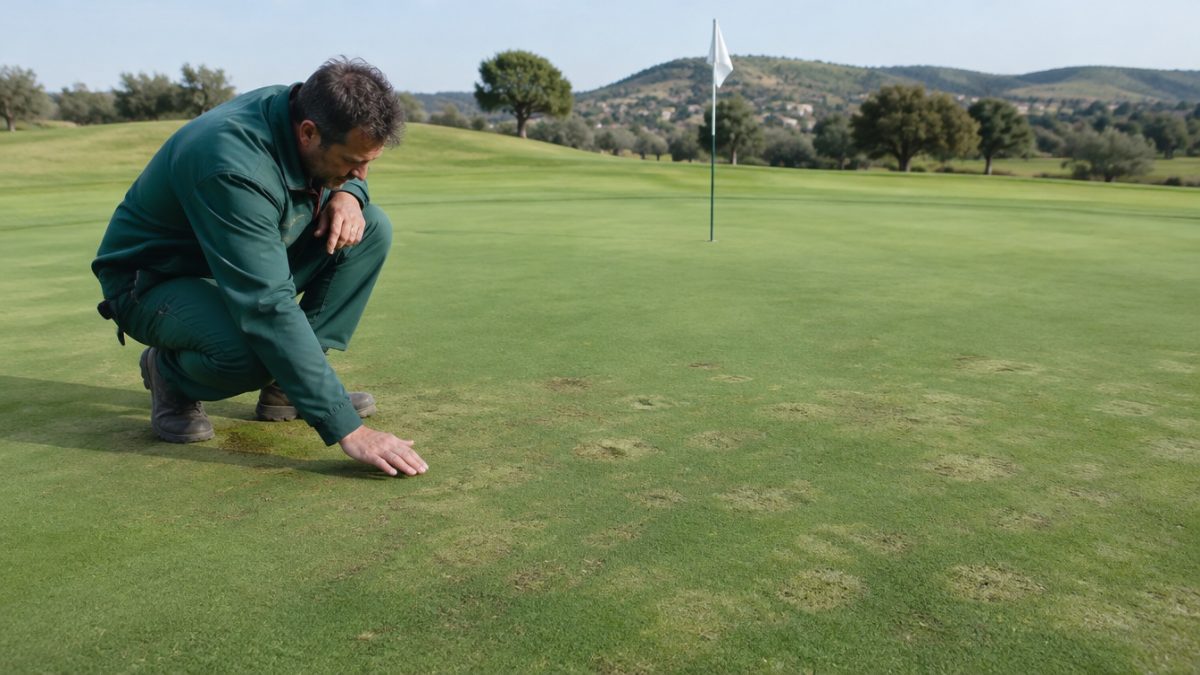
- Yellowing in irregular patches, spreading without a clear outline.
- An increasingly open sward, with thin, brittle leaves.
- Greater damage on edges, collars or high-traffic areas.
Because the symptoms resemble those of drought stress, nutrient deficiency or heat damage, confirmation by a technician or a laboratory is a good investment.
Factor 1: heat and humidity stress
Episodes of intense heat, with warm nights and high humidity, are the most favourable scenario. The plant respires more than it photosynthesises, loses reserves and becomes vulnerable. In a Mediterranean climate, these conditions are concentrated in midsummer and in some transition periods.
Watching the forecast and stepping up observation on those days lets you get ahead of the problem. Light syringing and good air movement across the green help relieve the plant, always without creating excess surface moisture that favours other diseases.
A useful tip: compare how the most exposed greens develop against the best-ventilated ones. If turf anthracnose appears earlier on those surrounded by trees or in hollows, you already have a clear clue about where to act first with pruning, fans or drainage improvements.
Factor 2: mowing too low and too often
The lower the cutting height, the less leaf area the plant has to produce energy. If it is also cut daily, with heavy rollers and no recovery margin, the sward accumulates mechanical stress.
A prudent practice during risk episodes is to raise the cutting height slightly, alternate mowing with rolling days and rest days, and reduce unnecessary passes. Green speed may suffer, so it is worth explaining the decision to the club: a healthy, stable surface is worth more than maximum speed for a few days. It is a good argument to put to the committee: easing the pressure on the sward in the critical season reduces the likelihood that turf anthracnose will later force you to close part of a green.
Factor 3 of turf anthracnose: unbalanced nutrition
Turf with deficiencies, especially of nitrogen, suffers more from turf anthracnose, which is why fertility is one of the factors most closely watched. But excess nutrients or imbalances between them also weaken the plant. That is why it is important to base the fertiliser plan on soil and tissue tests, and to adjust it to the season and the demands of each surface.
In risk periods, light and frequent applications are usually better than large, widely spaced ones. Any change to the programme should be noted down, along with the observed response, to understand what really works on each green.
Factor 4: compaction, drainage and shallow roots
A compacted soil restricts root development. With short roots, the plant depends on frequent irrigation and tolerates heat worse. Greens with poor drainage or sealed layers tend to show problems first.
Scheduled aeration, fine tining in risk periods and organic matter control help maintain a healthy profile. Avoid aggressive operations in the middle of a stress period, which can increase the damage. If the green has areas that always fail in the same spots, check the soil profile first before blaming the fungus. A simple soil pit and a look at the real rooting depth reveal a lot about why turf anthracnose always strikes in the same places.
Factor 5: traffic, and Factor 6: lack of records
Concentrated traffic, from both players and machinery, makes the situation worse. Collars, green entries and exits and mower turning areas are the first places where it shows. Alternating routes and spreading out turning points reduces the pressure on any one sector.
The sixth factor is less visible: lack of data. Without a record of when turf anthracnose appeared, what conditions there were and what was done, each outbreak is tackled as if it were the first. Note dates, temperatures, previous operations, cutting heights and results, and over time a pattern will emerge that allows you to prevent it.
What to do if you suspect anthracnose on your greens
At the first signs, the sensible sequence is: confirm the diagnosis, reduce stress on the surface, correct the management factors you can and, only if appropriate, consider a fungicide application. The latter must always follow the product label, current regulations and the advice of an authorised technician.
Communicate the plan clearly to the committee and the club: what is being done, why, and how long recovery may take. Transparency avoids pressure that leads to rushed decisions, such as cutting lower to improve appearance or over-fertilising. Once the episode is over, schedule an internal review: which signs were seen first, who spotted them and how long it took to make a decision. That calm analysis is what truly prepares the team for next time.
Further reading: USGA. The USGA offers technical resources on diseases and green management that are a good basis for reference.
Frequently asked questions
When is turf anthracnose most likely to appear?
It usually appears when the plant accumulates stress, especially in hot periods with high humidity, very low mowing, insufficient nutrition or compacted soils. It does not depend on a specific date but on a combination of conditions, so monitoring the weather and the condition of the sward is the best prevention tool.
Can turf anthracnose be prevented without fungicides?
The risk can be greatly reduced with cultural management: appropriate cutting height, balanced irrigation, adjusted nutrition, aeration and traffic control. If you still need to intervene with a product, it must be done following the label, current regulations and the judgement of an authorised adviser, never on an improvised basis.
What data should I record about turf anthracnose?
Useful items are the date of onset, the affected greens, the previous weather conditions, the cutting height, recent operations, the fertiliser plan and the measures taken with their result. With that data you can detect patterns and prepare action protocols for the next season.
Keep reading
- how to recognise and manage Fusarium in turf Fusarium patch in turf: 5 winter measures
- Poa annua on greens and fairways Poa annua on Greens: 6 Effective Control Strategies
- plant protection treatment records Pesticide Application Records: 6 Key Data Points