

There is plenty of talk about green speed and much less about hardness, even though players feel it on every approach shot. Green firmness determines whether the ball bites and stops, bounces on or sits buried in its own pitch mark. Measuring and managing it methodically is one of the keys to a quality surface.
In this article we look at what firmness is exactly, five ways to measure it on the course, which factors change it and which practices help deliver a firm green without sacrificing turf health or playability for the average member.
What Green Firmness Is and Why It Matters to Players
Firmness is the surface’s resistance to deformation from the impact of the ball. With low green firmness, the surface absorbs the shot and stops the ball, but it marks easily and is soon ruined; one that is excessively hard makes the ball bounce and forces players to hit their irons differently.
There is no universal ideal firmness. It depends on the level of the players, the type of course and the club’s philosophy. A high-level tournament usually seeks uniform firmness across greens, while a members’ course prioritises ball marks that are easy to repair. What matters is that green firmness is consistent from hole to hole and stable throughout the week.
Way 1: Observing the Bounce and the Ball Mark
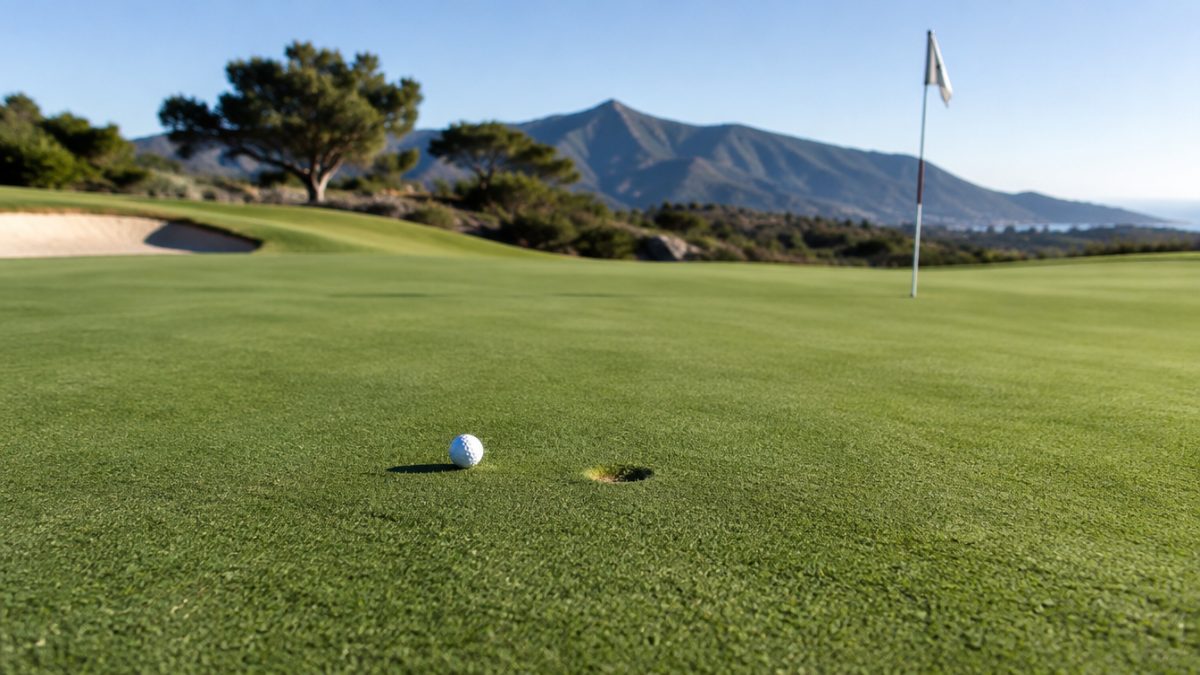
This is the most immediate and most subjective measure, but useful if done methodically. Watch how the green receives a typical approach shot.
- How far does the ball bounce before stopping?
- What depth and shape does the impact mark have?
- Is it similar across the different greens?
Noting these impressions on a simple scale, always by the same person and in comparable conditions, lets you detect obvious differences without any equipment. It is very useful for comparing green firmness between holes on the same day.
Way 2: Drop or Impact Tests with Specific Equipment
There are portable devices that measure the deceleration of a weight as it hits the surface. They give a numerical value that lets you compare greens, areas and dates.
- Choose fixed measuring points on each green, representative and at similar distances from edges and pin positions.
- Take several readings per point and calculate the average.
- Always measure at the same time of day and with similar moisture, because water changes the result.
With that data you can set a target range for your course and see whether your practices bring you closer to it. Green firmness stops being an opinion and becomes a management variable.
Way 3: Penetration Resistance in the Profile
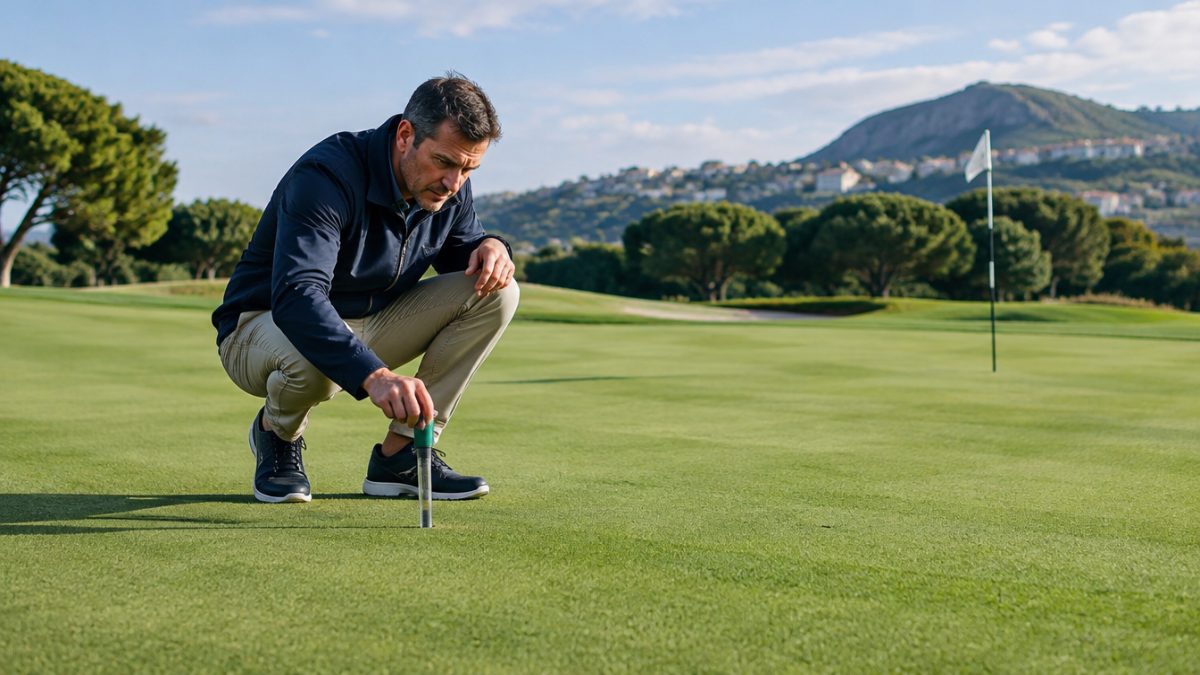
A penetrometer or a simple probe rod lets you assess the soil’s resistance at several depths. This measure tells you about the profile, not just the surface, and helps distinguish a green that is firm because of good structure from one that is hard because of compaction.
The difference matters. A firm, healthy green has deep roots, drains well and recovers quickly after play. One that is hard through compaction shows short roots, waterlogging and stressed turf. That is why green firmness should always be interpreted alongside a soil profile pit and an observation of rooting.
Way 4: Soil Moisture, the Factor That Conditions Everything
Two firmness readings on the same green can vary widely depending on available water. Moisture is probably the management factor with the greatest short-term influence.
- Measure soil moisture with a probe at the same points as firmness.
- Relate both values to learn what moisture produces the desired behaviour.
- Adjust irrigation so that moisture stays in that band, with more precise and less abundant watering.
With this approach, green firmness no longer depends on the luck of the weather and is actively managed. In the days before a competition, strict moisture control is the quickest tool.
Way 5: The Historical Record to Spot Trends
The fifth way of measuring is not a test but a discipline: keeping the data. A weekly record of firmness, moisture, cutting height, top-dressing and aeration shows which practices have the most influence and how long their effect lasts.
After one season you can already answer useful questions: how long green firmness takes to recover after aeration, which holes tend to be softer, or how the surface changes with rain. Without a record, every season starts from zero.
How to Improve Green Firmness Through Cultural Management
Once green firmness has been measured, it is worth acting on the factors that determine it, starting with the most structural:
- Control organic matter: spongy thatch cushions the impact and holds water. Aeration, regular top-dressing and moderate verticutting keep it in check.
- Improve the profile: good drainage and suitable sand give lasting firmness without resorting to extreme solutions.
- Adjust irrigation: less water, better distributed, keeps the surface firm and the root system deep.
- Use the roller judiciously: it helps consolidate the surface, but overuse can compact.
- Balance nutrition: excess nitrogen produces soft growth and soft surfaces.
Avoid quick fixes that sacrifice turf health. A very hard green at the cost of stressing the plant is paid for later in disease and loss of density. Sustainable green firmness is built with patience, measuring and recording every decision.
Further reading: USGA. The USGA offers technical publications on the speed, firmness and consistency of putting surfaces.
Frequently asked questions
Is green firmness the same as green speed?
No. Speed indicates how far the ball rolls on a putt, while firmness describes how the surface responds to the impact of an approach shot. They are related because both depend on moisture, cutting height and density, but they can vary independently and are best measured separately.
How often should I measure green firmness?
A reasonable guideline is to measure weekly at fixed points, and more often before major events. The key is to keep the same method, the same time of day and similar moisture conditions so the readings are comparable. Recording the data lets you see trends and assess the effect of each practice.
Can a green be firmed up without harming the turf?
Yes, if it is done through cultural management: controlling thatch, improving drainage, adjusting irrigation and nutrition and using the roller sparingly. What you should not do is force hardness through water stress or compaction, because it is paid for later in disease, loss of density and higher recovery costs.
Keep reading
- Stimpmeter: measuring green speed Stimpmeter: 5 Steps to Measure Green Speed
- Thatch in greens: how to control it Thatch in greens: 6 warning signs and how to reduce it
- USGA Green Section: what it offers clubs USGA Green Section: 5 useful resources for greenkeepers