
The Stimpmeter is a simple tool, almost a ramp with a notch to release the ball, but the data it gives can be very misleading if used without a method. A reading taken on a slope, in wind or with a different ball cannot be compared with the one from the day before, and that is where many arguments between members and the maintenance team come from.
If you want the Stimpmeter to be useful, treat it as what it is: a measuring instrument that requires a fixed procedure. In this article we review five steps to obtain reliable readings, understand what they mean and use them to make decisions about mowing, rolling and irrigation.
Step 1: Prepare the Stimpmeter and Equipment
Before heading out to the green, check that the instrument is clean, with no dents or deformations in the ramp and with the release notch in good condition. A damaged Stimpmeter gives inconsistent readings, and the error carries over to all later measurements.
- Bring three balls of the same model and condition, reserved only for measuring.
- Use a tape measure or a long measuring rule and markers for the landing point.
- Prepare a sheet or device to record each reading with date, time and hole.
- Always measure with the same equipment and, if possible, the same person.
If you use several units at the club, check that they give similar readings on the same surface before using them interchangeably. Store the instrument in a dry, protected place and handle it carefully in transport: the ramp is more delicate than it looks and a slight bend is enough to alter the results.
Step 2: Choose a Level, Representative Spot
Slope is the great enemy of the reading. Look for a reasonably level part of the green, away from the entrance, the edges and the pin positions, that represents the average surface of the hole. If the whole green has some slope, the right approach is to measure in two opposite directions and calculate the average, as we will see in the next step.
- Avoid freshly tined areas, areas with recent top-dressing or footprints.
- Make sure the surface is dry; moisture artificially slows the ball.
- Measure in a comparable spot each day, so that the data series makes sense.
Note the conditions at the time: wind, humidity, time of the last mow or roll. That information will be key when comparing readings. If it is very windy, it is better to postpone the measurement: a gust can push the ball and completely distort the roll, and the resulting figure would only create confusion.
Step 3: Roll the Balls in Both Directions with the Stimpmeter
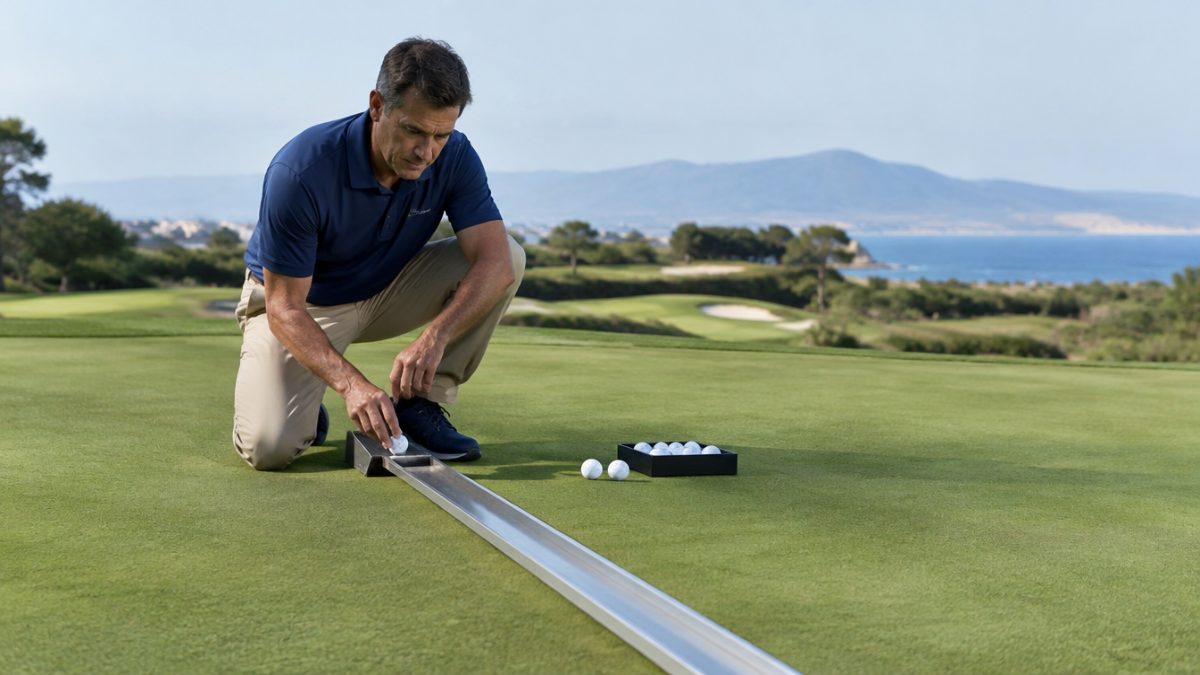
With the Stimpmeter resting on the ground, a ball is placed in the notch, the end is lifted gently until the ball rolls without impulse, and the distance it travels over the green is measured. The usual procedure is to roll three balls in one direction and another three in the opposite direction, from the same starting point.
- Mark the point where the end of the ramp rests.
- Roll three balls and measure the distance of each from the base of the instrument.
- Discard clearly anomalous values, for example due to a gust of wind or an irregularity.
- Repeat in the opposite direction, from the opposite end of the measured stretch.
Averaging the two directions compensates for small slopes and gives a representative value. If the two series differ greatly, the area was probably not level enough and it pays to repeat elsewhere.
Step 4: Interpret Stimpmeter Readings with Judgement
An isolated figure says little. What is useful is understanding what it means on your course, in your season and for your type of player. A very fast green is not always a better green: if the surface has pronounced slopes, excessive speed makes many pin positions unplayable.
- Compare readings with the reference the club has set for each time of year.
- Look at consistency between holes; it often matters more than the absolute value.
- Bear in mind that speed varies during the day, with turf growth and with humidity.
- Distinguish between everyday conditions and tournament conditions.
A common mistake is chasing maximum speed all year round. Cutting too low or overusing the roller weakens the plant and leaves the green vulnerable to heat and disease. It is wiser to set speed ranges by season and stay within them consistently.
If differences between greens are large, review the usual causes: cutting height, blade condition, amount of organic matter, moisture, shade or compaction.
Step 5: Record and Act on the Results
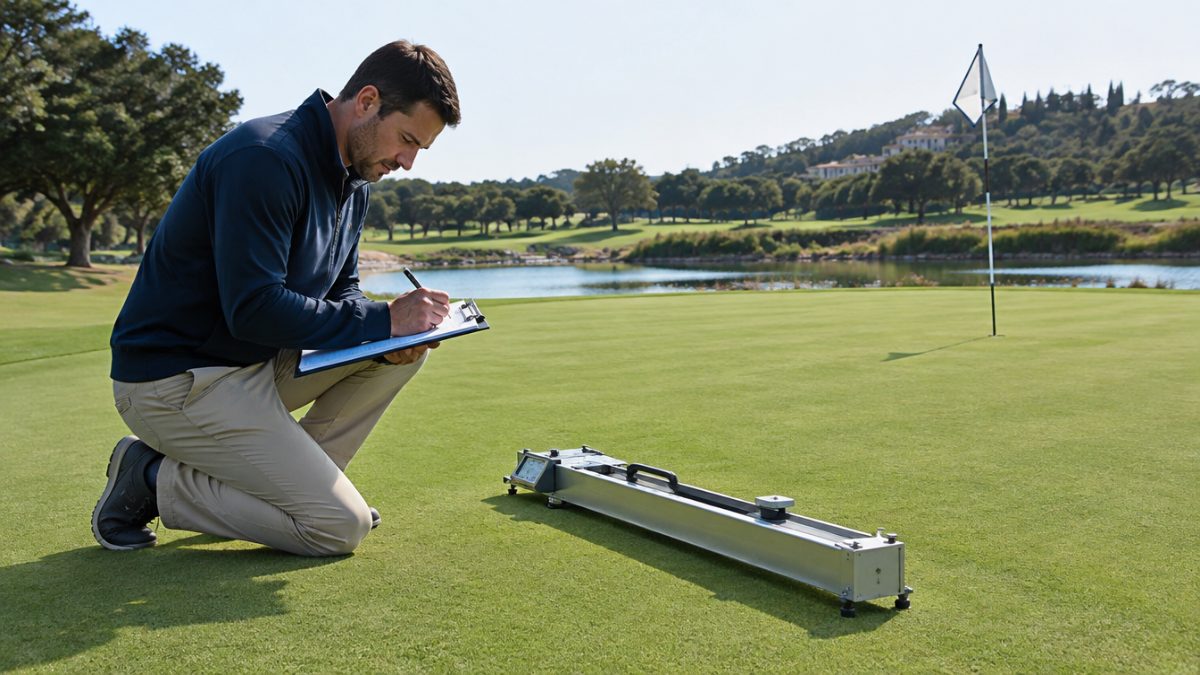
Measuring without writing it down is pointless. Record each reading with its context and review the series over the weeks. This way you can check whether an aeration, a change in height or a rainy season is having a sustained effect on speed.
With the data in hand you can decide:
- Whether to adjust the cutting height or mowing frequency.
- Whether it makes sense to add rolling on certain days, without overdoing it so as not to compact.
- Whether irrigation or top-dressing needs correcting to regain consistency.
- How to report to management or the green committee with specific figures.
Sharing readings transparently reduces complaints: when members know that measurement follows a method and that the crew is aiming at a reference, the debate moves from personal impression to data.
Further reading: USGA. The measuring ramp was devised by Edward Stimpson and its use spread through the USGA, which offers reference documentation on how to measure and compare green speed.
Frequently asked questions
What exactly is the Stimpmeter for?
It is used to objectively measure the speed of a green, that is, the distance a ball travels after leaving a ramp with a constant impulse. Thanks to the Stimpmeter, greens can be compared with each other, their evolution followed and measurable conditions communicated to players instead of impressions.
How often should I use the Stimpmeter?
It depends on the course and the time of year. It is usual to measure periodically and before important competitions, always with the same procedure. Consistency is essential: a few well-made, recorded measurements are more valuable than many isolated readings taken in different conditions.
Why do Stimpmeter readings change during the day?
Because the turf grows, moisture varies, the wind changes and the surface is affected by traffic and mowing. That is why it pays to measure at the same time, note the conditions and not compare readings from very different situations. The consistency of the method is as important as the device.
Keep reading
- The work of the USGA Green Section USGA Green Section: 5 useful resources for greenkeepers
- How to choose the mowing height of turf Mowing height: a complete guide by course zone
- Greens mowers: what to consider Greens Mowers: 6 Criteria for Choosing Well