
Every pesticide or fertiliser application leaves a trail: what was applied, where, when, who did it and under what conditions. Keeping that information in order is the essence of treatment traceability, and on many courses it still depends on notebooks, loose sheets and the memory of whoever is on duty.
Digitising that record does not change the course’s obligations, but it does make them easier to meet and to put to use. We review five benefits, which data to capture and how to start without complicating the crew’s daily work. Remember that every treatment must be carried out according to the label, current regulations and the advice of a licensed technician.
What treatment traceability really means
Tracing a treatment means being able to reconstruct its complete history: what problem or need prompted it, what product or method was used, in which area, with what equipment, in what weather conditions, who applied it and what the result was. It is not just an administrative requirement: it is the basis for learning from what is done on the course.
Well-kept treatment traceability answers everyday questions. When was the last application on the seventh green? What was done before that patch appeared? Who calibrated the sprayer? With scattered paperwork, every question is a search; with an orderly record, it is a query that takes seconds.
That is why treatment traceability is not limited to pesticides. It is also worth recording fertilisations, amendments, biostimulants and other applications that influence the condition of the turf, so that the history of each zone is complete and every decision rests on the whole picture.
Benefit 1: regulatory compliance with less effort
Current regulations require records of certain applications to be kept and retained for a period of time. A digital system makes it easier for the mandatory fields to always be complete and for the information to be legible, orderly and easy to present at an inspection or audit.
It also avoids the classic problem of the missing entry because whoever applied forgot to note it. A form with guided fields reminds you what has to be recorded and reduces transcription errors. Always check with your adviser or the competent authority which records apply to you, because the requirements depend on the type of activity and the product. In practice, good treatment traceability takes the nerves out of a review: everything is where it should be.
Benefit 2: fewer errors and greater safety
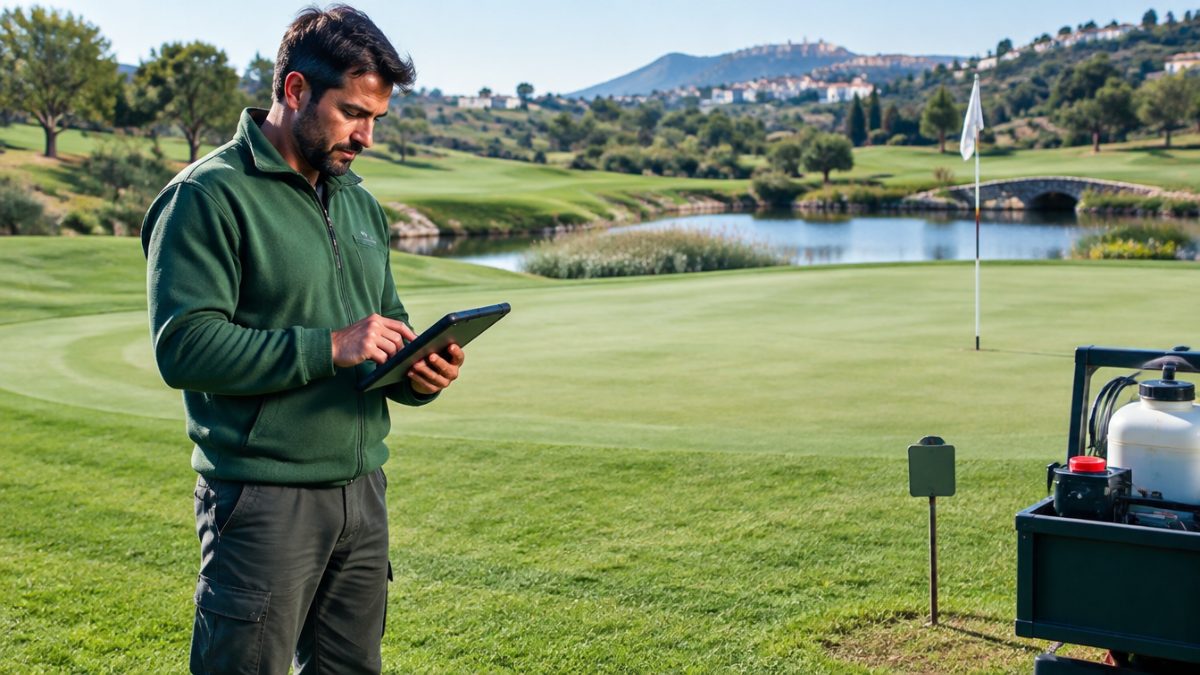
Mistakes in treatments are costly: mixing up an area, repeating an application or not respecting an interval. A digital record lets you check at a glance what has been done in each sector and avoid duplication or overlap.
- History visible before scheduling a new application.
- Control of deadlines and intervals between treatments.
- Clear identification of the applicator and the equipment used.
- Calibration data and application conditions at hand.
A frequent case is the applicator who, in a hurry, cannot remember whether the sector already had a pass the previous week. With the history in view, the doubt disappears and the risk of error drops noticeably.
Safety improves too: if everyone consults the same information, it is easier to coordinate the crew, report on the state of an area and protect players and workers.
Benefit 3: technical decisions based on data
When treatments are recorded in an orderly way, patterns can be analysed. Which areas need more interventions, which strategies have worked best, which seasons concentrate the most incidents. That information lets you move from intuition to evidence.
Treatment traceability also helps evaluate the effect of changes in management. If you have changed irrigation or fertilisation and reduced applications in a sector, the data prove it. And if a problem reappears, you can compare with earlier episodes to find common causes and adjust prevention, always with technical advice. A good analysis does not require complex tools: a few questions repeated each month about areas, reasons and results already give a very valuable view of the programme.

Benefit 4: transparency and trust with the club
Members and ownership increasingly ask about what is applied on the course. A clear record lets you answer quickly and with data, without improvising. It shows professionalism and strengthens confidence in the maintenance team.
It also simplifies communication with the green committee. Instead of explaining from memory what was done, you can prepare a monthly summary with treatments by area, reasons and results. Good treatment traceability turns doubts into calm conversations and eases the pressure when there are complaints. When the course is hit by a disease or a weather event, having treatment traceability lets you show that the crew acted with judgement and in an orderly way.
Benefit 5: time savings and continuity of knowledge
The fifth benefit is a practical one: time. Searching for papers, reconstructing dates or rewriting reports consumes hours that could be spent on the course. A digital system reduces that administrative load and centralises the data in one place.
In addition, knowledge no longer depends on one person. If the manager changes, falls ill or goes on holiday, the history remains and the new team can carry on without starting from scratch. This is especially valuable at clubs with staff turnover or outsourced services. And when a new season is being prepared, last year’s history serves as a starting point, not a forgotten archive.
How to start going digital without complicating daily work
You do not need to change everything at once to improve treatment traceability. Start with the essentials and expand when the crew feels comfortable.
- Define which data are essential: date, area, product or method, applicator, equipment, conditions and reason.
- Choose a single, simple format that everyone uses in the same way.
- Train the crew with real examples and resolve doubts as you go.
- Review the records every week to find gaps and correct them early.
- After a quarter, analyse which information you find most useful.
If you depend on paper today, do not drop it all at once: convert gradually, until digital treatment traceability is the crew’s standard.
Further reading: Ministerio para la Transición Ecológica (Spain's Ministry for the Ecological Transition). To consult the general framework on the sustainable use of plant protection products, you can visit the website of Spain's Ministry for the Ecological Transition (MITECO).
Frequently asked questions
What data should treatment traceability include?
At a minimum, date, area treated, reason, product or method, applicator, equipment used and application conditions. Under current regulations more information may need to be recorded. Check with your adviser or the competent authority which fields are mandatory for your activity and what retention periods are required.
Is it compulsory to digitise treatment records?
The obligation usually centres on keeping and retaining the records required by current regulations, rather than on the format. However, digitising them makes it easier for them to be complete, orderly and accessible, and reduces the risk of losses, transcription errors and long searches when information has to be presented.
How do I get started with digital treatment traceability?
First define the essential data, choose a common format and train the crew with real cases. Start with the most frequent applications and review the records every week to find gaps. Over time, extend its use to other operations and use the history to analyse and plan better.
Keep reading
- Recording pesticide treatments Pesticide Application Records: 6 Key Data Points
- Digital work orders on the course Digital Work Orders: 6 Advantages on the Course
- The greenkeeper's dashboard Greenkeeper Dashboard: 7 Key Metrics to Track