

When a greenkeeper has to justify a decision to management or the green committee, having a recognised reference makes the difference. The USGA Green Section is probably the most cited in the industry: a technical department that for generations has studied, published and advised on how a golf course is built and maintained.
In this article we go through five resources that can help you day to day, what to keep in mind when applying them on a Spanish course and how to turn that information into documented working criteria that are understandable to those who do not walk on the turf.
What the USGA Green Section is and why it matters outside the United States
The USGA Green Section began as a service dedicated to solving real turf problems on courses affiliated with the American federation. Over time it has become a technical reference that other countries consult, because its conclusions rest on applied research, field visits and comparison between many clubs.
It matters outside its own country for a simple reason: the principles (drainage, aeration, the balance between density and firmness, water management) are universal, even though the specific recipes are not. A recommendation designed for a transition-zone course in a continental climate does not transfer as is to a bermudagrass course on the Mediterranean coast. That is why the key is to read the source looking for the why and not the literal calendar.
Resource 1: the green construction specifications
Among the best known things from the USGA Green Section are the recommendations for building greens in layers: drainage profile, sand quality and control of the gravel layer. Even if you are not going to build a new green, they help you diagnose an old one.
- If water is slow to infiltrate, check for contaminated layers or accumulated organic matter.
- If the green dries unevenly, review the uniformity of the profile and the sealing points.
- If you plan a partial renovation, use the specifications as a checklist for the project.
Requesting laboratory analyses of the mix and comparing them with these criteria avoids costly surprises.
Resource 2: advisory visits and their reports
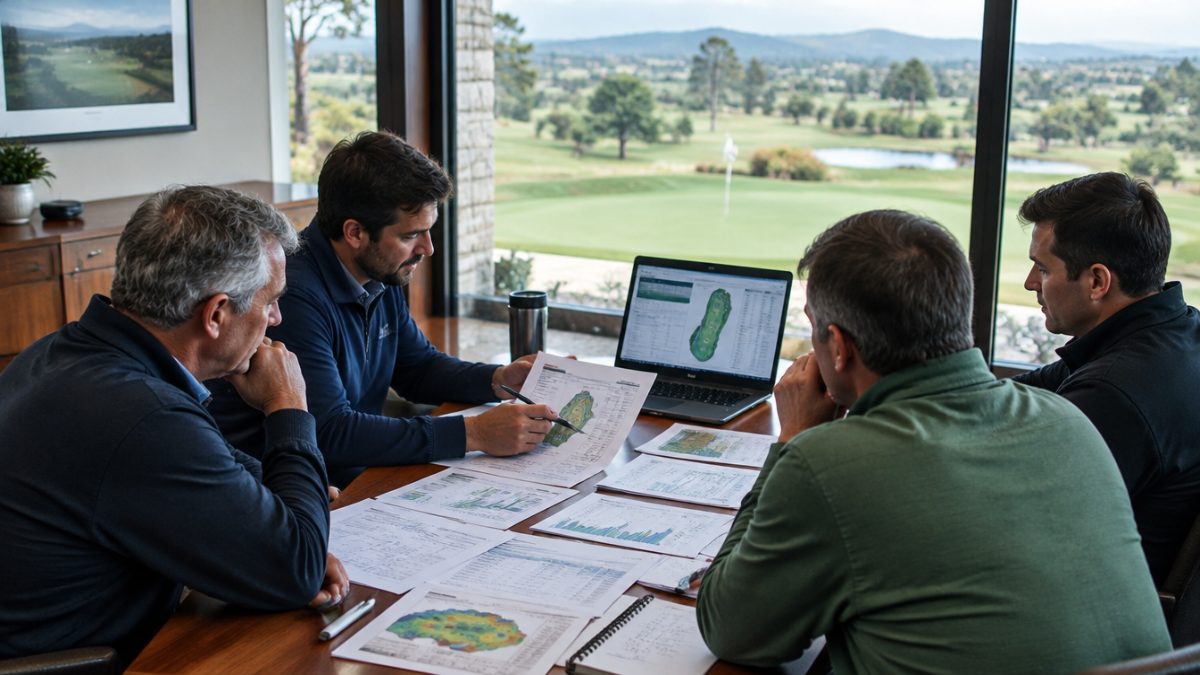
One of the most valuable contributions of the USGA Green Section is its visit model: a technician walks the course, observes, talks with the team and leaves a report with priorities. That format can be copied at any club, with or without an outside adviser.
You can organise a quarterly internal visit with a fixed structure:
- A walk through greens, fairways, bunkers and shaded areas.
- Dated photographs of the same spot to compare progress.
- A maximum of three priorities, with an owner and a date.
- Follow-up on what was agreed at the previous visit.
Limiting priorities to three forces decisions, and that is exactly what committees appreciate.
Resource 3: technical and educational publications
The USGA Green Section publishes articles and bulletins on very specific topics: water management, surface firmness, organic matter, shade and air movement, managing courses on a tight budget. They are short reads, designed for the busy professional.
A useful habit is to set aside some time each month to read an article and share one applicable idea with the team. Note it down together with the part of the course where you would try it. That way the reading stops being theoretical and becomes a controlled trial, with a result you can record.
Resource 4: turf research and data
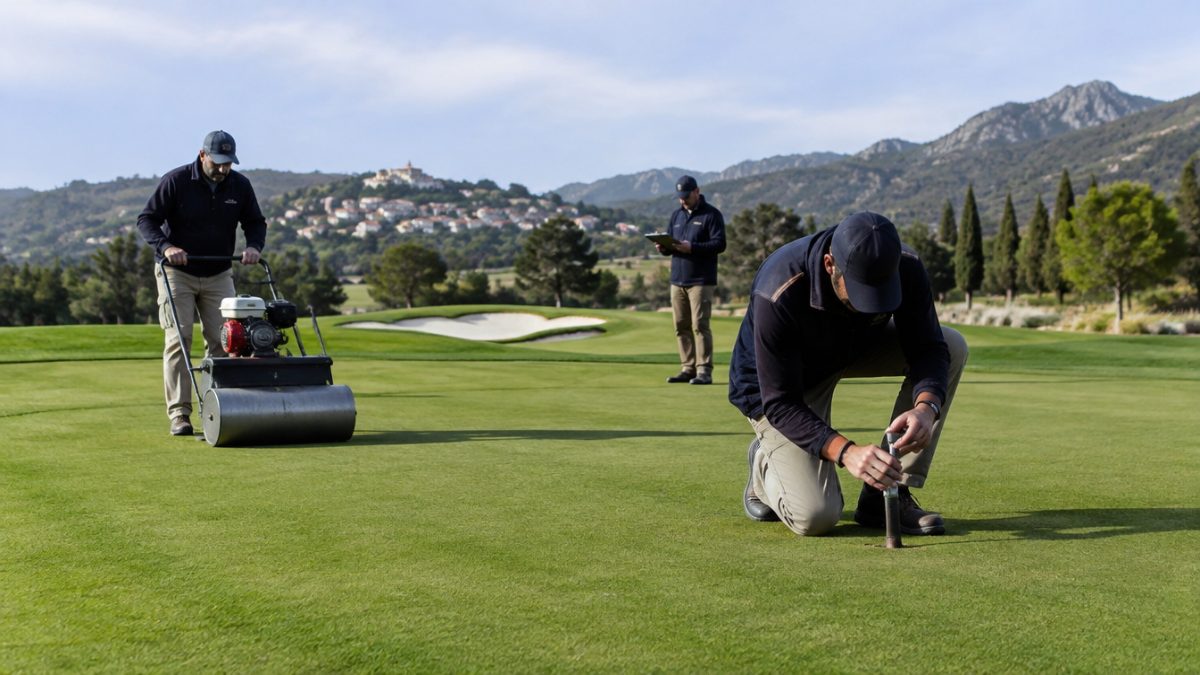
The federation funds studies on varieties, stress tolerance, efficient water use and reduced inputs. Not everything is transferable, but the methodology is: comparison plots, a single factor that changes, repeated measurement and cautious conclusions.
You can imitate it on a small scale. Choose two similar areas of a fairway, change a single practice in one of them (for example, aeration frequency) and record firmness, colour and response to play over several weeks. With your own data, your argument carries much more weight against the opinions of members and players.
That is, in essence, how the USGA Green Section works: it does not sell absolute certainties, but hypotheses tested in the field. If you adopt the same approach, each season will leave you a small library of evidence you can consult when the management team changes or a new greenkeeper arrives.
Resource 5: training programmes and the professional community
The fifth resource is less tangible but just as important: the network of professionals that forms around seminars, conferences and publications. Talking with colleagues facing similar problems greatly shortens learning.
If your club cannot send anyone to international events, make use of national and regional greenkeeper associations, which translate and adapt a good part of this content. And always bring a specific question with you: which practice are you going to improve and how will you measure it?
Many professionals start by following the USGA Green Section publications and end up exchanging experiences with colleagues from other regions. That ongoing conversation, more than any isolated course, is what keeps a team’s technical judgement sharp.
How to adapt what you learn to the Spanish climate
Before applying any USGA Green Section recommendation, filter three variables:
- Turf species: bermudagrass, kikuyu, paspalum or mixes with ryegrass do not respond like a temperate-climate bentgrass.
- Water regime and irrigation quality: salinity or scarcity shape leaching and frequency decisions.
- Play pressure and seasonality: a tourist course has peaks that a private club does not show.
Document this adaptation in writing. When someone asks why something is done differently from the reference, you will have the answer in order.
One page per decision is enough: what the USGA Green Section says, what changes on your course and what result you expect to observe. Review those pages at the end of each season and discard or confirm each criterion against what actually happened.
Further reading: USGA. To consult the Green Section's current publications and resources, the best thing is to go directly to the USGA website.
Frequently asked questions
Is the USGA Green Section useful for a Mediterranean course?
Yes, as long as it is read with judgement. The principles on drainage, aeration, water management and the balance between density and firmness are valid in any climate. What needs adapting are the timings, the species and the intensity of the practices to local conditions and your course's play pressure.
Do you have to be a member or pay to access its content?
A good part of the USGA Green Section's educational publications can be read openly on the federation's website, while some services and programmes depend on membership. It is worth checking on its official site what is available at any given time before planning the team's training.
How do I turn these references into reports for the green committee?
Choose one criterion from the reference, explain how you have adapted it to your course and back it with your own data: dated photos, measurements and tasks carried out. Presenting three priorities with an owner and a date is much clearer for the committee than a long list of loose tasks.
Keep reading
- complete guide to turf maintenance Complete guide to turf maintenance on golf courses
- why efficient irrigation matters The importance of efficient irrigation in golf course care
- warning signs of thatch in greens Thatch in greens: 6 warning signs and how to reduce it