
Every autumn the same conversation comes up in the workshop: do we overseed, wait, or let the course get through winter as best it can? A well-planned winter overseeding keeps colour and density when warm-season species stop growing, and also protects the course from Poa annua and other opportunistic weeds.
In this article we go through six steps to decide whether it makes sense for you, choose the timing, prepare the soil, sow sensibly and monitor germination. These are general criteria for Mediterranean-climate courses: you will adjust them to your area, your base species and your budget.
First decide whether your course needs winter overseeding
Not every course needs it, and neither does every area within the same course. Winter overseeding makes sense when bermudagrass or kikuyu turf loses colour and density for months and that affects play or the club’s image. It also makes sense where heavy traffic on buggy paths, tee boxes or green aprons means they reach winter already worn.
Before buying seed, answer three questions:
- What standard of playability and appearance does the club expect in the cold months?
- How many rounds are played, and where is the wear concentrated?
- Can the team handle the extra irrigation and mowing that ryegrass needs during germination?
If play pressure is low and the course tolerates dormancy, it may be enough to overseed only tee boxes, green collars and walk-off areas.
Get the timing right: not too early, not too late
Ryegrass seed germinates while soils are still warm, and that is your useful window. Sowing while the bermudagrass is still very active creates competition: the warm-season species shades out and smothers the seedlings. Sowing late, in cold soils, drags out germination and leaves seedlings exposed to frost and disease.
For winter overseeding, as a rough guide, start when night temperatures drop steadily and bermudagrass growth slows. Rather than the calendar, watch the soil thermometer and the ten-day forecast. Write down the actual sowing date and the result every year, because your own record is worth more than any general rule.
Prepare the seedbed before a single seed goes down
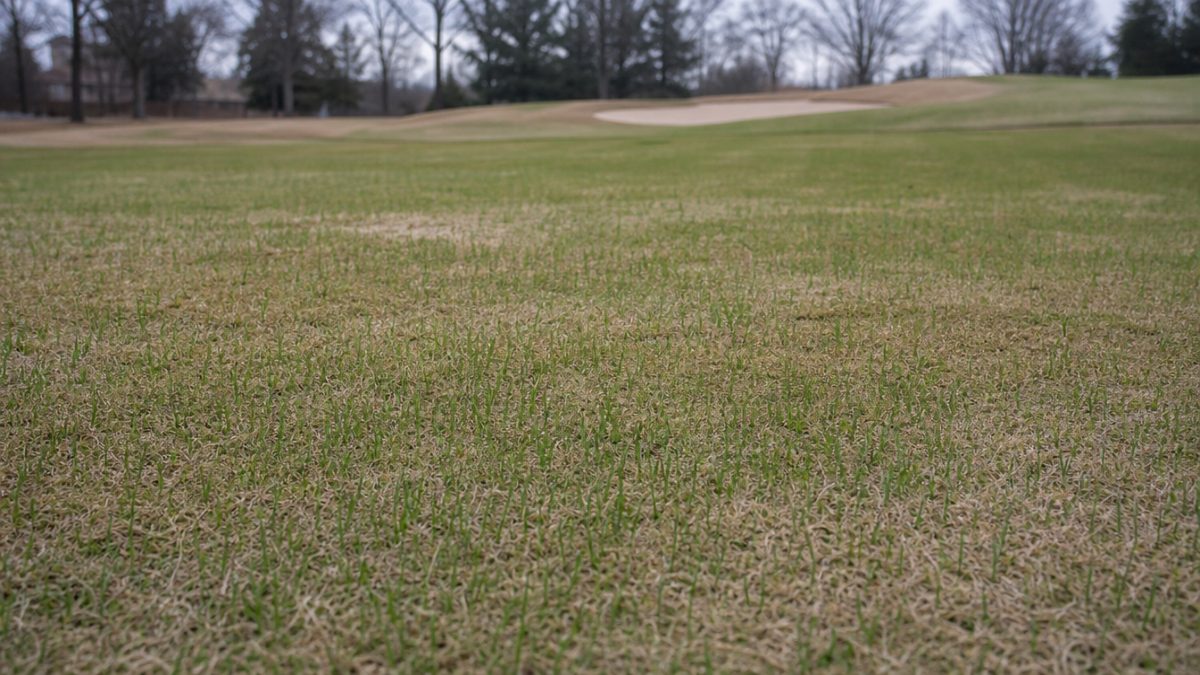
Seed needs contact with the soil. If it lands on a thick layer of dry material or on dense, unopened turf, much of it will never root. That is why preparation matters more than seeding rate.
- Low mowing of the existing turf so the seed can reach the soil.
- Debris removal by collection or brushing, depending on the condition of the surface.
- Light aeration or verticutting to open grooves, without damaging roots or irrigation.
- Fine top-dressing to cover the seed and level out small irregularities.
Intensity will differ on greens and fairways; on greens, precision and minimal damage matter more than aggressiveness.
Select species and mix according to how each area is used
Winter overseeding is not done the same way on a green as on a fairway. On greens, a fine surface, low cutting height and good ball roll are usually what count; on fairways and rough, fast establishment and wear tolerance. Always ask the supplier for the seed lot analysis: purity, germination and the presence of weed seeds.
Avoid deciding on price alone. Cheap seed with low germination or contamination from other species forces you to repeat the job or fight weeds all through the following year. If you are unsure between varieties for your winter overseeding, set up a small trial plot in a low-visibility area and compare germination, colour and mowing performance.
Sow methodically and protect germination with irrigation
For an even winter overseeding, calibrate the seeder before going out on the course and make two crossing passes at half rate each, to avoid stripes and gaps. After sowing, irrigation makes or breaks the result: the seed must neither dry out nor sit waterlogged.
The usual pattern is light, frequent irrigation over the first weeks, reducing frequency and increasing depth as roots advance. Keep in mind that:
- Slopes and areas in direct sun dry out sooner and need separate attention.
- Excess water encourages fungal disease in seedlings.
- A sector poorly covered by the sprinklers shows up immediately in the germination.
Manage mowing and fertilisation in the first weeks
In a winter overseeding, the first mowing comes when the seedlings are tall enough and well anchored. Mowing earlier pulls plants out; mowing late weakens them. Use sharp blades and, if you can, delay heavy machinery on the most tender areas. Seedlings being tugged out by a dull blade is a typical and avoidable problem.
For fertilisation, the logic is to supply what is needed for establishment without forcing soft growth. Specific criteria depend on the soil analysis and the species. With any plant protection product or fertiliser, follow the label, current regulations and the advice of an authorised technician.
Record what you do and assess the result before repeating it
Winter overseeding is one of those jobs that gets done a bit from memory every year. The exact date, the rate, the soil condition, how many hours it took and which sector turned out worst are all forgotten. Without that data it is impossible to improve or to justify the investment to the committee.
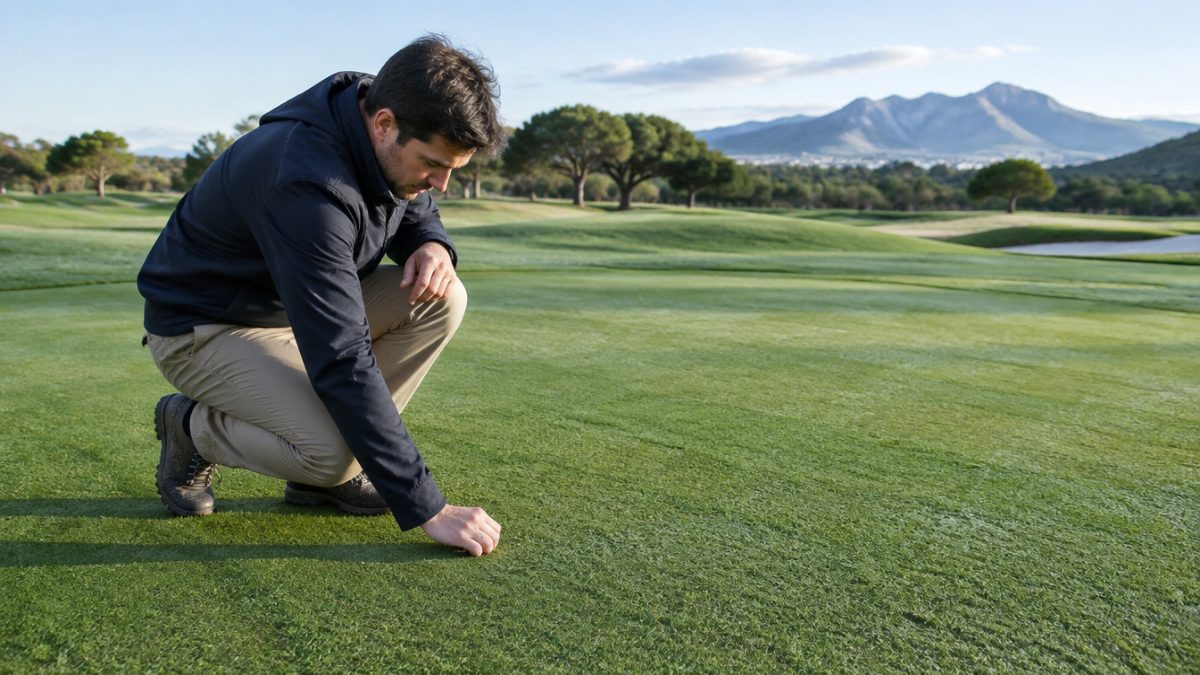
Note down at least the date, the area treated, the mix used, the seedbed preparation, staff and machinery hours, and an assessment of cover at four and eight weeks. A photo of the same spot at each visit gives a more reliable visual comparison than any recollection. Next year, the team will start from experience rather than from scratch.
Further reading: GCSAA. To broaden your turf management criteria and continuing education, you can consult the resources of the GCSAA superintendents' association.
Frequently asked questions
When is the best time for winter overseeding?
When nights cool down steadily, bermudagrass growth slows and the soil still holds enough warmth to germinate seed. Sowing too early creates competition with the warm-season species, and sowing late drags out germination. The most reliable approach is to go by soil temperature and the forecast, not just the calendar.
Do you have to overseed the whole course or only some areas?
It depends on use and budget. Many courses concentrate winter overseeding on greens, aprons, tee boxes and walk-off areas, which are the most visible and worn, and leave fairways and rough dormant. What matters is deciding area by area, with clear criteria, rather than overseeding out of habit.
What mistakes ruin an overseeding?
The most common are sowing over unopened turf, letting the seed dry out during germination, overwatering, mowing with dull blades and not recording anything to learn from the result. Almost all of them are avoided with good preparation and daily monitoring over the first weeks.
Keep reading
- Complete guide to turf maintenance on golf courses Complete guide to turf maintenance on golf courses
- The importance of efficient irrigation in course care The importance of efficient irrigation in golf course care
- How to prepare the course for peak season How to prepare a golf course for peak season